Navigating Joliet Roadways Safely: How to Handle Battery Failures and Flat Tires in Chicagoland

Driving around the Joliet and Plainfield area is always an adventure. From the highly congested stretches of Route 59 during afternoon rush hour to the fast-moving commercial traffic along Interstate 55 and Interstate 80, our local roads demand complete concentration and a highly reliable vehicle. Whether you are headed to the Louis Joliet Mall for weekend shopping, commuting into the Chicago loop, or driving home to Shorewood after a long shift, a sudden automotive breakdown is more than just a minor inconvenience—it can quickly become a highly stressful safety hazard. Two of the most common culprits behind unexpected roadside strandings are battery failures and flat tires. When your vehicle's electrical system fails to start or a sharp nail from a nearby construction site punctures your tread, your immediate plans are instantly put on hold. Understanding how to recognize the early warning signs of a failing battery and knowing how to safely handle a sudden flat tire are essential skills for every driver in the Will County area. At Hawk Mazda in Plainfield, we believe that driver education is just as important as high-quality automotive service. By equipping yourself with the knowledge to diagnose starting issues early and execute proper safety protocols during a tire emergency, you can navigate our busy local roadways with absolute confidence. Let's dive deep into the essential mechanics of car batteries and tires to ensure you are always prepared for whatever the Chicagoland roads throw your way.
What are the most common signs of a bad car battery?
Your vehicle's battery is the heart of its electrical system. Before it dies completely and leaves you stranded in a parking lot, it almost always drops subtle hints that its life cycle is coming to an end. Recognizing these early warning indicators is the key to avoiding a frustrating call for a tow truck. The most obvious sign of a struggling battery is a slow engine crank. When you turn the key or push the start button, does the engine sound sluggish, dragging its feet before finally roaring to life? This is a clear indicator that the battery is no longer holding a sufficient charge to easily turn over the starter motor. Another telltale symptom is the dimming of your headlights and interior cabin lights. Since the battery powers all electrical components when the engine is off or starting, weak lighting indicates a drop in voltage. You might also notice that your power windows roll up slower than usual, or your infotainment screen flickers during startup.
Furthermore, pay close attention to physical changes under the hood. A battery that has been overcharged or subjected to extreme seasonal temperatures can physically swell or bloat, which ruins its internal chemistry. You may also smell a strong, unpleasant scent resembling rotten eggs (sulfur), which indicates that the battery is leaking gas. Lastly, keep an eye on your dashboard; the battery warning light (which looks like a small battery with plus and minus signs) will often illuminate when the charging system detects a drop below safe operational voltage. If you notice any of these symptoms while driving near Shorewood, it is time to have your charging system professionally inspected.
Why does extreme cold weather make it harder for a car battery to start?
While we are currently enjoying the warm summer months, anyone who has spent a winter in Chicagoland knows just how brutal the freezing temperatures can be on our vehicles. To understand why your battery struggles in the cold, we have to look at the chemistry happening inside the casing. A standard automotive battery relies on a chemical reaction between lead plates and a liquid sulfuric acid electrolyte solution to generate electrical energy. When the temperature drops below freezing, this chemical reaction slows down significantly. In fact, at 32 degrees Fahrenheit, a car battery loses about 20% of its starting power. When the thermometer plummets to 0 degrees, that power output drops by a staggering 60%.
To make matters worse, cold weather also has a dramatic effect on your engine oil. As temperatures decrease, your motor oil thickens, turning from a smooth fluid into a viscous, syrup-like substance. This creates immense physical resistance inside the engine block. Consequently, your starter motor requires significantly more electrical current to turn the cold, stiff engine over at the exact moment when your battery's capacity is at its absolute lowest. This combination of reduced chemical efficiency and increased physical workload is the primary reason why weak batteries consistently fail during the first cold snap of an Illinois winter. Preparing your vehicle during the milder seasons is the best defense against this seasonal threat.
What signs point to battery failure instead of alternator or starter motor trouble?
When your car refuses to start, it is easy to assume the battery is dead. However, the battery is only one part of a three-part system consisting of the battery, the alternator, and the starter motor. Diagnosing which component is actually failing can save you from replacing parts that are still perfectly fine. Here is how to tell them apart:
1. Dead Battery Signs
If you turn the key and hear a rapid clicking sound, or if your vehicle's lights and dashboard are completely dark, the battery is almost certainly the culprit. A weak battery stores enough charge to illuminate a few dashboard icons, but does not have the necessary amperage to spin the starter motor, leading to the rapid clicking sound of the starter solenoid struggling to engage.
2. Failing Alternator
If your vehicle starts successfully but stalls shortly after, or if you notice your dashboard lights growing progressively dimmer while driving down Route 59, the issue likely lies with your alternator. The alternator's job is to charge the battery and power the electrical systems while the engine is running. If it fails, the vehicle drains the battery dry until it dies.
3. Bad Starter Motor
If your headlights are bright, your radio works perfectly, but turning the key results in a single, loud metallic click or absolutely no sound at all, your battery is likely healthy, but the starter motor is unable to physically engage. The starter motor receives the electric current but cannot turn over the internal combustion engine.
How to Inspect and Test Your Car Battery Health at Home
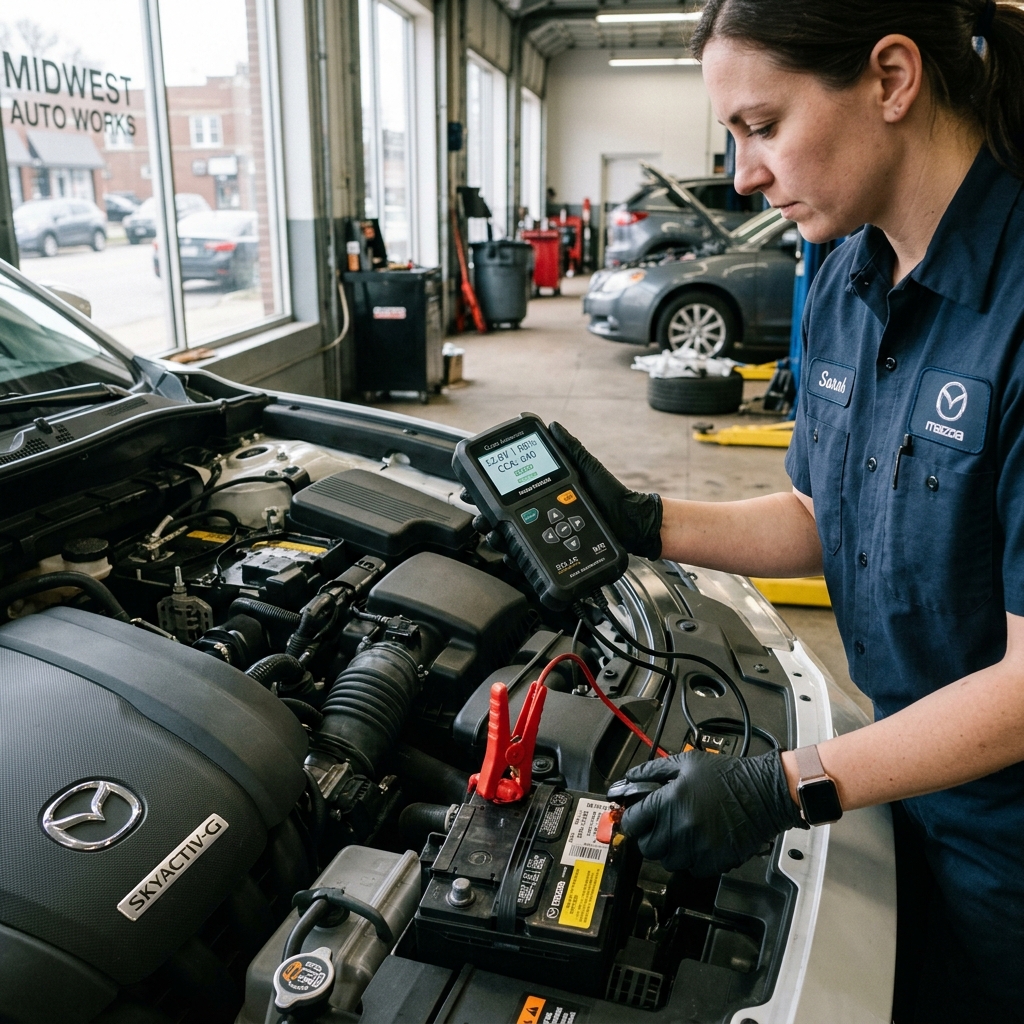
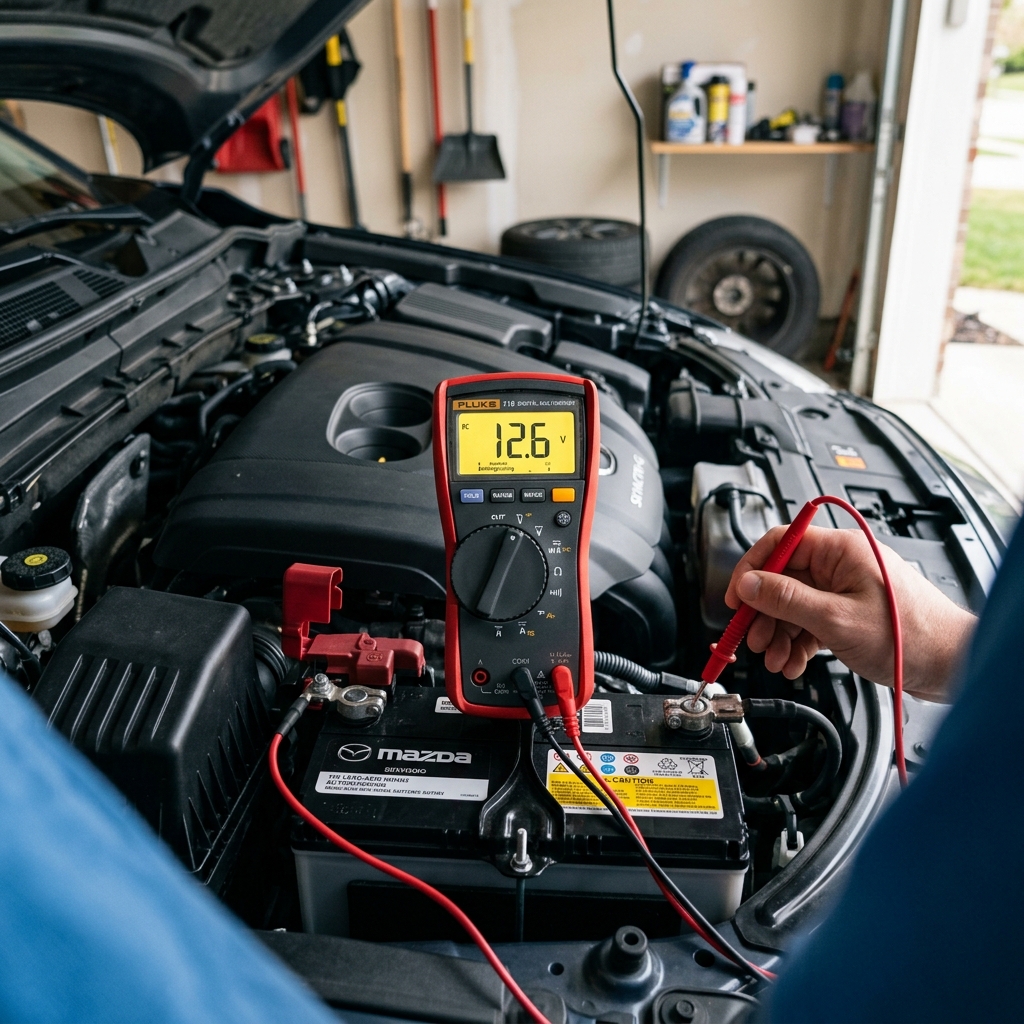
Inspecting your battery is a straightforward task that you can easily perform in your own driveway or garage. Begin by turning off your engine and opening the hood. Look closely at the battery terminals—the positive (+) and negative (-) metal posts. Are they covered in a white, blue, or green powdery substance? This is lead sulfate corrosion, which acts as an insulator, blocking the flow of electricity from the battery to your starter. If you see corrosion, you can clean it using a stiff wire brush and a mixture of baking soda and water, making sure to dry the area thoroughly afterward. Also, physically wiggle the battery to ensure the hold-down bracket is secure; a vibrating battery can experience internal structural damage over time. If you own a digital multimeter, you can easily test the actual voltage of your battery. Set your multimeter to the DC voltage setting (usually denoted by a straight line over a 'V'). Touch the red probe to the positive terminal and the black probe to the negative terminal. A healthy, fully charged battery should read between 12.6 and 12.8 volts when the engine is off. If your reading is 12.4 volts or lower, your battery is only at about a 75% charge and may need to be recharged or replaced. Any reading below 12.0 volts indicates a completely discharged battery that requires immediate professional evaluation.
What should I do first if I get a flat tire on a busy road?
A tire blowout can be an incredibly alarming experience, especially when traveling at high speeds on a busy thoroughfare like Route 59 or near the busy intersections of Plainfield. The moment you hear the distinct flopping sound of a flat tire or feel your vehicle pull violently to one side, your natural instinct might be to panic and slam on the brakes. However, this is the most dangerous reaction possible.
The absolute first step is to maintain physical control of your vehicle. Keep a firm, two-handed grip on the steering wheel to counteract any pulling sensations caused by the deflated tire. Gently ease your foot off the accelerator pedal—do not brake suddenly, as this can cause you to lose traction and spin out. Immediately turn on your hazard lights (four-way flashers) to signal to other drivers that you are experiencing an emergency and are slowing down. Scan the roadway ahead for a safe, flat, and visible area to pull off. It is far better to ruin a damaged tire by driving slowly on it for an extra quarter-mile than to put yourself in immediate danger by stopping in the middle of active traffic.
How do you safely pull over on a highway with a completely flat tire?
1. Signal & Transition
When a flat tire occurs on a major highway like I-55 or I-80, you must act deliberately. Signal your intention to move to the right shoulder. Gradually change lanes one by one, checking your mirrors and blind spots carefully. Avoid sudden steering inputs, which can upset the balance of your vehicle.
2. Maximize Space
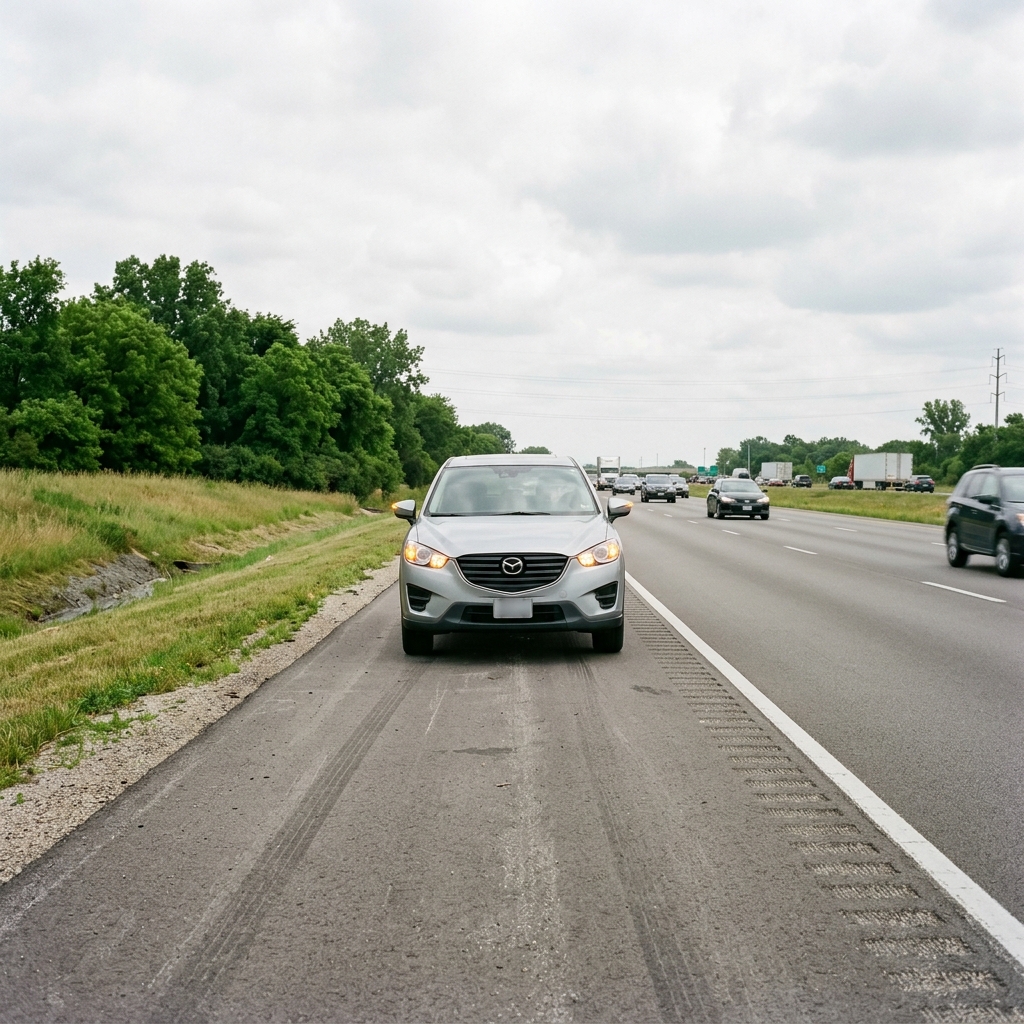
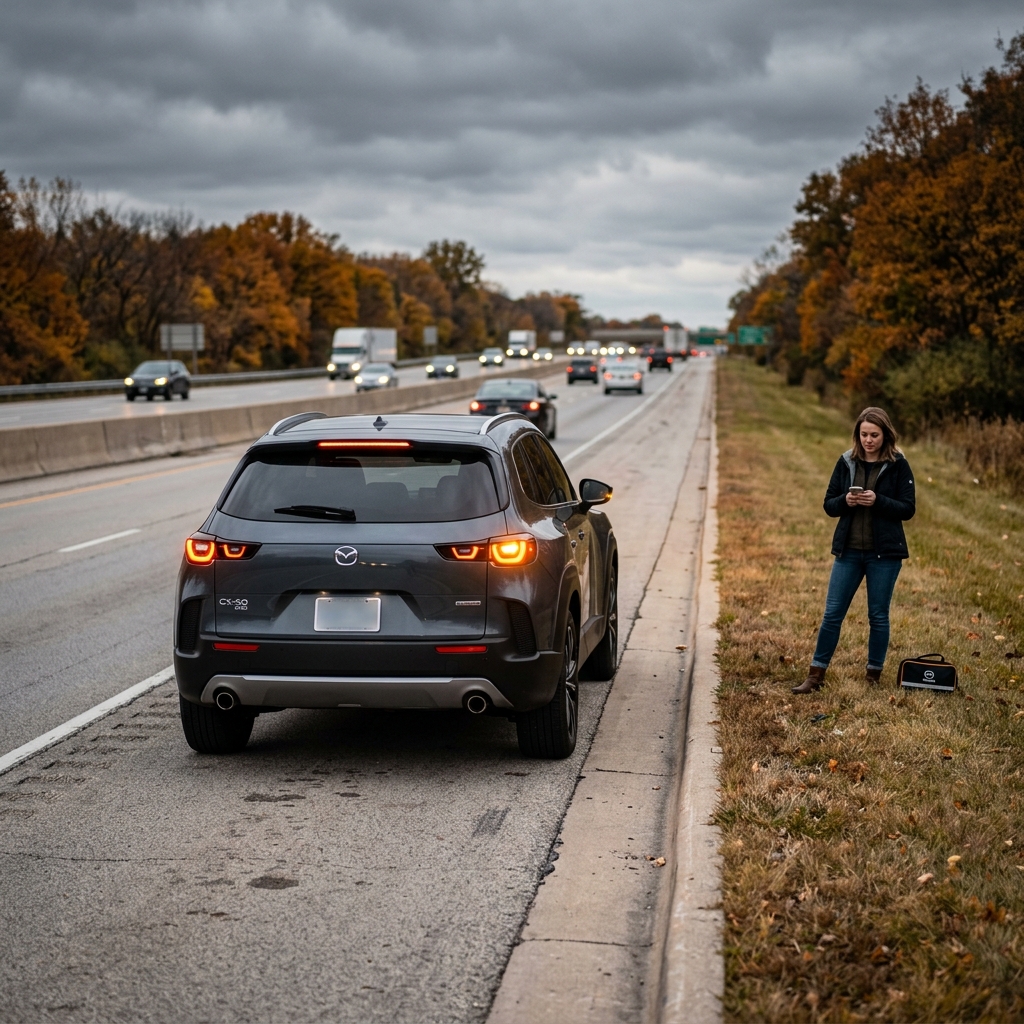
Once you reach the right side of the highway, look for a wide, level stretch of the shoulder. Pull as far away from the active driving lanes as possible to create a safe buffer zone between you and passing traffic. Keep your hazard lights flashing continuously to alert oncoming vehicles.
Park on solid, level ground. Engage your parking brake (emergency brake) immediately—this is crucial to prevent the car from rolling or shifting when you lift it. If you have passengers, keep them safely buckled inside the vehicle or move them well off the roadway behind a guardrail.
Step-by-Step Guide: How to Safely Change a Flat Tire on Shorewood and Joliet Roads
Changing a flat tire is a fundamental automotive skill that can save you hours of waiting for roadside assistance. Once your vehicle is safely parked on a flat surface away from traffic, locate your spare tire, jack, and lug wrench (usually stored under the trunk floorboard). Before lifting the car, use the lug wrench to loosen the lug nuts on the flat tire by turning them counterclockwise about one half-turn. Do not remove them completely yet; you just want to break their initial resistance while the tire is still firmly planted on the ground. Next, consult your vehicle's owner's manual to locate the designated jack points on your car's frame (typically reinforced metal notches or pinch welds located just behind the front wheels or in front of the rear wheels). Place the jack securely under this point and slowly raise the vehicle until the flat tire is approximately six inches off the ground. Never place any part of your body under the vehicle while it is supported only by a jack. Remove the loosened lug nuts completely, pull the flat tire off, and set it aside. Align the spare tire onto the bolts, and hand-tighten the lug nuts clockwise. Lower the vehicle slowly until the tire just touches the ground but does not bear full weight, then use the wrench to tighten the lug nuts as firmly as possible in a star or crisscross pattern to ensure even distribution of pressure. Finally, lower the car completely, remove the jack, and give the lug nuts one final check. If you find that your factory emergency kit is missing key tools or if you want to upgrade your equipment, you can easily order genuine parts directly through our dealership to ensure your trunk is fully prepared for any roadside scenario.
Under what conditions is a flat tire considered unrepairable?
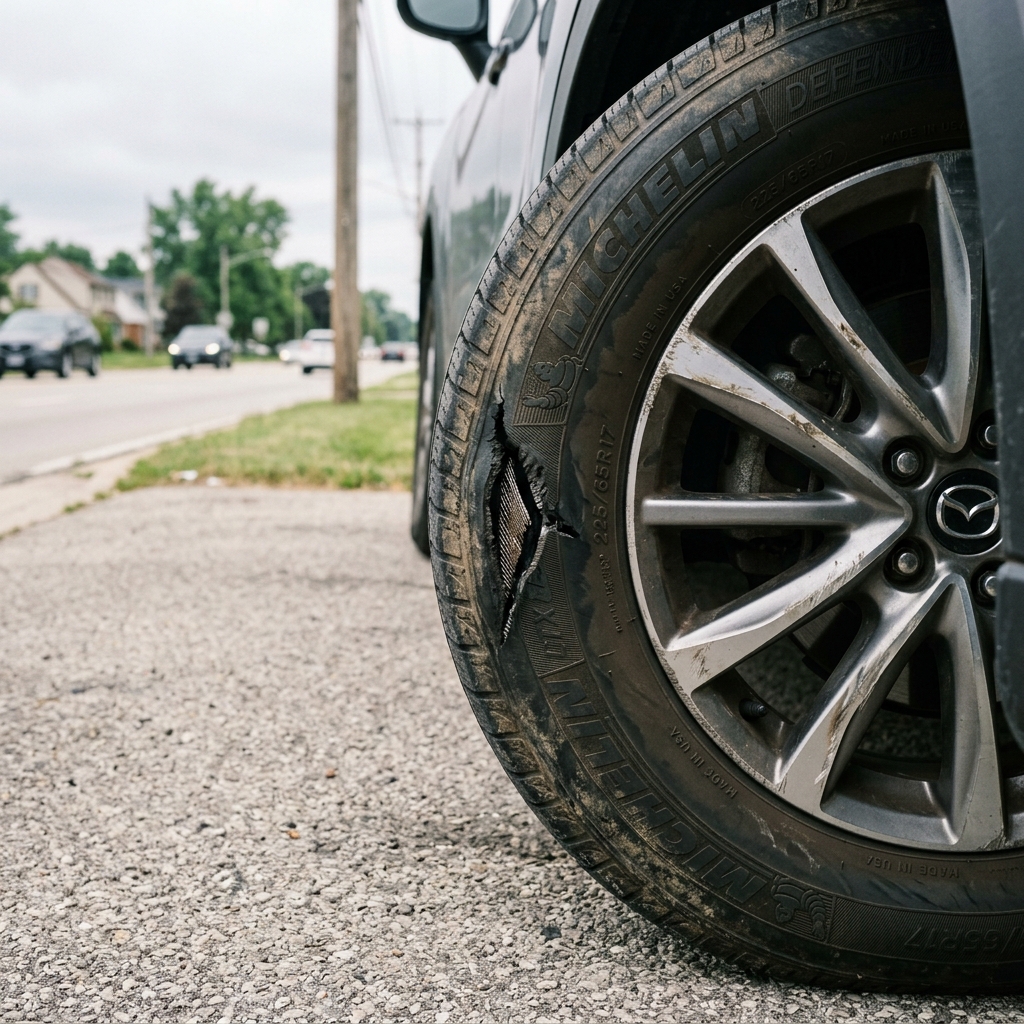
Not all flat tires can be saved with a simple patch. For safety reasons, professional tire repair standards are highly strict. If a puncture occurs in the tire's sidewall or along the outer shoulder block (the curved edge where the tread meets the sidewall), it cannot be repaired. The sidewall is subject to intense flexing and load-bearing forces; a patch in this area will inevitably fail, potentially leading to a catastrophic blowout at highway speeds. Additionally, any puncture larger than one-quarter of an inch (6mm) is too large to be safely sealed. If your tire was punctured by a large bolt, a piece of sharp metal, or road debris, replacement is your only safe option.
Furthermore, driving on a flat tire—even for a short distance—can cause irreparable structural damage. When a tire loses air pressure, the heavy rim of your wheel crushes the soft rubber sidewall against the hard pavement. This destroys the inner lining of the tire, leaving behind a telltale line of worn rubber dust inside the tire cavity. If you see this wear pattern or if the tire casing is creased, the tire is structurally compromised and must be replaced immediately.
Essential Roadside Emergency Kit Checklist for Will County Drivers
1. Power & Lighting
A well-equipped emergency kit should always include heavy-duty jumper cables (at least 10 to 12 feet long) or a portable lithium-ion jump starter pack, which allows you to jump-start your own car without needing another vehicle. Add a high-lumen LED flashlight with fresh batteries.
2. Safety & Visibility
To protect yourself while working on the side of a busy Joliet road, carry reflective warning triangles or LED road flares. Placing these several hundred feet behind your vehicle gives oncoming drivers ample warning. A high-visibility safety vest is also highly recommended.
3. Tools & Gear
Keep a reliable tire pressure gauge, a pair of heavy-duty work gloves, a basic socket set, adjustable pliers, and a small block of wood to place under your jack for stability on soft ground. Having these items on hand ensures you can handle minor repairs safely.
Should You Repair, Patch, or Replace Your Damaged Tire?
When dealing with tire damage, understanding the difference between temporary and permanent fixes is critical for your safety. A simple tire plug (which is inserted from the outside without removing the tire from the wheel) is considered a temporary emergency repair. It is designed to get you to the nearest service station, not to be driven on indefinitely. A proper, permanent repair requires a "plug-and-patch" combination, which involves dismounting the tire from the wheel to inspect the interior for damage, sealing the puncture from the inside, and filling the physical hole to prevent moisture from rusting the steel belts.
If replacement is necessary, you must consider your vehicle's drivetrain. For front-wheel-drive or rear-wheel-drive vehicles, replacing tires in pairs (both fronts or both rears) is standard practice to maintain balanced traction and handling. However, if you drive an All-Wheel Drive (AWD) vehicle, the rules are much stricter. AWD systems rely on matching tread depths across all four wheels to prevent strain on the center differential. If one tire is ruined, installing a single brand-new tire with full tread alongside three worn tires can trick the AWD system into thinking a wheel is slipping, leading to severe and expensive drivetrain damage. In these cases, you may need to replace all four tires or have the new tire shaved down to match the tread depth of the remaining three.
Preventative Maintenance: How Often Should You Check Your Battery and Tires?
The single best way to handle a roadside emergency is to prevent it from happening in the first place. Incorporating simple tire and battery checks into your monthly routine can save you thousands of dollars in repairs and hours of frustration on the side of the road. You should check your tire pressure at least once a month and before any long road trips. Always measure the pressure when the tires are "cold" (meaning the car has been parked for at least three hours), as driving warms up the air inside and increases the pressure reading. Keep an eye on tread wear by performing the classic "penny test" or checking the built-in wear bars. Tires should be rotated every 5,000 to 7,500 miles to ensure even tread wear and maximize their lifespan. As for your battery, have it professionally load-tested at least twice a year—ideally in the spring and fall—to ensure it is ready to handle the extreme seasonal temperature shifts of Illinois. Taking a few minutes to monitor these vital components ensures your vehicle remains safe and dependable. If you are due for an inspection, do not wait for a breakdown to occur. You can easily schedule an appointment with our team to keep your vehicle in prime operating condition.
Stay Safe on the Road: Visit Hawk Mazda in Plainfield for Battery Testing and Tire Replacements
Your safety on the Joliet and Plainfield roadways is our absolute highest priority. At Hawk Mazda, we are committed to keeping your vehicle operating at its absolute best, whether you need a quick battery diagnostic, a professional tire patch, or a brand-new set of high-performance tires. Our state-of-the-art service center is staffed by factory-certified technicians who know your vehicle inside and out, ensuring every repair is completed to the highest standards of safety and precision. Don't wait until you are stranded on the shoulder of I-55 or dealing with a dead battery in your driveway. Be proactive about your vehicle's health and safety. We invite you to visit us today for a comprehensive multi-point inspection. You can Get Directions to Hawk Mazda to find our convenient showroom and service center on Route 59, or simply Call us at (779) 260-6502 to speak directly with our friendly service advisors. We also offer a wide selection of replacement batteries and name-brand tires designed specifically for your vehicle. To help you save on your next visit, check out our current service and parts specials. Ready to take the next step? You can Schedule Your Service Today online or explore our Browse New Mazda Inventory and Browse Used Vehicle Inventory to find your next reliable ride. If you need financial assistance for major repairs or a new vehicle purchase, feel free to Apply For Financing Now or use our convenient tool to Get Your Trade-In Value. Let Hawk Mazda be your trusted partner in automotive safety and reliability!