Demystifying the Trade-In Process: How to Build Confidence Around Trading in a Vehicle

For many drivers throughout Plainfield, Joliet, and the wider Will County area, the prospect of trading in a vehicle can stir up a complex mix of anticipation and anxiety. It is completely natural to feel a bit protective of an asset you have owned, maintained, and relied upon for years. You might find yourself wondering:Am I going to get a fair price? Will the negotiation process be stressful? How do I even know what my car is actually worth in today's shifting summer market? These questions are incredibly common, but they do not have to stand in the way of a seamless upgrade. At Hawk Mazda, we believe that clarity is the ultimate antidote to trade-in anxiety. When you understand exactly how the valuation process works, what appraisers look for, and how to prepare your vehicle, you shift from a position of uncertainty to one of absolute confidence.

This comprehensive, expert-guided handbook is designed to pull back the curtain on the entire dealership trade-in lifecycle. Our goal is to empower you with the practical knowledge, local market insights, and step-by-step strategies necessary to approach your next transaction like a seasoned pro. Whether you are planning to transition out of a family SUV that has seen years of reliable service or looking to upgrade your daily commuter to a spirited new Mazda, preparation is the key that unlocks a stress-free, rewarding experience. By learning how to establish realistic expectations, organize your physical and digital paperwork, and present your car in its best possible light, you can completely transform what used to be a stressful chore into a highly satisfying financial victory.

As we move through the warm summer months of July 2026, the local automotive landscape in Illinois remains dynamic. Demand for quality pre-owned vehicles is high, making this an exceptionally advantageous window to maximize the value locked inside your current driveway. We invite you to read on, take notes, and discover how easy it can be to navigate this journey. If you ever have questions or want to speak with our dedicated team of friendly local experts, you can Call us at (779) 260-6502 or drop by our showroom floor in Plainfield to experience our transparent, guest-first philosophy firsthand.

A female dealership employee shaking hands with a male customer over a desk at Hawk Mazda. (Representative image for illustration purposes only. Actual vehicle may vary based on trim and configuration.)

What Factors Does a Dealer Look at When Valuing My Trade-In Vehicle?

To build complete confidence, you first need to understand the analytical framework that dealerships use to calculate a vehicle's wholesale and retail value. Appraisers do not pull numbers out of thin air; instead, they rely on a highly structured set of parameters tailored to the unique economic realities of the greater Will County region. By breaking these metrics down into clear, distinct categories, you can evaluate your own vehicle through the eyes of an appraiser and form an accurate picture of what to expect.

Core Vehicle Metrics

Mileage & Model Year: These are the foundational pillars of any valuation. Mileage serves as the primary odometer-based indicator of remaining mechanical lifespan. An average vehicle accumulates roughly 12,000 to 15,000 miles per year. If your car falls significantly below this curve, it typically commands a premium because it represents less wear and tear on key components like the engine, transmission, and suspension. Conversely, high-mileage vehicles face steeper depreciation curves but can still retain excellent utility value if supported by rigorous maintenance records.

Overall Physical Condition: This covers both the exterior sheet metal and the interior cabin. Appraisers examine the depth of the paint, looking for scratches, shopping cart dings, rust spots, or signs of poorly executed body repairs. On the inside, they check for upholstery tears, permanent stains, lingering odors (such as pet smells or tobacco smoke), and the functionality of electronic features like heated seats, infotainment systems, and climate control dials.

Mechanical & Market Forces

Mechanical Integrity & History: A vehicle that starts smoothly, idles quietly, shifts gears seamlessly, and brakes without pulsation is inherently more valuable. Dealers will perform a brief test drive to evaluate suspension noises, steering alignment, and engine responsiveness. Having a documented paper trail of timely oil changes, fluid flushes, brake jobs, and tire rotations proves that the vehicle has been cared for, drastically reducing the perceived risk of future mechanical failure.

Local Market Demand: This is where geography plays a massive role. In Plainfield and surrounding communities like Joliet, Naperville, and Shorewood, local climate and lifestyle preferences heavily shape demand. For example, all-wheel-drive (AWD) crossovers and robust SUVs are highly sought-after year-round to handle unpredictable midwestern winters, while fuel-efficient sedans remain popular for local commuters traveling along Interstate 55. High local demand directly translates into a stronger trade-in offer.

What Information About My Car Do Appraisers Verify During a Trade-In Evaluation?

An appraisal at Hawk Mazda is a thorough, systematic, and highly objective validation process. To keep our transactions fully transparent and ensure we offer top market value, our professional appraisers follow a standardized inspection protocol. They use advanced diagnostic tools and trusted industry databases to construct a comprehensive profile of your vehicle's physical state and historical record. Knowing exactly what happens during this deep-dive inspection will remove any mystery and help you feel entirely comfortable while our team works.
1. History Reports & Title

The first step is running a detailed vehicle history report, typically via CARFAX® or AutoCheck®. Appraisers verify the number of previous owners, state registration records, and whether the vehicle has ever been involved in reported accidents. They also verify the title status—checking for clean titles versus salvage, rebuilt, or flood-damaged designations—and confirm there are no active liens that would complicate the transfer of ownership.

2. Diagnostic & Recall Check

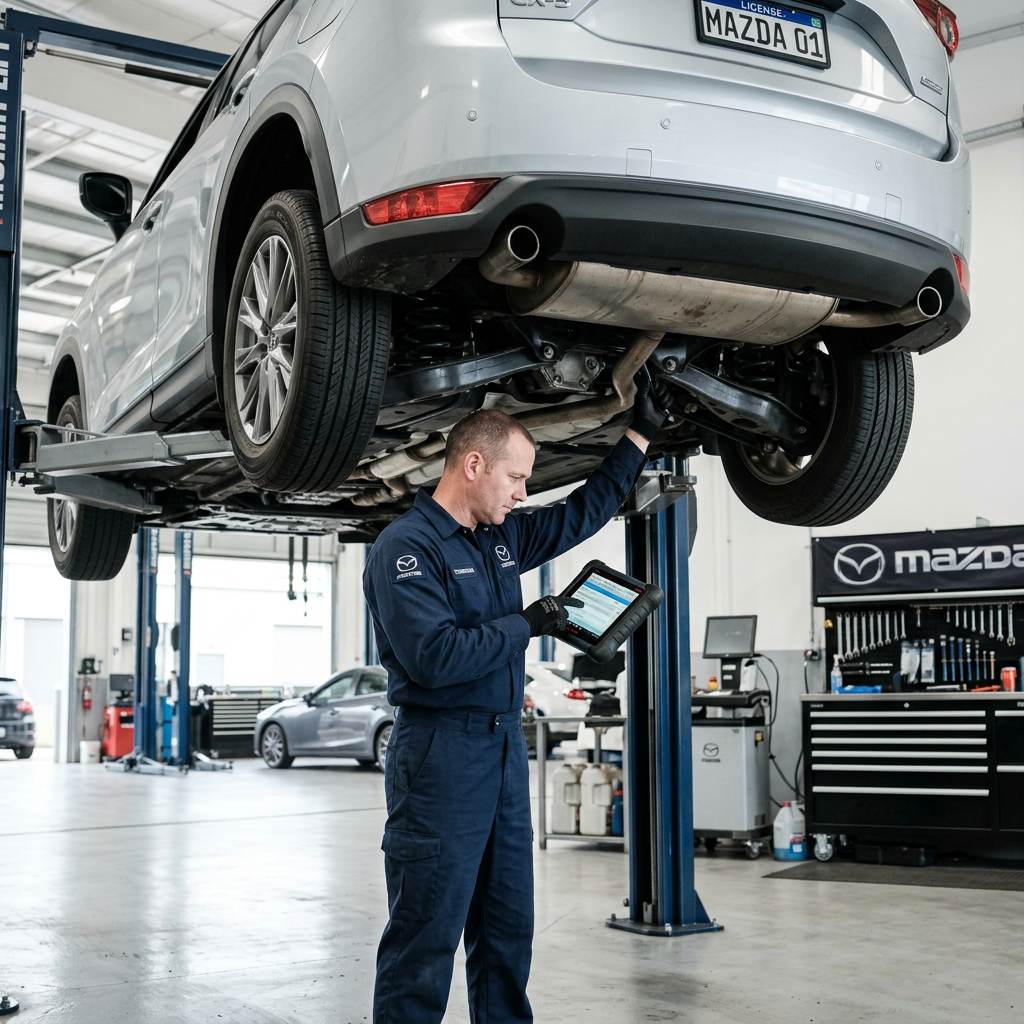
Next, our technicians perform an electronic scan of your vehicle’s onboard computer system (OBD-II) to check for active or pending trouble codes. This scan ensures that hidden engine, transmission, or emissions issues aren't lurking beneath a cleared dashboard warning light. We also cross-reference your Vehicle Identification Number (VIN) against national databases to identify any open manufacturer recalls that require completion.

3. Structural & Wear Review

Finally, the physical structure undergoes a hands-on review. The appraiser looks at body panel alignment to detect undocumented collision repairs, checks the frame or unibody for structural damage, and measures tire tread depth and brake pad thickness. Understanding these wear-and-tear details allows us to calculate an accurate reconditioning cost, which is the amount required to prepare the vehicle for its next owner.

A mechanic in blue overalls inspects the underside of a raised silver Mazda SUV using a diagnostic tablet. (Representative image for illustration purposes only. Actual vehicle may vary based on trim and configuration.)

Is It Better to Trade In My Car or Sell It Privately to Maximize Value?

This is perhaps the single most common dilemma faced by vehicle owners:Should I put in the work to sell my car myself, or does trading it in make more sense? While a private sale can sometimes yield a slightly higher raw transaction price on paper, it is crucial to look at the complete financial picture, including tax laws, time investment, and overall convenience. When you analyze the numbers holistically, you often discover that trading in your vehicle is not only vastly simpler but also surprisingly competitive from a financial standpoint.

The Reality of Private Selling

Selling a vehicle on your own is essentially taking on a temporary part-time job. It requires writing compelling listings, taking high-quality photographs, paying for advertisements on digital marketplaces, and fielding dozens of messages from low-ball offer makers and flaky buyers. You also must coordinate schedule-disrupting test drives and handle complex DMV title transfers, bill-of-sale forms, and secure payment verifications entirely on your own.

Furthermore, if you still owe money on your current auto loan, a private sale becomes incredibly complicated. Most private buyers are hesitant to hand over cash and wait weeks for your bank to release the physical title. At a dealership, we handle loan payoffs daily, streamlining the process instantly.

The Illinois State Tax Advantage

In the state of Illinois, trading in your vehicle provides a powerful, built-in tax incentive that can easily close the gap between a private sale offer and a dealer trade-in value. When you trade in your vehicle and purchase another one in the same transaction, you only pay state sales tax on the difference between the purchase price of your new vehicle and the value of your trade-in, rather than the full price of the new vehicle.

For example, if you purchase a new vehicle for $35,000 and receive a trade-in credit of $15,000, you are only taxed on $20,000. At a typical local sales tax rate, this trade-in tax credit instantly saves you over $1,000 in cold, hard cash. This massive tax savings, combined with avoiding reconditioning costs and advertising fees, makes trading in at Hawk Mazda a highly lucrative and stress-free financial decision.

What Are the Safety Risks of Selling a Car Privately?

A woman and an appraisal consultant discuss vehicle valuation reports at a desk inside a car dealership showroom. (Representative image for illustration purposes only. Actual vehicle may vary based on trim and configuration.)

Protecting Your Personal Security & Finances

While the financial trade-offs are important, personal safety is an equally critical factor that deserves careful consideration. Selling a vehicle privately requires you to invite complete strangers to your home, or meet them in public parking lots across Plainfield, Naperville, or Joliet. Allowing unknown individuals to take your vehicle for test drives introduces significant personal safety, liability, and property damage risks that are hard to mitigate on your own.

Furthermore, financial fraud has become increasingly sophisticated. Private sellers frequently encounter forged cashier's checks, fraudulent digital payment transfers, or elaborate escrow scams designed to siphon away your car without giving you legitimate funds. Verifying a buyer's identity and checking that their payment is fully cleared can take days, leaving you exposed to severe financial vulnerability during the transition.

When you choose to transact with an established community institution like Hawk Mazda, these security, legal, and financial worries disappear entirely. Our clean, secure, and professional dealership environment provides total peace of mind. We handle the paperwork, verify the funds, assume all liability, and pay off any existing loans instantly and securely, allowing you to walk away with total confidence in your safety and financial security.

Which Minor Repairs Are Worth Doing Before I Trade in My Vehicle?

A common misconception among car owners is that they need to make their vehicle absolutely flawless before bringing it to the dealership. In reality, spending thousands of dollars on major mechanical overhauls or professional bodywork rarely yields a positive return on investment (ROI). Because dealerships have in-house service departments and buy parts at wholesale prices, we can perform major repairs far more cost-effectively than an individual can. However, performing a few low-cost, high-impact aesthetic updates is a brilliant way to elevate your car's curb appeal and maximize your final trade-in value.

Smart, Low-Cost DIY Fixes

Focus your efforts on high-visibility, low-cost improvements. Replace worn, streaking windshield wiper blades, and top off your basic fluids like windshield washer fluid. If a headlight or taillight bulb is burned out, replacing it is a quick, inexpensive fix that prevents the appraiser from worrying about potential electrical gremlins. Addressing these tiny details shows that the car has been loved and maintained.

Curb Appeal & Detailing

First impressions are incredibly powerful. Give your vehicle a thorough wash, vacuum the carpets, and wipe down the dashboard and console surfaces to remove dust and fingerprints. Removing personal items, trash, and clutter instantly makes the cabin feel larger, cleaner, and more appealing. A fresh-smelling, tidy interior makes it easy for the appraiser to picture the vehicle on our pre-owned lot.

Repairs to Avoid Completely

Do not spend money replacing major components like worn tires, grinding brake rotors, or cracked windshields. Additionally, avoid paying for professional body shop paint correction or dent removal services. Because our factory-certified service center handles these exact reconditioning tasks at internal dealer cost, we will deduct far less from your trade-in offer than you would spend paying retail prices at an independent shop.

How Does Setting Clear Trade-In Goals Before Visiting the Dealer Help My Confidence?

Confidence is not a vague feeling; it is the natural byproduct of preparation and clear goal-setting. When you walk through our doors in Plainfield with a well-defined plan, you remove the element of surprise and replace it with structure. Setting goals begins with doing a small amount of homework beforehand. By researching online valuation ranges for your specific year, make, model, and trim, you establish a realistic benchmark of what your vehicle is worth in the current July 2026 market. This keeps your expectations grounded in real-world data and prevents any feelings of uncertainty.

In addition to knowing your car's estimated value, you should outline your financial objectives for the entire transaction. Determine whether you want to apply your trade-in equity directly as a substantial down payment on a new vehicle, use it to lower your monthly financing payments, or simply walk away with a check. Understanding how your trade-in fits into your overall budget helps you make clear, stress-free decisions when discussing options with our finance team.

At Hawk Mazda, we love working with prepared guests. Having clear goals fosters an atmosphere of collaborative partnership rather than stressful negotiation. When we are both on the same page, the conversation flows naturally, decisions are made with absolute clarity, and you remain in complete control of your car-buying journey from start to finish. If you want to get a head start on your financial planning, we highly recommend you Apply For Financing Now to establish a clear picture of your purchasing power before you even step foot in our showroom.

A woman working on a laptop displaying a car trade-in budget spreadsheet at a wooden dining table. (Representative image for illustration purposes only. Actual vehicle may vary based on trim and configuration.)

Why Is It Recommended to Keep the Trade-In and Purchase Price Negotiations Separate?

The Logic of Two Distinct Transactions

To maintain complete financial clarity and transparency, industry experts always recommend treating your vehicle trade-in and your new vehicle purchase as two separate transactions. When you bundle the two deals together prematurely, the math can quickly become confusing. Combining trade-in allowances, interest rates, monthly payments, and vehicle purchase prices into a single lump sum makes it difficult to evaluate the individual merits of each component.

By isolating the trade-in value first, you establish a solid, stand-alone cash figure for your asset. Once that number is finalized, you can transition with total confidence to discussing the purchase price of your next vehicle, applying your trade-in equity exactly like a cash down payment.

How Hawk Mazda Keeps It Simple

At Hawk Mazda, we make transparency our primary mission. We do not engage in complex financial shell games or high-pressure math. Our team presents clear, itemized breakdowns of every transaction component, keeping your trade-in value, the purchase price of your new Mazda, and your financing options completely distinct and easy to understand.

Whether you are interested in a sophisticated new crossover or exploring our curated selection of high-quality pre-owned vehicles, we encourage you to Browse Used Vehicle Inventory and find the perfect match for your lifestyle, knowing that we will handle your trade-in with total honesty and clear, straightforward math.

The Step-by-Step Checklist for Your Plainfield Trade-In Day

When the day arrives to trade in your vehicle at Hawk Mazda, being fully organized is the ultimate way to feel relaxed and in control. To ensure your visit is incredibly efficient and enjoyable, we have compiled the definitive checklist of physical items, documents, and preparation steps you should complete before heading to our dealership on Route 59. Having these items organized and ready to go will streamline your paperwork and get you behind the wheel of your next vehicle in record time.
1. Ownership Paperwork

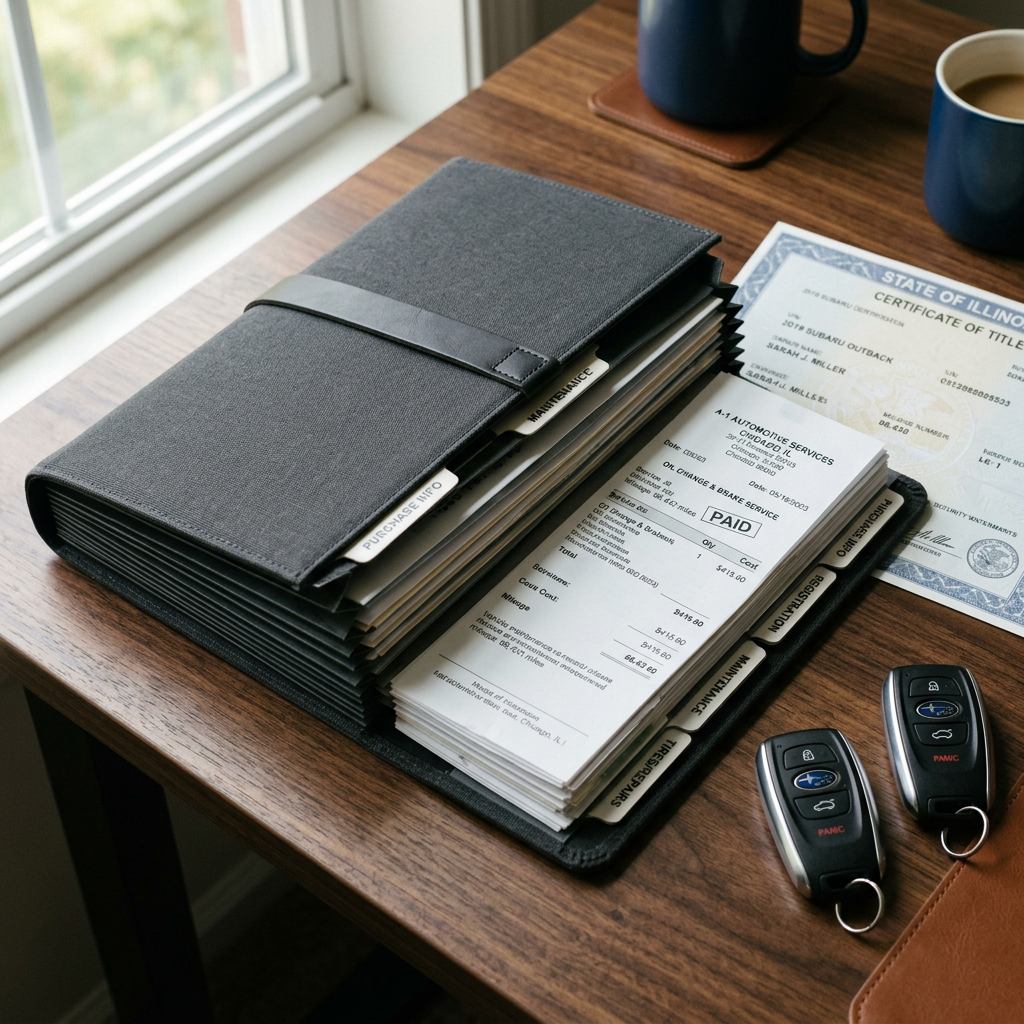
  • Vehicle Title (Pink Slip): If you own your car outright, bring the physical title. Make sure all listed owners are present to sign.

  • Loan Payoff Info: If you have an active loan, bring your current statement containing your account number and lender contact info.

  • Valid Registration: Ensure your state registration is current.

  • Driver's License: A valid photo ID for all parties on the title.

2. Keys & Accessories

  • All Key Fobs & Keys: Modern key fobs are expensive to replace. Providing all sets (including valet keys) boosts value.

  • Owner's Manuals: Keep the original literature in the glove compartment.

  • Navigation SD Cards: Ensure any proprietary map software chips remain installed.

  • Removable Accessories: Bring cargo covers, headrests, or floor mats that belong to the car.

3. Maintenance & Prep

  • Service Records: Bring a folder of oil changes, brake work, and major service receipts to verify vehicle care history.

  • Personal Detrash: Remove parking passes, sunglasses, charging cords, and garage door openers.

  • System Reset: Clear your personal data, saved home locations, and paired Bluetooth phones from the infotainment system.

An open dark gray organizer folder with labeled tabs on a wooden table next to car keys and a vehicle title. (Representative image for illustration purposes only. Actual vehicle may vary based on trim and configuration.)

Get an Instant, Transparent Trade-In Offer in Plainfield Today

Now that you are equipped with expert-level knowledge, actionable prep tips, and a clear understanding of the valuation process, you are fully prepared to take the next step with absolute confidence. At Hawk Mazda, we pride ourselves on delivering a transparent, zero-pressure dealership experience that honors your time, respects your vehicle's value, and keeps your financial goals front and center. You don't have to navigate this process alone—our friendly, non-commissioned product specialists are here to guide you every step of the way.

Whether you are ready to drive home in a sophisticated new vehicle, want to explore our incredible pre-owned inventory, or simply want to convert your current car into cash, we make the entire process fast and incredibly rewarding. You can use our easy online advisor to Get Your Trade-In Value in just a few clicks, or drop by our showroom on Route 59 today. We look forward to welcome you to the Hawk Mazda family and showing you just how stress-free and rewarding a dealership trade-in can be!


Subscribe to Our Blog

Popular Tags

Technology