

How Often to Change Wiper Blades for Safe Driving in Plainfield and Joliet
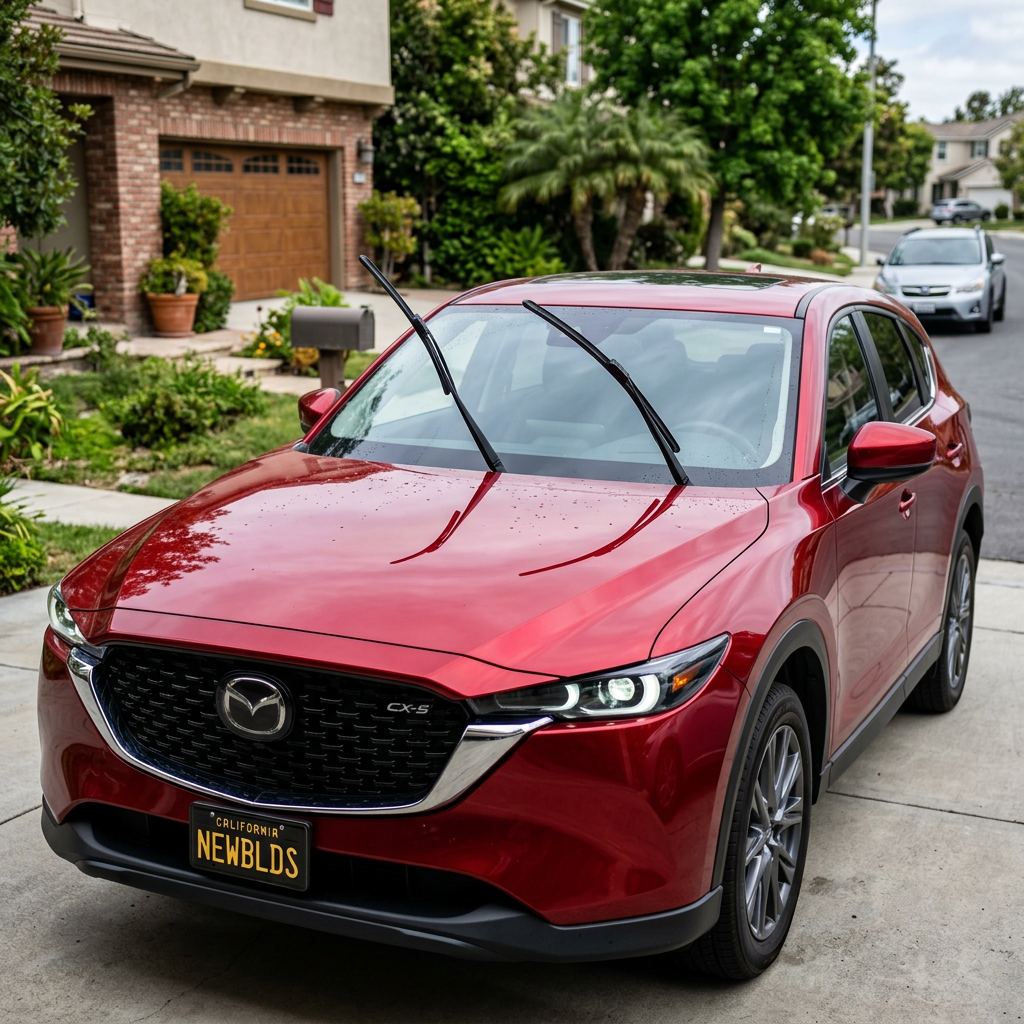
Front view of a red Mazda CX-5 SUV with raised windshield wipers parked in a suburban driveway.

When we think about automotive safety, our minds naturally drift to high-tech driver-assist technologies, advanced braking systems, and robust structural designs. However, one of the most critical safety components on your vehicle is also one of the simplest: your windshield wiper blades. Operating a vehicle in the northern Illinois region, particularly around Plainfield, Joliet, and the wider Chicagoland area, requires total preparedness for volatile, rapidly changing weather conditions. A sudden downpour along Route 59 or a blinding summer thunderstorm can instantly compromise your forward vision, turning a routine trip into a high-stress scenario. Knowing exactly how often to change wiper blades is not just a routine maintenance chore; it is an essential protocol for ensuring your safety and the safety of everyone sharing the road with you.

As a general rule of thumb, automotive experts and manufacturers recommend replacing your windshield wiper blades every6 to 12 months. However, this timeframe is not set in stone. Depending on your driving habits, where your vehicle is parked, and the specific environmental elements your car faces, you might need a replacement much sooner. If you wait until you are caught in a torrential rainstorm to realize your wipers are failing, you have waited too long. In northern Illinois, our dramatic seasonal shifts accelerate the aging process of the rubber elements. This is why having a trusted local partner is invaluable. At Hawk Mazda, conveniently located in Plainfield, we serve as your premier community resource for maintaining peak vehicle visibility and performance, offering both top-tier OEM parts and factory-trained technicians to keep your field of view perfectly clear.

If you are unsure of your current blades' condition, we invite you toSchedule Your Service Todayfor a quick visual inspection. Our dedicated team can quickly analyze your blades, check for signs of dry rot, structural warping, or tension loss, and install high-quality replacements in minutes. Let us explore the science behind wiper blade degradation, how our specific local climate plays a massive role, and how you can spot the warning signs before your visibility is compromised.

How Does Climate Affect Wiper Blade Longevity in Northeastern Illinois?

The climate of northeastern Illinois is notorious for its extreme seasonal swings. From freezing, sub-zero winter blasts to hot, intensely humid summer days, our weather places immense physical stress on your vehicle’s exterior components. The squeegee portion of your wiper blade is made of organic rubber or a synthetic compound. Both materials are highly susceptible to thermal expansion and contraction. During the brutal winters in Plainfield and Joliet, freezing temperatures cause the rubber to stiffen, lose its flexibility, and become brittle. When you operate your wipers over frost, ice, or packed snow on the windshield, the fragile edge of the blade easily tears, chips, or cracks. Additionally, the heavy application of road salt and chemical de-icers on our local roads creates a corrosive film that rapidly eats away at the rubber, breaking down its structural integrity at a molecular level.

A blue Mazda SUV drives through snowy, slushy Chicago streets on a cold winter day.

Conversely, the intense heat and UV rays of our Chicagoland summers present an entirely different set of challenges. When your vehicle sits parked outside under the baking sun, windshield temperatures can soar well past 140 degrees Fahrenheit. This extreme heat literally bakes the rubber, drying out its essential oils and causing it to warp, crack, and lose the uniform contour necessary to clean the glass surface. The combination of intense summer sun, airborne pollen, and sudden heavy rainstorms creates a cyclical pattern of degradation that can render even a brand-new set of traditional rubber blades useless in a single season.

The Dangerous Reality: How Does Delaying Wiper Replacement Affect My Safety?

Reduced Wet-Weather Visibility

When heavy rain strikes during your daily commute along I-55, worn-out wipers cannot clear water quickly enough. This results in a continuous sheet of water over your windshield, warping your depth perception, hiding road markings, and dangerously increasing your reaction time to sudden braking from the vehicles ahead of you.

Severe Nighttime Glare

Worn-out blades leave micro-streaks of grease, dirt, and moisture across the glass. At night, oncoming headlights and street lamps catch these streaks, refracting light in multiple directions. This creates a blinding, starburst glare that can completely obscure obstacles, pedestrians, or sudden lane changes.

Permanent Glass Damage

When the rubber element disintegrates entirely, the plastic or metal framework of the wiper arm is exposed. Operating your wipers in this state allows these hard materials to scrape directly against the glass. Over time, this carves deep, permanent arc-shaped scratches into your windshield, requiring an expensive full glass replacement.

Signs It’s Time for a Change: How Often to Change Wiper Blades on Your Vehicle

You don't need to be a professional mechanic to identify when your windshield wipers are approaching the end of their functional lifespan. Your vehicle constantly communicates its needs through physical signs and auditory cues. To determine if you are overdue for a replacement, perform a quick physical inspection of your blades. Lift each arm away from the glass and run your finger gently along the rubber squeegee. If you feel cracks, chips, or a hard, inflexible texture, the material has degraded. Watch closely for these common symptoms during operation:

Streaking:If your wipers leave bands of water or a hazy film across the windshield, the rubber has hardened or split.
Skipping & Chattering:When the blade vibrates or bounces across the glass instead of sliding smoothly, it indicates structural warping from heat or continuous UV exposure.
Squeaking or Screeching:A persistent, annoying noise as the blade moves is a clear sign that the rubber has lost its natural lubrication and flexibility.
Split or Peeling Rubber:If you see sections of the rubber strip separating from the metal frame, the blade can no longer apply even pressure to clear the glass.

Recognizing these warning signs early can save you from a dangerous situation during a summer rainstorm on your commute home. Fortunately, addressing these issues is incredibly fast and hassle-free. If you notice any of these symptoms while driving near Joliet or Naperville, don't wait for the next storm to catch you off guard. Bring your vehicle directly to our state-of-the-art service department at Hawk Mazda. Our skilled technicians can perform a comprehensive visibility check, replacing your old, worn-out wipers with original equipment manufacturer (OEM) blades that are designed specifically for your vehicle's windshield curvature and arm design.Schedule Your Service Todayonline to guarantee your vehicle is ready for whatever Mother Nature throws your way.

Should You Replace Both Wiper Blades at the Same Time?
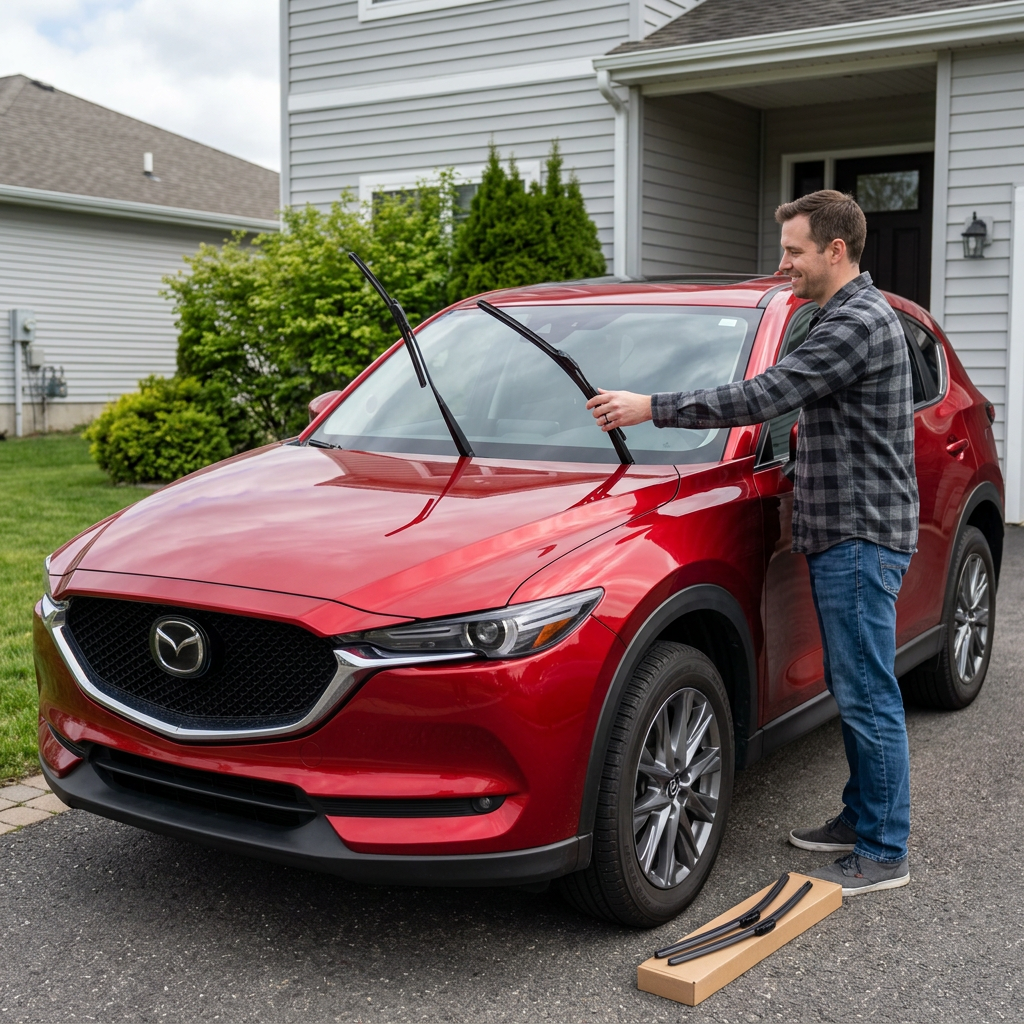
Why Symmetrical Wear Matters

A common question among vehicle owners is whether it is truly necessary to replace both front wiper blades simultaneously, especially if only one seems to be streaking. The short answer is yes. Wiper blades are exposed to the exact same environmental hazards, UV radiation, and freezing temperatures. If one blade has degraded to the point of failure, the other is not far behind. Replacing only one blade results in uneven wear and inconsistent visibility across your windshield, which can distract your eyes as they transition between a clear driver's side and a smudged passenger's side.

A man replacing the windshield wipers on a red Mazda SUV parked in a driveway.

By replacing both blades together, you ensure a uniform field of view and save yourself an extra trip to the service center later in the season.

Don't Forget the Rear Wiper

For drivers of versatile Mazda SUVs and hatchbacks—such as the CX-5, CX-30, or CX-90—it is equally important not to overlook the rear window wiper blade. Rear wipers are frequently subjected to intense turbulence, road grime, kick-up dust, and salt spray from the highway. While they may not be used as frequently as the front wipers, they deteriorate just as quickly due to constant exposure. Replacing your rear wiper blade at the same time as your front set guarantees complete 360-degree visibility for safer parking, reversing, and monitoring highway traffic behind you.

Silicone vs. Rubber: How Do Silicone Wiper Blades Compare to Rubber Blades?

When shopping for replacement wiper blades, you will generally be faced with two primary materials: traditional organic rubber and modern synthetic silicone. Traditional rubber blades have been the industry standard for decades. They offer good initial performance and are highly cost-effective in the short term. However, organic rubber is highly sensitive to environmental factors. Exposure to summer heat, winter cold, and UV rays causes organic rubber to degrade, lose its flexibility, and crack relatively quickly, typically requiring replacement every six months.

On the other hand, premium synthetic silicone wiper blades represent a major evolutionary step in automotive visibility technology. Silicone is naturally much more resilient to extreme temperatures, remaining highly flexible in sub-zero winter temperatures and resisting warping in the intense summer sun. Additionally, as silicone blades wipe across your windshield, they deposit a micro-thin, invisible hydrophobic layer on the glass. This layer acts as a continuous water-repellent treatment, causing rainwater to bead up and run off the windshield naturally, often allowing you to see clearly even before the wiper completes its stroke. While silicone blades carry a higher upfront cost, their lifespan is typically double that of traditional rubber.

Feature / Metric

Traditional Rubber

Premium Silicone

Average Lifespan

6 to 12 Months

12 to 24+ Months

Extreme Heat Resistance

Moderate (prone to cracking)

Excellent (retains shape)

Sub-Zero Performance

Stiffens & skips

Remains flexible & quiet

Water Repellency

None

Hydrophobic coating effect

Relative Cost

Budget-friendly upfront

Higher initial investment

What Are the Benefits of Silicone Wiper Blades for Naperville Commuters?

Red Mazda SUV driving down a downtown street lined with shops and American flags in Naperville, Illinois.

For commuters traveling daily from Plainfield, Joliet, or Naperville into the heart of Chicago or across the outer suburbs, driving along busy corridors like Interstate 55 and Interstate 88 presents unique visibility challenges. Highway driving at speeds of 60 to 70 mph intensifies the physical impact of weather. In a heavy downpour, rainwater accumulates on the windshield at an accelerated rate, and the wind pressure can lift flimsy, worn-out wipers away from the glass. Premium silicone wiper blades are engineered with aerodynamic designs and robust tension systems that prevent wind lift, keeping the squeegee in constant, firm contact with the glass. This aerodynamic stability is critical for maintaining an unobstructed view of brake lights and lane changes in high-density highway traffic.

Furthermore, the long-term benefits of silicone blades make them an exceptionally smart investment for high-mileage drivers. Because silicone is highly resistant to ozone and UV radiation, these blades do not degrade during the long hours your vehicle sits in open commuter parking lots. The continuous hydrophobic coating they apply means that during light mist or drizzle—common in the shoulder seasons—you may not even need to run your wipers on high speed, reducing mechanical wear on your wiper motor and linkages. For Naperville commuters who value reliability, peace of mind, and long-term cost savings, upgrading to silicone blades during your next visit to Hawk Mazda is an easy decision that pays safety dividends on every single trip.

Cost Analysis: How Much Does It Cost to Replace Windshield Wiper Blades?

Maintaining safe visibility is remarkably affordable compared to almost any other automotive repair. The cost of replacing your windshield wiper blades varies based on the type of blade you choose and whether you handle the installation yourself or have a certified technician do it for you. Standard organic rubber blades typically cost between $15 and $25 per blade. While this is highly budget-friendly, remember that you will likely need to replace them twice a year in our northern Illinois climate, bringing your annual parts cost to around $60 to $100. Premium beam-style or silicone blades range from $30 to $50 per blade. However, because they last up to two times longer, your annual cost remains roughly equivalent while you enjoy superior performance and peace of mind throughout the year.

At Hawk Mazda, we strongly emphasize the value of using original equipment manufacturer (OEM) wiper blades. Cheap aftermarket blades found at big-box retailers often utilize universal adapters that can fit loosely, leading to vibrations, noise, or even detaching at highway speeds. Mazda OEM wiper blades are engineered specifically to match the precise curvature of your Mazda’s windshield and windshield-washer nozzles, ensuring a streak-free sweep every time. Our parts department carries a complete inventory of genuine Mazda wiper blades and assemblies. If you are ready to secure the perfect fit for your vehicle, you can quicklyOrder Genuine Mazda Partsonline, or stop by our service bay to have them professionally installed in minutes.

Can I Save Money by Replacing Just the Rubber Refills?

What Are Rubber Refills?

In decades past, it was common practice to replace only the rubber insert (refill) of the wiper blade while keeping the existing metal framework. This was a highly cost-effective way to refresh your wipers. However, modern automotive design has shifted. Today's vehicles utilize advanced 'beam-style' blades that integrate the rubber directly into a tensioned, aerodynamic frame to provide uniform pressure across curved, modern windshields.

Structural Wear & Tear

Even if you can find rubber refills that fit your wiper frame, the frame itself is subject to wear. Over time, the internal tension springs lose their strength, and the plastic joints can degrade or crack. Simply replacing the rubber element does not address a weakened frame. A worn-out frame will fail to press the new rubber firmly against the windshield, leading to immediate streaking and poor performance.

Installation & Reliability

Installing rubber refills can be an incredibly tedious, frustrating process that often requires small tools to slide the rubber into tiny metal claws. If the refill is not locked in perfectly, it can slip out during operation, allowing the bare metal arm to scratch your glass. Replacing the entire blade assembly is substantially safer, much easier, and far more reliable in the long run.

Step-by-Step Guide: How Do I Put My Wipers in 'Service Mode'?
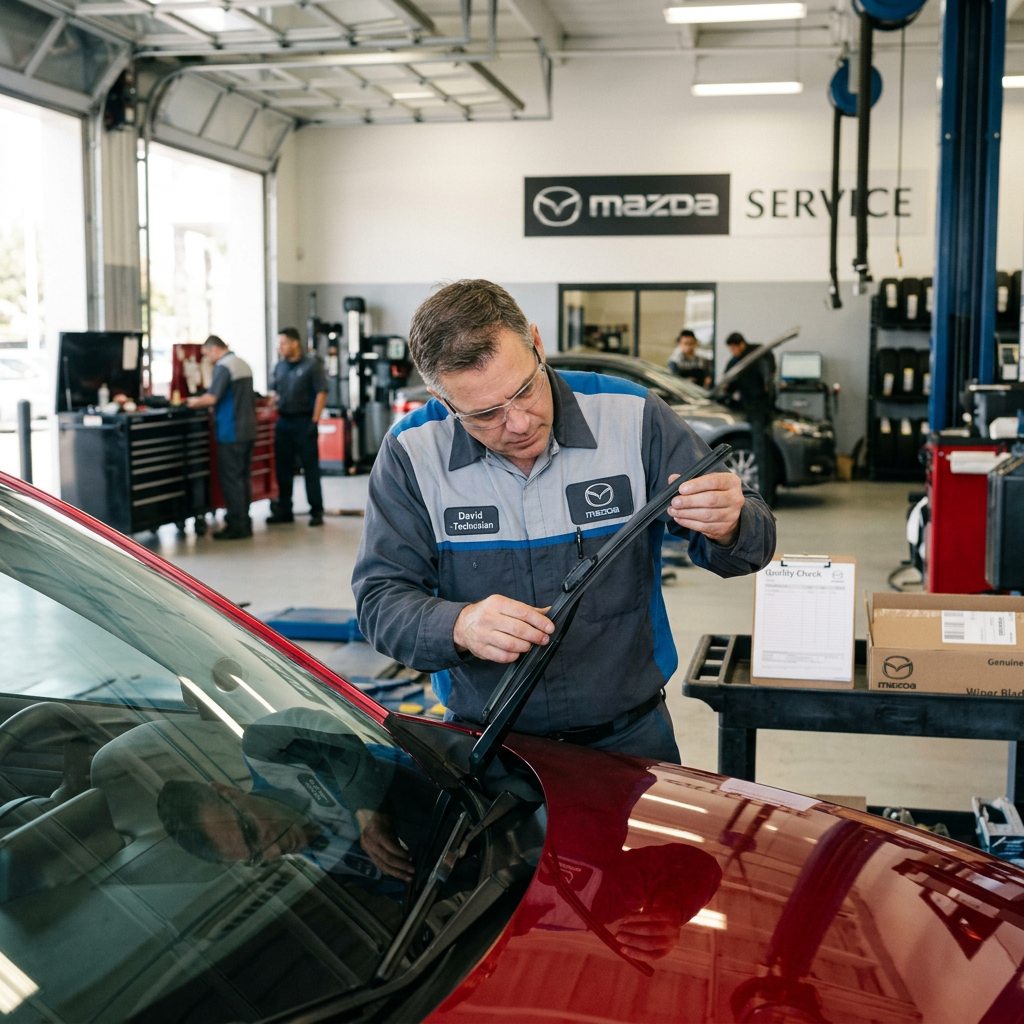
A Mazda service technician inspecting a windshield wiper blade on a red car in a service bay.

On many modern vehicles—including almost all current Mazda models—the windshield wipers are tucked neatly beneath the rear edge of the hood when not in use. This clever design improves aerodynamics, reduces wind noise at highway speeds, and protects the wipers from direct sunlight. However, this means you cannot simply lift the wiper arms away from the glass to inspect or replace the blades without scraping and damaging the painted edge of your hood. To safely raise the wiper arms, you must put your vehicle into 'Service Mode.'

Here is a step-by-step guide to activating Service Mode on your Mazda:
1. Ensure your vehicle is parked on a flat surface and the ignition is completely turnedOFF.
2. Turn the ignitionON(press the Start/Stop button twice without stepping on the brake pedal) to activate the electronics, then turn itOFFagain.
3. Within 30 seconds of turning the ignition off, push the wiper control lever upward (to the 'MIST' position) and hold it down for approximately two seconds.
4. The wiper arms will automatically sweep upward and stop vertically on your windshield, safely clear of the hood edge.
5. You can now easily lift the wiper arms away from the glass to inspect, clean, or replace the blades. Once finished, lay the arms back flat against the glass, turn the ignition on, and tap the wiper control lever once to return them to their hidden position.

If you ever feel uncomfortable performing this procedure or worry about damaging your hood's paint, don't worry. The factory-trained specialists at Hawk Mazda perform this task daily. We can quickly lift your wipers, inspect the squeegee material, and swap out your blades during your routine oil change or tire rotation.

Choosing and Installing the Right Blades at Hawk Mazda

Finding Your Exact Fit

Windshield wipers are not one-size-fits-all. Your vehicle requires a specific driver-side length, passenger-side length, and connector style. Using the wrong size can cause the blades to collide during operation or leave large, uncleared patches on your windshield, severely limiting your vision.

The Advantage of OEM Parts

When you purchase genuine Mazda parts from Hawk Mazda, you receive components engineered to match your vehicle's specifications. OEM blades are constructed with high-grade materials that provide consistent, whisper-quiet performance, and they click directly onto your wiper arms with zero modification.

Stress-Free Professional Service

Instead of wrestling with complicated multi-adapter plastic clips in a dark garage, let our factory-trained technicians handle the installation for you. We can quickly size, fit, and test your new blades during any routine service visit, ensuring perfect operation before you head back onto Route 59.

Schedule Your Wiper Blade Replacement and Service in Plainfield Today

A Hawk Mazda dealership at night with cars on display in the showroom and parking lot.

Don't wait for a sudden summer thunderstorm to remind you that your windshield wipers are past their prime. Clear, unobstructed visibility is one of the most fundamental requirements for safe driving, especially when navigating heavy traffic on the highways and local roads around Plainfield, Joliet, and Naperville. At Hawk Mazda, we are committed to helping you maintain your vehicle in peak operating condition. Whether you need a simple set of replacement blades, a comprehensive multi-point inspection, or more complex vehicle maintenance, our expert service team is here to assist. You can easilySchedule Your Service Todayonline to choose a time that fits perfectly into your busy schedule.

While you are visiting our dealership, feel free to explore our other community automotive resources. If you are considering upgrading your vehicle entirely, you canBrowse New Mazda Inventoryor check out our high-quality pre-owned options when youBrowse Used Vehicle Inventory. Curious about what your current vehicle is worth? Use our online tool toGet Your Trade-In Valuein seconds. Our finance department is also standing by to help you take the next step—you can easilyApply For Financing Nowfrom the comfort of your home.

Ready to visit us in person? We are conveniently located at 2421 S Route 59 in Plainfield, IL 60586. Get your turn-by-turn directions by clicking here:Get Directions to Hawk Mazda. Have a quick question about wiper sizes, availability, or pricing?Call us at (779) 260-6502to speak directly with one of our friendly service coordinators. We look forward to serving you and keeping your driving experience clear, safe, and enjoyable all year round.


Subscribe to Our Blog

Popular Tags

Technology