What Is Cold Cranking Amps (CCA) and Why It Matters in Winter
When the bitter Midwestern winter settles over Plainfield, Illinois, few automotive components face a tougher test than your vehicle's battery. As temperatures plummet toward zero degrees Fahrenheit, drivers across Will County turn their keys or push their start buttons expecting an immediate, lively engine roar. Yet winter morning start-up failures remain one of the most common breakdown causes in northern climates. The key to understanding whether your car will start reliably in freezing conditions boils down to an essential specification: Cold Cranking Amps (CCA).
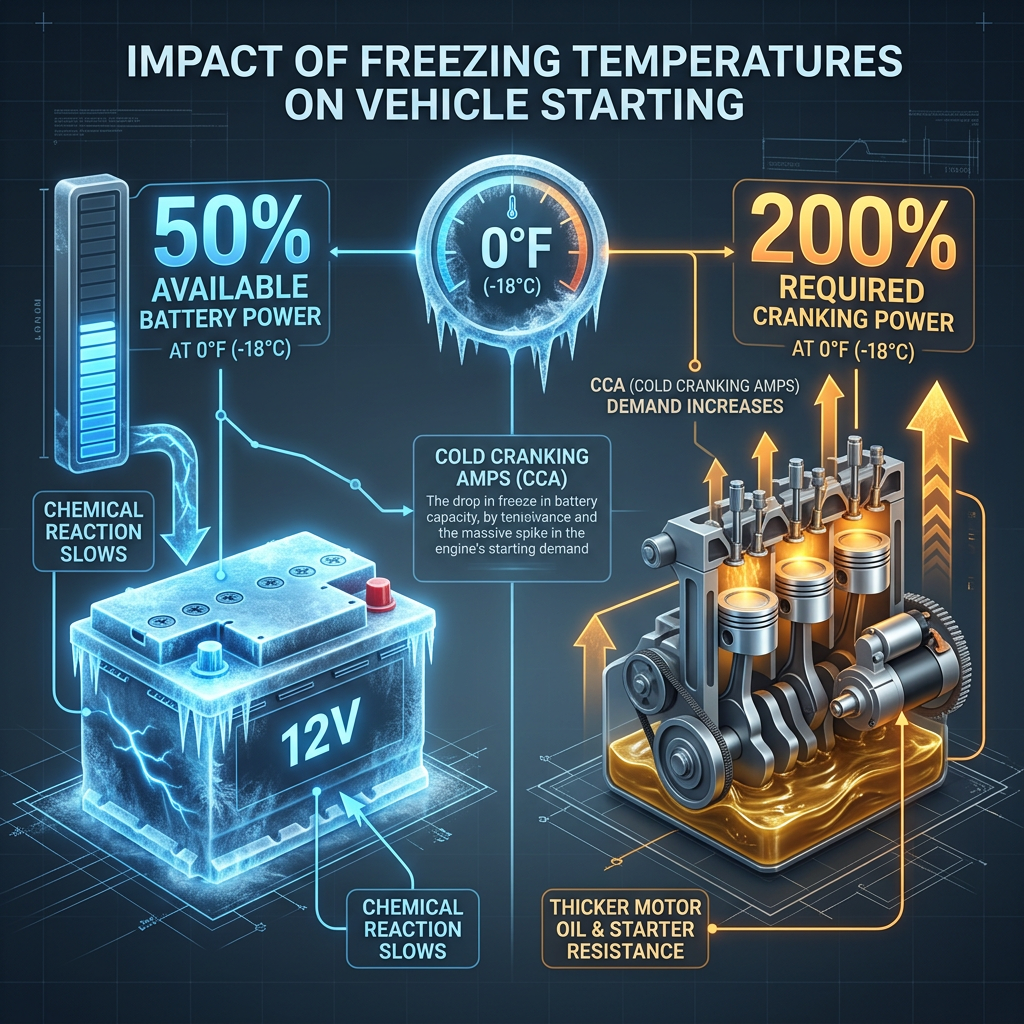
Technically speaking, Cold Cranking Amps (CCA) is an industry-standard rating that measures the exact electrical current (amps) a fully charged 12-volt battery can deliver at 0°F (-17.8°C) for 30 consecutive seconds while maintaining a minimum voltage threshold of 7.2 volts. The higher the CCA rating, the more raw starting power the battery possesses under freezing conditions. When your Mazda sits overnight in sub-zero Plainfield weather, the battery must overcome two simultaneous physical obstacles: severely slowed chemical activity within the battery cells and substantially increased mechanical resistance from chilled, thickened motor oil.
For local drivers navigating suburban commutes down Route 59 or I-55, a battery with an inadequate or depleted CCA rating will quickly manifest as a slow, agonizing engine turn-over—or worse, a rapid clicking sound that leaves you stranded in your driveway. Choosing a replacement battery with sufficient CCA ensures your vehicle has the energy reserve necessary to start quickly, protecting your starter motor from electrical strain and guaranteeing peace of mind all winter long.
How Does Cold Weather Affect a Car Battery's Performance?
To understand cold-weather battery failure, one must look at basic electrochemistry. Standard lead-acid automotive batteries generate electrical energy through a chemical reaction between lead plates and an electrolyte solution composed of sulfuric acid and distilled water. As ambient temperatures drop, chemical reaction speeds decrease significantly. At freezing (32°F), a standard automotive battery loses roughly 20% to 30% of its total cranking output capacity. When temperatures reach 0°F, available battery capacity plunges by up to 50% compared to room-temperature baseline performance. While battery output drops by half, engine starting requirements soar. Cold weather causes motor oil to thicken substantially, increasing internal friction within engine cylinders and bearings. The starter motor requires up to twice as much electrical amperage to spin a cold, oil-thickened engine at standard cranking speed.
Compounding this power squeeze is the heavy electrical demand imposed by winter driving accessories. The moment you start your vehicle on a frosty Plainfield morning, you immediately activate defrosting heaters, heated seats, heated steering wheels, windshield wipers, and headlights. This creates a severe instantaneous draw on a battery already operating at half its warm-weather power output.
Understanding Battery Ratings: How CCA Differs From CA and Amp-Hours
When inspecting the dynamic specification label on top of a replacement battery, you will encounter several acronyms. It is crucial for northern Illinois vehicle owners to understand how these metrics differ so they do not accidentally install a warm-weather battery ill-suited for Will County winters.
Cold Cranking Amps (CCA)
Test Temp: 0°F (-17.8°C)
CCA measures maximum current delivered for 30 seconds while staying above 7.2 volts at zero degrees Fahrenheit. This is the single most important metric for winter starting in Illinois. Never compromise on your manufacturer's recommended CCA rating.
Cranking Amps (CA)
Test Temp: 32°F (0°C)
Also called Marine Cranking Amps (MCA), CA measures discharge amperage at freezing temperature rather than sub-zero. Because chemical activity is higher at 32°F, CA numbers look 20-25% higher than CCA. Do not confuse CA with CCA when buying a winter battery!
Reserve Capacity & Amp-Hours
Sustained Power & Storage
Reserve Capacity (RC) measures how many minutes a battery can supply 25 amps before dropping to 10.5 volts if your alternator fails. Amp-Hours (Ah) indicates total stored chemical energy over a 20-hour discharge period, vital for modern electronic suites.
How Long Do Car Batteries Typically Last in Cold Climates?
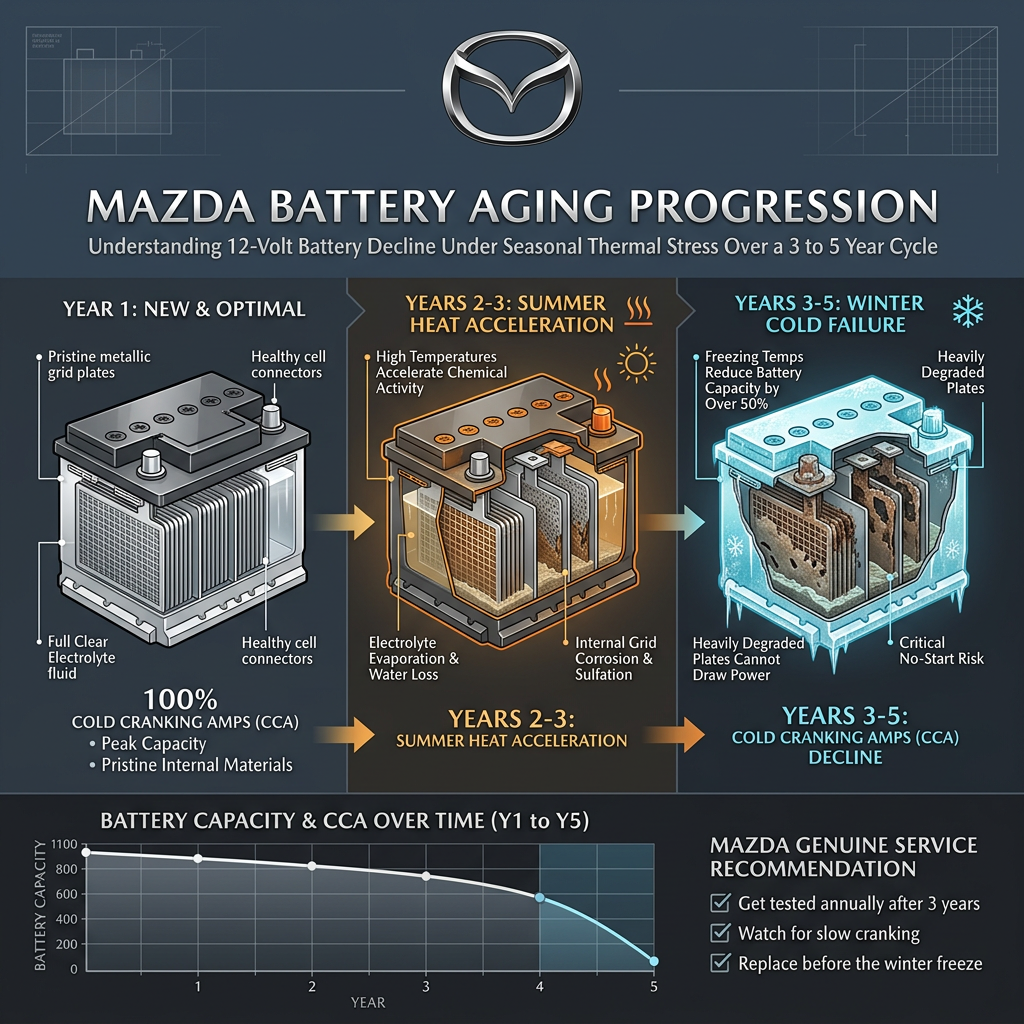
In northern Illinois climates like Plainfield, the average life expectancy of a standard flooded automotive battery ranges between 3 to 5 years. However, many drivers are surprised to learn that cold weather is rarely the root cause of battery degradation—it is merely the reveal mechanism. Extreme summer heat in the Midwest actually accelerates internal plate corrosion and causes electrolyte fluid evaporation inside standard flooded lead-acid cells. Over hot summer months, internal grids degrade and active lead paste sloughs off the plates. When autumn turns to winter, the weakened, degraded battery is suddenly called upon to produce high CCA output in freezing conditions. It fails not simply because it is cold, but because summer heat ruined its internal chemical storage capacity.
If your battery is approaching its 3rd or 4th winter, proactive testing is essential. Waiting for absolute battery death often means getting stranded in sub-zero Plainfield weather. If you suspect your vehicle is due for an upgrade or replacement, consider exploring our new Mazda vehicle lineup equipped with high-efficiency charging systems.
Do AGM Batteries Recharge Faster Than Conventional Batteries in Sub-Zero Weather?
The Short Answer: Yes, significantly faster.
Absorbent Glass Mat (AGM) batteries utilize a specialized micro-glass fiber separator matrix that holds liquid electrolyte saturated against the lead plates. Because the electrolyte is contained within fiberglass mats rather than sloshing freely like standard flooded batteries, AGM batteries offer dramatically lower internal electrical resistance. Lower internal resistance yields two major advantages during severe Plainfield winters:
- 5x Faster Recharge Rates: In freezing conditions, standard flooded batteries accept charging current from the alternator very slowly. AGM batteries accept charge up to 5 times faster, meaning short winter commutes are far more likely to replenish the energy used during initial startup.
- Superior CCA Output: AGM construction allows tighter plate packing, delivering significantly higher Cold Cranking Amps in the exact same physical casing size.
AGM Batteries in Modern Mazda Vehicles
Modern Mazda vehicles featuring i-Stop engine stop-start technology, advanced infotainment systems, and Skyactiv powertrain management put rigorous continuous demand on the electrical architecture. Standard flooded batteries can quickly become depleted under these high-draw conditions during winter. In addition to faster cold-weather recharging, AGM batteries offer leak-proof sealed design, superior resistance to severe engine vibration, and double to triple the cycle life of traditional flooded lead-acid batteries. Upgrading to an OEM-spec AGM battery is one of the smartest investments Plainfield drivers can make for zero-stress winter commuting.
How Much Does It Cost to Replace a Car Battery and What Is a Core Charge?
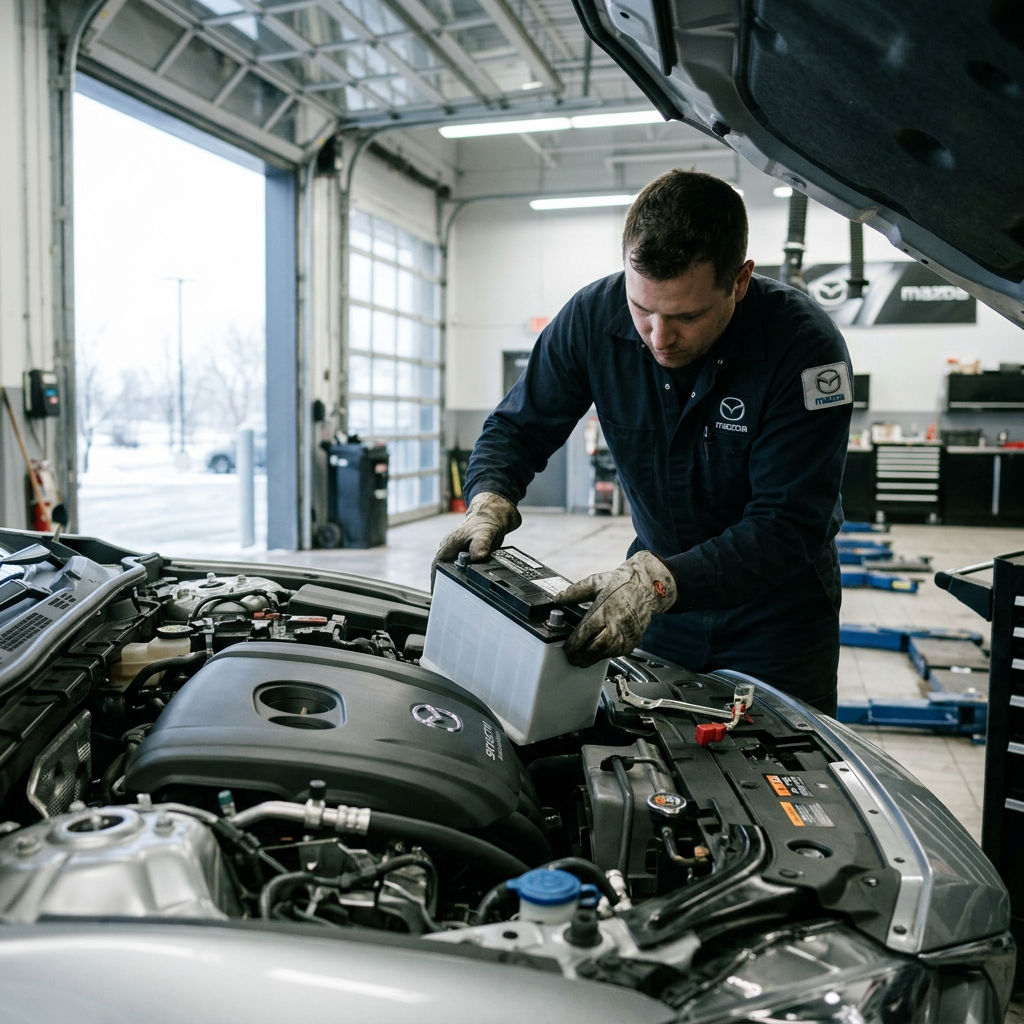
Replacement Battery Costs
Standard flooded lead-acid batteries typically range from $130 to $190 depending on CCA rating and group size. Premium AGM (Absorbent Glass Mat) batteries generally cost between $220 and $320, reflecting their superior cold-weather lifespan, vibration resistance, and rapid charge acceptance.
What Is a Core Charge?
A core charge is a mandatory, refundable deposit (typically $15 to $25) added to the price of a new battery to encourage recycling. Automotive lead-acid batteries are over 99% recyclable. When you bring your spent battery to Hawk Mazda, the core charge is instantly credited back to you.
Installation & BMS Reset
Professional installation generally adds $30 to $70 in labor. On modern vehicles, factory-trained technicians must perform terminal cleaning, electrical system diagnosis, and reset the internal Battery Management System (BMS) so the vehicle charges the new battery at optimal rates.
Warning Signs Your Battery Is Failing Before the First Will County Freeze
Car batteries rarely fail without issuing subtle warning signals beforehand. Pay close attention to these red flags during late autumn in Plainfield so you can address battery health before sub-zero winter temperatures leave you stranded:
- Sluggish Engine Turn-Over: The starter motor sounds sluggish, laboring heavily (e.g., 'r-r-r-r-vroom') for several seconds before the engine fires.
- Dimming Headlights at Idle: Headlights or interior dash displays dim noticeably when idling at stoplights along Route 59, but brighten when pressing the accelerator.
- Clicking Ignition Relay: Pushing the start button yields a fast, sharp metallic clicking noise rather than engine cranking, indicating insufficient current to engage the starter solenoid.
- Powdery Corrosion at Terminals: Visible white, blue, or greenish crusty buildup surrounding the positive (+) or negative (-) terminal posts, restricting electrical conductivity.
- Swollen Battery Case: Physical bulging or bloat on the plastic sides of the battery, caused by excessive summer heat or internal short circuiting.
- Foul Sulfur Odor: A rotten-egg smell coming from under the hood, indicating a battery that is leaking acid fluid or gas venting due to overcharging.
- Dashboard Check Engine or Battery Light: Illumination of the red battery icon or charging system warning indicator on your instrument cluster.
Where Can Plainfield Drivers Get a Winter Battery and Charging-System Check?
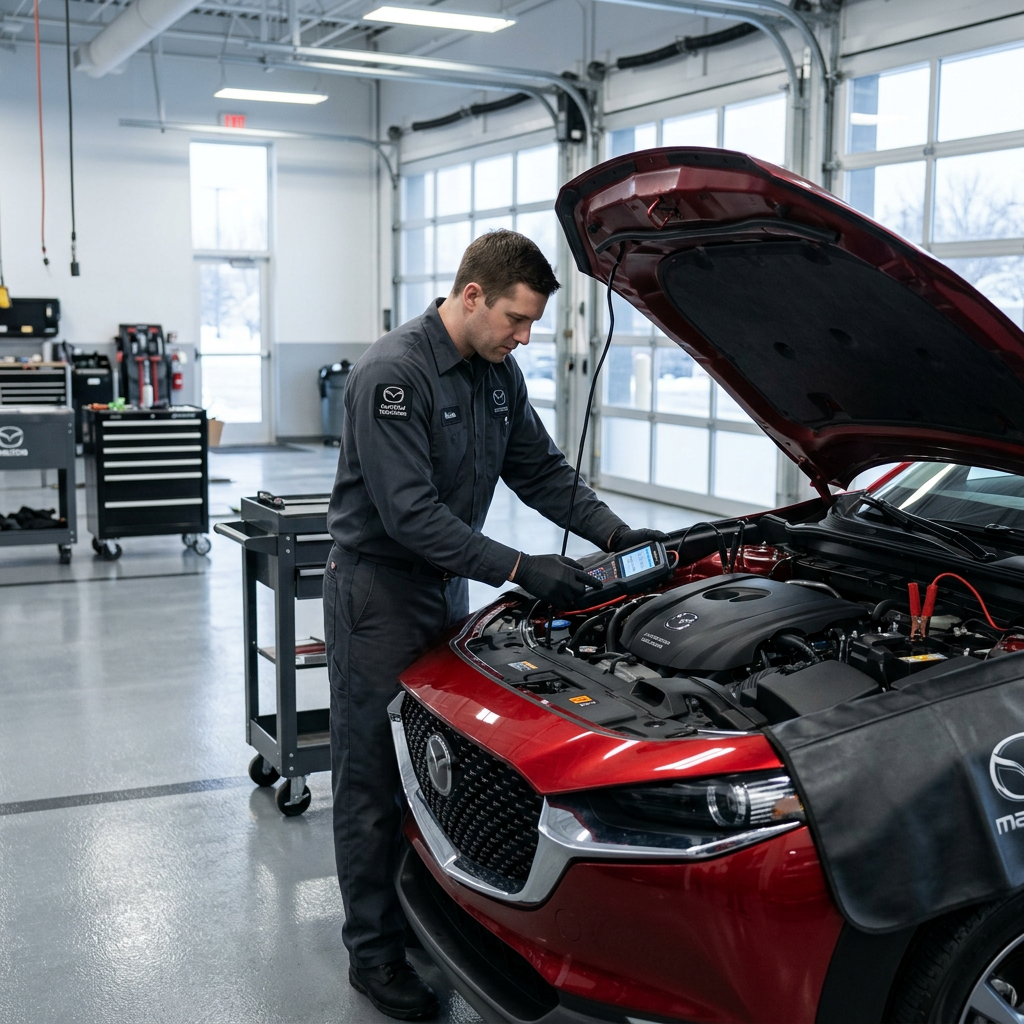
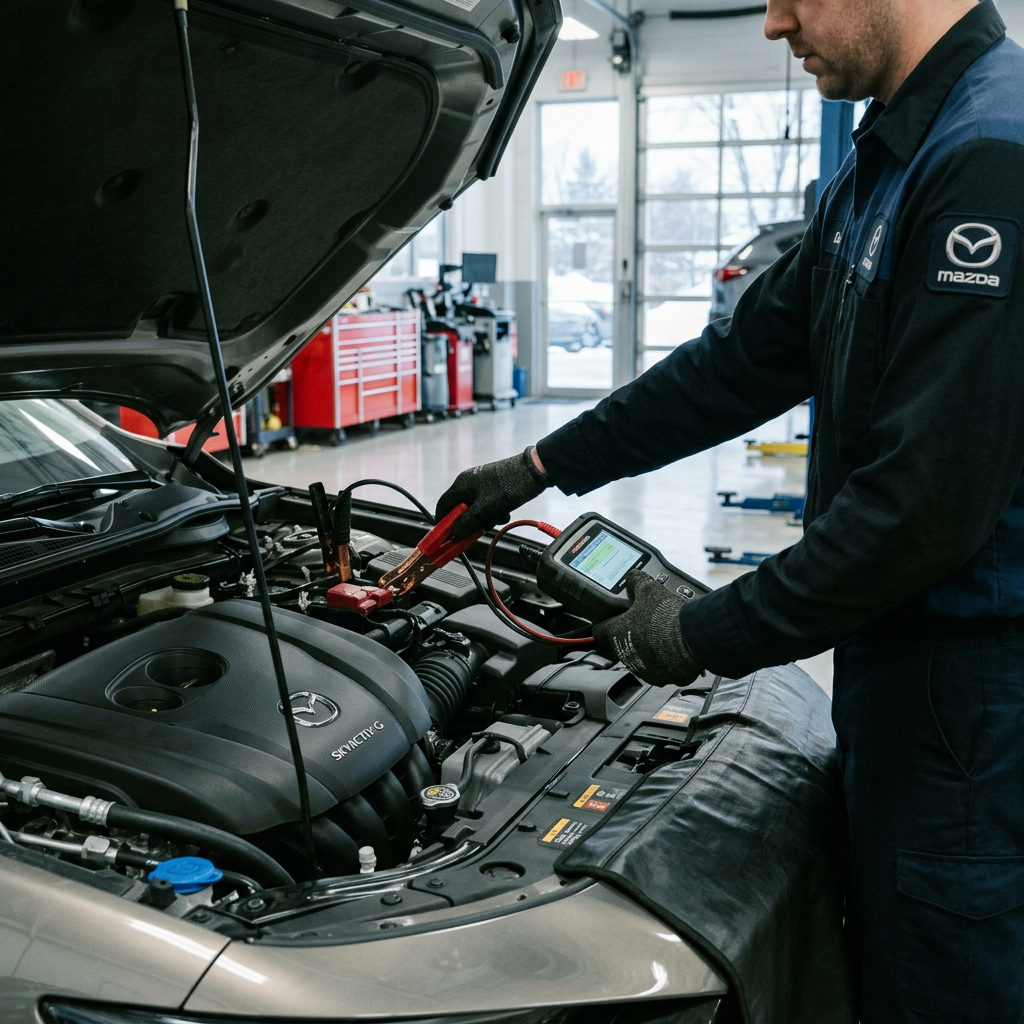
For reliable battery diagnosis and winter preparation, Plainfield, Shorewood, and Joliet drivers can count on the certified service center at Hawk Mazda. Simple multimeter voltage checks only tell part of the story; our factory-trained technicians utilize state-of-the-art digital conductance analyzers to measure exact remaining Cold Cranking Amps under simulated load. Our full winter charging-system inspection includes:
- Digital CCA measurement compared against factory specification
- Alternator diode and voltage regulator charging output test
- Starter motor amperage draw diagnostic
- Inspection and cleaning of battery terminal connections and ground straps
- Parasitic electrical draw check to prevent battery drain while parked
Conveniently located at 2421 S Rte 59 in Plainfield, IL 60586, our team is equipped to service all vehicle makes and models. You can easily call (779) 260-6502 to speak with a service advisor today.
Practical Steps to Protect Your Battery's CCA and Extend Its Life This Winter
1. Garage & Parking Care
Whenever possible, park your vehicle inside an attached garage during severe freezes. Even an unheated garage shields your engine bay from sub-zero wind chills, keeping ambient temperatures 10 to 15 degrees warmer than driveway exposure and preserving available CCA.
2. Clean & Tighten Terminals
Ensure terminal connections are clean and fully tightened. Corrosion adds electrical resistance, hindering the flow of high current during starting. Clean terminals with baking soda and water, apply anti-corrosion felt washers, and seal with terminal protective spray.
3. Adequate Drive Time
Avoid repeated short trips under 5 minutes in cold weather. It takes roughly 15 to 20 minutes of steady highway driving for your alternator to fully restore the energy used to start a cold engine. Weekly longer trips keep battery charge levels topped off.
Choosing the Right Cold Cranking Amp Rating for Your Specific Mazda Model
Every Mazda vehicle lineup—from efficient sedans like the Mazda3 to versatile crossovers like the CX-30, CX-5, CX-50, and three-row CX-90—features specific factory requirements for battery physical dimensions (Group Size) and electrical capacity (CCA rating). Installing a battery with insufficient CCA can cause electronic errors in advanced driver-assist systems (i-Activsense), erratic transmission shifting during warmup, and pre-mature starter relay failure. Always consult your owner manual or verify specs with our parts department before purchasing.
Typical OEM Mazda Battery Standards:
- Mazda3 & CX-30: Group Size 35 or 47/H5 — 520 to 600 CCA minimum
- Mazda CX-5 & CX-50: Group Size 35 or 48/H6 — 550 to 650 CCA minimum
- Mazda CX-90 (MHEV / PHEV): High-capacity AGM systems — 700+ CCA with dedicated auxiliary power management
Note: Upgrading to a slightly higher CCA rating than factory minimum is acceptable and often recommended for Illinois winter driving, provided physical group size dimensions match.
Schedule Your Winter Battery Inspection at Hawk Mazda in Plainfield
Don't wait for the first freezing Midwestern blizzard to discover that your battery lacks the Cold Cranking Amps needed to start your engine. Protect your morning commute and ensure your vehicle is 100% prepared for Will County's toughest winter weather. Whether you need a quick complimentary battery health test, terminal maintenance, or a replacement genuine OEM battery, the experts at Hawk Mazda are here to help. You can easily get directions to Hawk Mazda or contact our friendly team today.