Thermal Efficiency Face-Off: How Mazda Skyactiv-X Matches and Exceeds Toyota Dynamic Force Engines
When automotive engineers discuss thermal efficiency, they are evaluating the percentage of energy in gasoline that is converted into actual propulsion rather than lost as wasted heat. For decades, traditional internal combustion engines hovered between 25% and 30% thermal efficiency. However, recent breakthroughs by Japanese automakers have dramatically altered the landscape. Mazda Skyactiv-X achieves an extraordinary peak thermal efficiency of 43% to 50% under lean-burn operating conditions using Spark Controlled Compression Ignition (SPCCI). This performance surpasses Toyota's acclaimed Dynamic Force engine family, which tops out at 40% thermal efficiency for standard gasoline applications and 41% for hybrid powertrains.
For drivers throughout Plainfield, Shorewood, and northern Illinois, this technical milestone translates directly into tangible real-world advantages. Skyactiv-X combines the rev-happy, free-breathing responsiveness of a traditional gasoline engine with the low-end torque and exceptional fuel economy of a diesel. By burning an ultra-lean air-fuel mixture that traditional spark plugs could never ignite on their own, Mazda unlocks unmatched fuel economy without sacrificing driving engagement. Below, we break down the engineering mechanics, head-to-head performance specs, and daily driving dynamics of these flagship powertrains.
What Is Mazda Skyactiv Technology and How Does It Work?
Skyactiv Technology is not merely a single engine design; it is Mazda's holistic, ground-up engineering philosophy that optimizes every major vehicle system—including the internal combustion engine, automatic and manual transmissions, lightweight chassis architecture, and body structure. Launched to challenge the industry's reliance on heavy battery packs, Skyactiv maximizes the thermodynamic potential of internal combustion before electrification is introduced.
At the core of Skyactiv-G gasoline engines is an ultra-high compression ratio (14:1 in global markets and 13:1 in North American specs), combined with 4-2-1 long-runner exhaust headers that prevent hot residual gases from forcing early engine knock. By extracting more energy from every stroke, Mazda engineers dramatically reduced pumping losses, lowered mechanical internal friction by up to 30%, and elevated overall thermal efficiency well beyond competitive four-cylinder engines.
In tandem with engine efficiency, Skyactiv-Drive transmissions utilize a multi-plate lockup clutch across up to 89% of operational cycles. This eliminates the sluggish rubber-band feel of continuous variable transmissions (CVTs) found in competitor vehicles, providing direct manual-like power transfer while maintaining buttery-smooth gear changes during suburban stop-and-go driving along Route 59.
Furthermore, Skyactiv-Body and Skyactiv-Chassis design principles utilize continuous framework concepts and ultra-high-tensile steel to shed parasitic vehicle weight. By reducing total mass while increasing torsional rigidity, Mazda creates a vehicle platform where every unit of thermal energy generated by the engine converts into rapid acceleration, nimble cornering, and superior fuel economy.
What Is Skyactiv-X and How Does Spark Controlled Compression Ignition (SPCCI) Work?
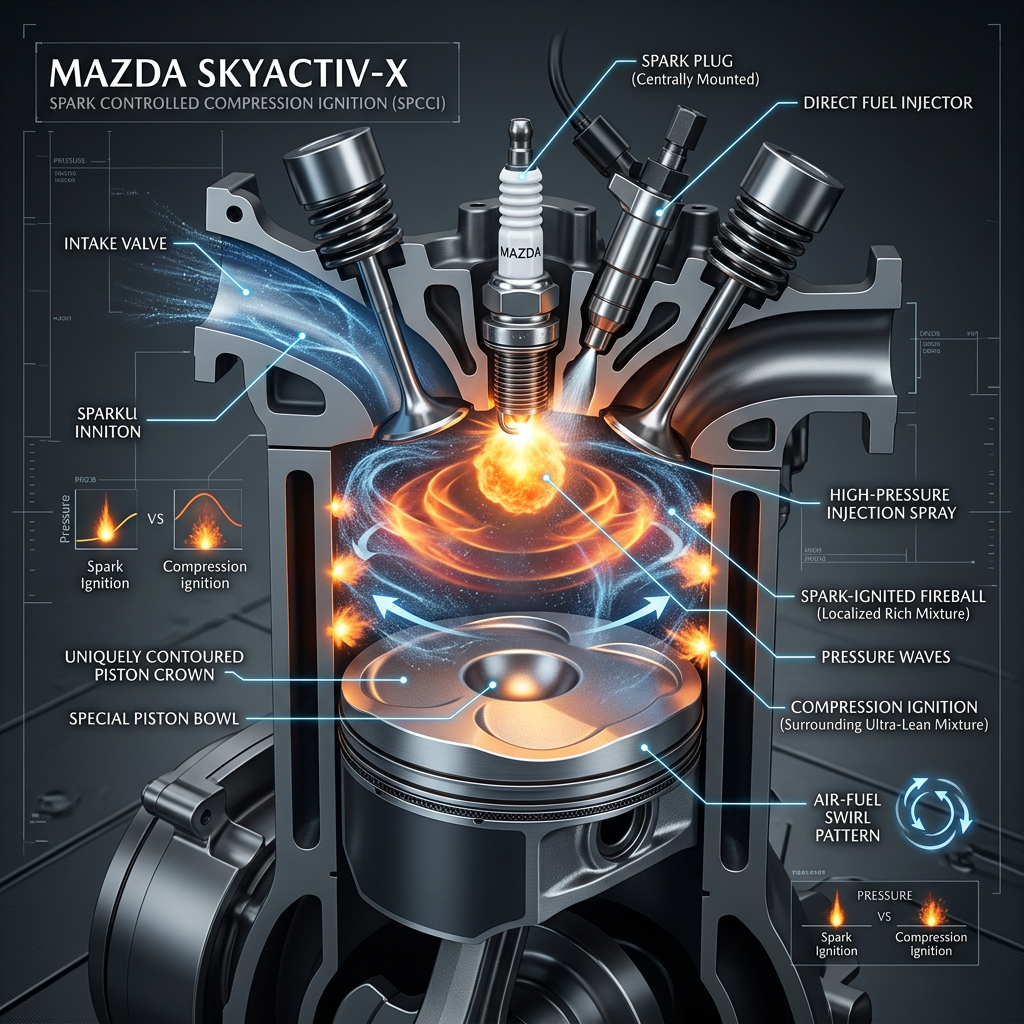
Engine designers have long sought the Holy Grail of internal combustion: Commercial Compression Ignition for gasoline. While diesel engines use intense compression heat to auto-ignite fuel, gasoline is volatile and prone to destructive engine knocking under extreme pressure. Mazda solved this fundamental chemical limitation with Spark Controlled Compression Ignition (SPCCI).
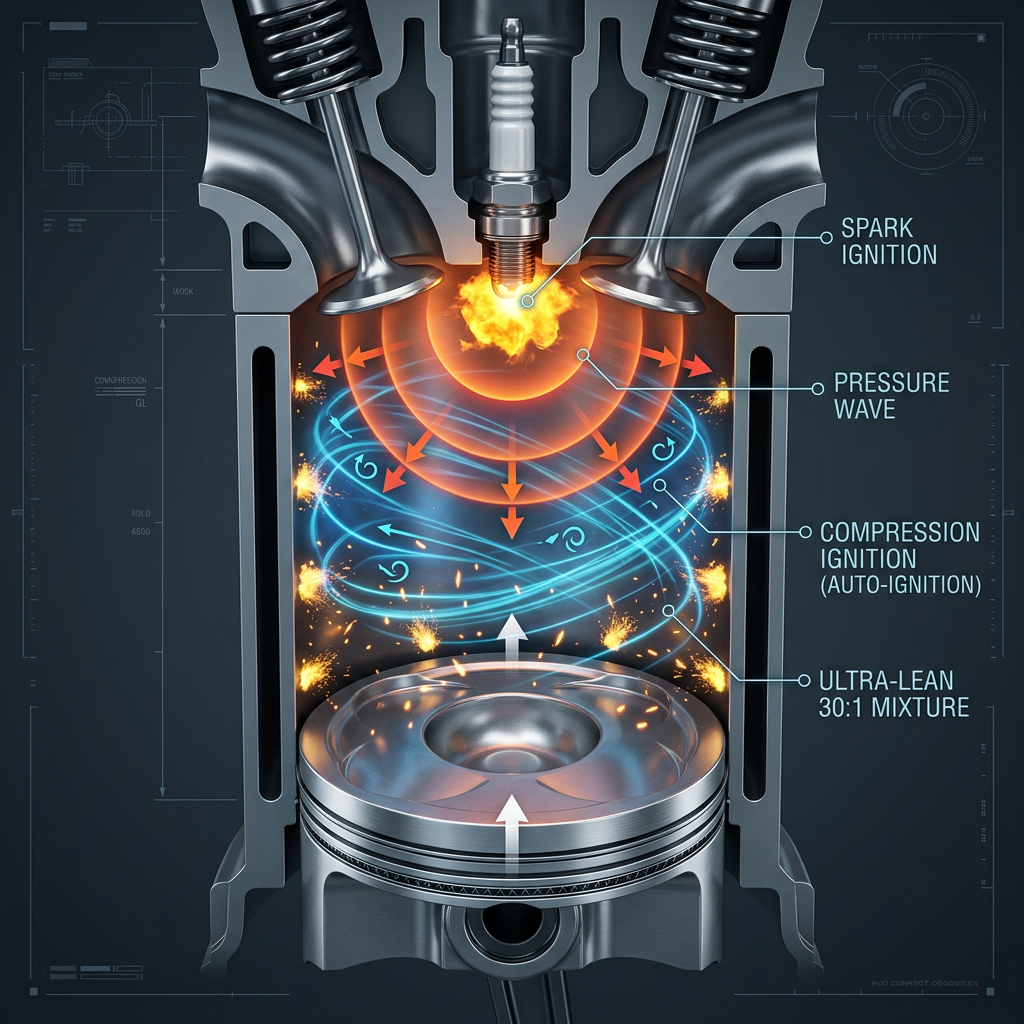
SPCCI uses a split-injection system to create an ultra-lean air-fuel mixture (as lean as 30:1, compared to the standard stoichiometric 14.7:1 ratio) throughout the cylinder during the intake stroke. A tiny, richer pocket of air-fuel mixture is injected directly around the spark plug right before ignition. When the spark plug fires this localized pocket, it creates a rapidly expanding fireball that acts as a secondary virtual piston.
This localized pressure wave instantly compresses the remaining ultra-lean mixture throughout the combustion chamber, causing it to ignite simultaneously across the cylinder without knock. The combustion happens extraordinarily fast and cold, turning almost all thermal energy into mechanical force while minimizing nitrogen oxide (NOx) emissions.
Toyota Dynamic Force vs. Mazda Skyactiv-X: Head-to-Head Technical Comparison
To understand how these engineering giants compare, we evaluated key mechanical benchmarks between Toyota's 2.5L Dynamic Force engine (A25A-FKS) and Mazda's 2.0L Skyactiv-X engine across compression ratios, air-fuel delivery systems, and thermal efficiency outputs.
|
Engineering Metric
|
Toyota Dynamic Force (2.5L)
|
Mazda Skyactiv-X (2.0L)
|
|
Combustion Mode
|
High-Tumble Spark Ignition
|
Spark Controlled Compression Ignition (SPCCI)
|
|
Peak Thermal Efficiency
|
40% (Gasoline) / 41% (Hybrid)
|
43% - 50% (Ultra-Lean SPCCI Mode)
|
|
Compression Ratio
|
13.0:1 (Gasoline) / 14.0:1 (Hybrid)
|
15.0:1 to 16.3:1
|
|
Air-Fuel Ratio Range
|
Standard Stoichiometric (14.7:1)
|
Ultra-Lean Burn (up to 30:1)
|
|
Induction System
|
Naturally Aspirated (Multi-hole D4-S)
|
High-Pressure Roots Supercharger
|
|
Throttle Response & Feel
|
Linear, gradual high-RPM power
|
Instant torque, diesel-like pull with high rev capability
|
Thermodynamics
Toyota relies on rapid combustion achieved through high-tumble intake ports and laser-clad valve seats. This reaches an impressive 40% thermal efficiency. However, Mazda's SPCCI ignites lean fuel across the entire cylinder volume simultaneously, reducing heat transfer loss to cylinder walls and pushing efficiency up to 50%.
Air Management
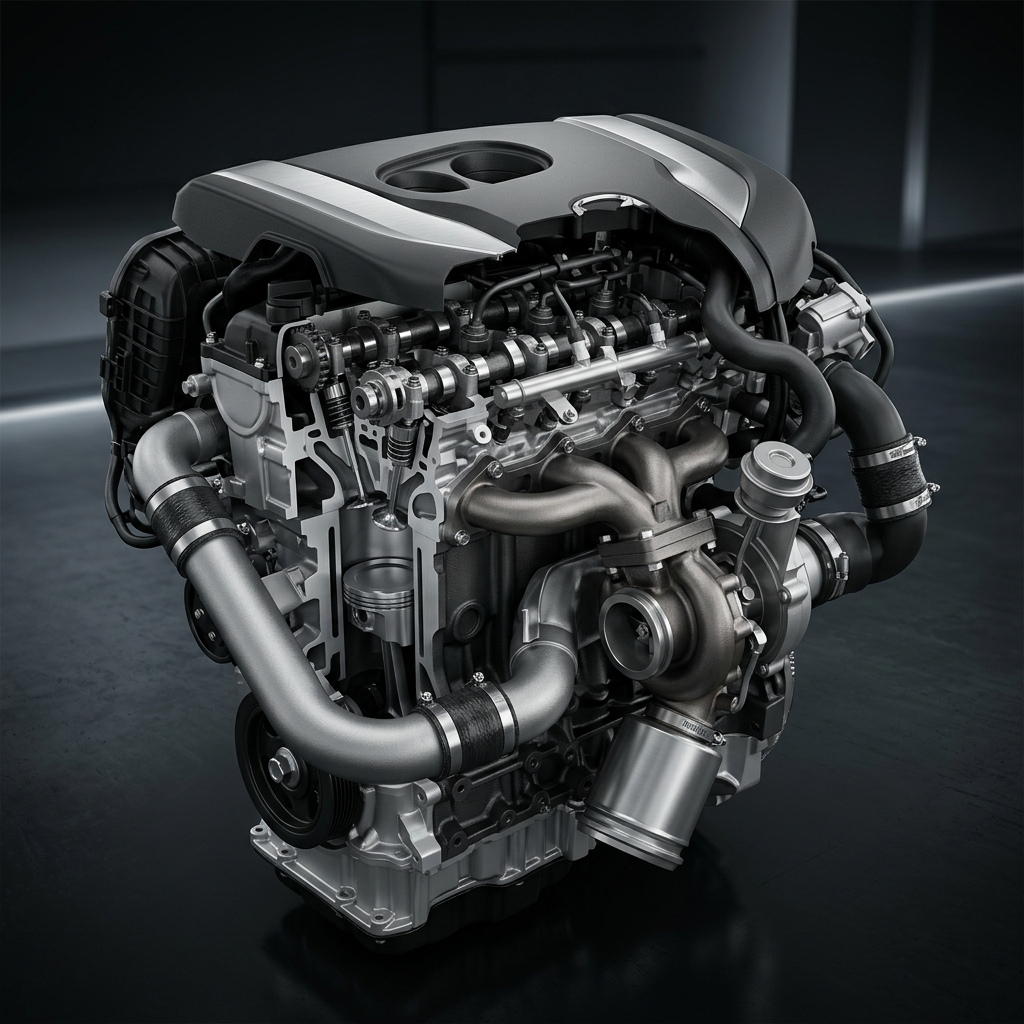
Toyota utilizes standard atmospheric breathing with electric VVT-iE on intake valves. Skyactiv-X equips a small, highly responsive Roots-type supercharger not for boost charging horsepower, but to force massive volumes of extra air into the cylinder to sustain ultra-lean air-fuel mixtures during lean-burn operation.
Driving Character
While Toyota Dynamic Force paired with CVTs can drone under hard acceleration, Skyactiv-X pairs with traditional automatic or manual gearboxes. It provides intuitive, immediate low-end torque combined with linear top-end performance that enthusiast drivers prefer.
How Much Horsepower and Torque Does the Skyactiv-G 2.5 Turbo Produce on Premium vs Regular Fuel?
For drivers seeking high-output performance alongside efficiency, Mazda's Skyactiv-G 2.5 Turbo engine demonstrates intelligent powertrain tuning. Unlike competitors that mandate high-octane fuel to achieve advertised output figures, Mazda engineered its Dynamic Pressure Turbo system to adapt seamlessly to whatever fuel octane you pump at your local Plainfield station.
When fueled with 93 octane premium gasoline, the Skyactiv-G 2.5 Turbo generates a robust 250 horsepower and 320 lb-ft of torque. When running on 87 octane regular unleaded fuel, the engine produces 227 horsepower and 310 lb-ft of torque. Notice that even on regular fuel, torque remains exceptionally high at 310 lb-ft, available at just 2,000 RPM.
The secret behind this low-end punch is Mazda's patented Dynamic Pressure Turbo technology. By using a specialized valve system that channels exhaust gas through narrow ports at low RPMs (similar to placing your thumb over a garden hose), exhaust gas velocity increases dramatically, spooling the turbine instantly and completely eliminating turbo lag.
How Much Lighter Is a Mazda Skyactiv-Body Compared to Previous Mazda Platforms?
Engine efficiency is only half of the performance equation; vehicle weight is the constant enemy of fuel economy, handling precision, and braking distance. When Mazda introduced Skyactiv-Body architecture, engineers targeted a significant weight reduction while simultaneously increasing safety ratings and crash energy absorption.
Compared to previous-generation Mazda non-Skyactiv platforms, the Skyactiv-Body achieves an overall weight reduction of 8% to 15% (saving approximately 200 to 220 pounds) depending on the model tier, while improving structural rigidity by an impressive 30%.
Engineers accomplished this double triumph by adopting straight-line frame structures where curved member beams were previously used, eliminating cross-member welds, and increasing the usage of ultra-high-tensile steel (rated up to 1,480 MPa) from 40% to over 60% of total body structure mass.
For daily Shorewood commuters, a lighter, stiffer body structure means the engine requires less power to launch from stops, suspension damping reacts faster to road imperfections, and body flex during emergency maneuvers is virtually eliminated.
Sales Consultant Perspective: Why Mazda Engineering Delivers a Superior Driving Experience
"In over a decade advising vehicle buyers here in Plainfield, I've had thousands of test drives with customers comparing Mazda vehicles directly against Toyota and Honda competitors. The dynamic difference is immediate from the second you pull out of our showroom lot onto Route 59."
— Senior Sales Consultant, Hawk Mazda (10 Years Automotive Experience)
When buyers look strictly at specification sheets, Toyota Dynamic Force numbers appear competitive on paper. But paper specs don't capture driving feel. Toyota pairs many of their non-hybrid Dynamic Force engines with Continuously Variable Transmissions (CVTs) designed purely for EPA test cycles. When you step on the gas to pass a semi-truck on I-55, a CVT forces high-RPM engine flare before acceleration builds, creating cabin noise without immediate thrust.
Mazda's Skyactiv philosophy approaches engineering from the human element (what Mazda calls Jinba Ittai—car and driver as one). Because Skyactiv engines produce abundant low-rpm torque and pair exclusively with direct-drive 6-speed or 8-speed automatic transmissions, pedal input yields instant, linear acceleration. You don't wait for gear hunting or engine roaring; the vehicle moves in direct harmony with your right foot. You get executive-level cabin quietness, exceptional MPG, and genuine driving pleasure every single day.
Real-World Efficiency for Northern Illinois Commuters: Plainfield and Shorewood Driving Dynamics
Living and commuting in Will and Kendall counties presents unique driving challenges. Northern Illinois drivers encounter heavy traffic bottlenecks along Route 59, high-speed arterial cruising on Interstate 55, and extreme seasonal temperature swings ranging from sub-zero winter mornings to humid 90-degree summer afternoons.
Skyactiv thermal efficiency excels under these exact conditions. In cold winter weather, conventional engines lose tremendous thermal efficiency trying to warm cold oil and cylinder heads. Skyactiv engines utilize multi-hole direct fuel injectors and controlled coolant control valves that allow rapid warm-up, quickly restoring cabin heating and optimal fuel air mixtures within minutes.
During high-speed highway commutes from Shorewood toward Chicago, Skyactiv's tall top gear ratios keep engine RPM low at 70 mph, allowing the vehicle to sip fuel in peak efficiency zones. Meanwhile, Mazda's i-Activ AWD system continuously monitors exterior temperature, wiper usage, steering angle, and wheel slip 200 times per second.
Unlike crude all-wheel drive systems that drag fuel economy down constantly, i-Activ AWD disengages rear torque when not required, preserving front-wheel-drive fuel efficiency while maintaining instant readiness when encountering sudden black ice or heavy rain.
Author Credentials: Insights from a Veteran Automotive Sales Consultant
This engineering evaluation was authored by a Senior Sales Consultant at Hawk Mazda with over 9 years of direct automotive sales, powertrain analysis, and customer consulting experience. Having guided hundreds of buyers through comparative test drives between Mazda, Toyota, Honda, and Subaru offerings, our consulting team specializes in translating complex mechanical telemetry into practical ownership guidance.
Our sales team undergoes rigorous annual factory certifications covering Skyactiv Powertrain Architecture, i-Activ AWD mechanics, and vehicle safety engineering. We take pride in providing transparent, objective data to help drivers make informed automotive investments.
Does Skyactiv Technology Help Mazda Vehicles Retain Higher Resale Value?
Engine Durability
By engineering Skyactiv engines with robust forged steel crankshafts, hardened wrist pins, and advanced thermal management, Mazda powertrains routinely reach high mileage milestones with minimal oil consumption or component wear. Secondary market buyers pay premium prices for dependable pre-owned Mazdas.
Lower Cost of Ownership
Unlike complex hybrids that require specialized high-voltage battery replacements after 100,000 miles, Skyactiv naturally aspirated and turbo engines use proven mechanical architecture. Standard maintenance schedules keep ownership costs predictably low.
Strong Residual Value
Independent industry analysts continuously rank Mazda vehicles near the top of residual value retention charts. Models like the CX-5 and Mazda3 maintain strong trade-in valuations thanks to timeless Kodo design aesthetics and enduring mechanical reliability.
Practical Advice for Buyers: Selecting the Right Skyactiv Powertrain for Your Lifestyle
Skyactiv-G 2.5L NA
Best For: Daily commuters prioritizing peak fuel efficiency, lower initial purchase price, and long-term mechanical simplicity.
If your daily drive involves suburban errands across Plainfield, taking kids to school, and predictable highway commuting, the naturally aspirated 2.5L delivers outstanding MPG on standard regular gas with zero fuss.
Skyactiv-G 2.5 Turbo
Best For: Drivers who demand effortless passing power, towing capability, and premium luxury performance.
If you frequently highway merge onto I-55, haul full passenger loads, or simply love instantaneous low-end punch, the 2.5 Turbo delivers V6-like power with four-cylinder efficiency. Explore flexible options when you Apply For Financing Now online.
Experience Mazda Skyactiv Innovation Firsthand at Hawk Mazda in Plainfield
Reading about thermal efficiency and SPCCI engineering is one thing—feeling the immediate throttle response and refined performance in person is another. At Hawk Mazda, located at 2421 S Rte 59 in Plainfield, IL 60586, we invite you to experience the Mazda difference.