Does Cold Weather Drain the Mazda CX-5 12-Volt Battery Faster?
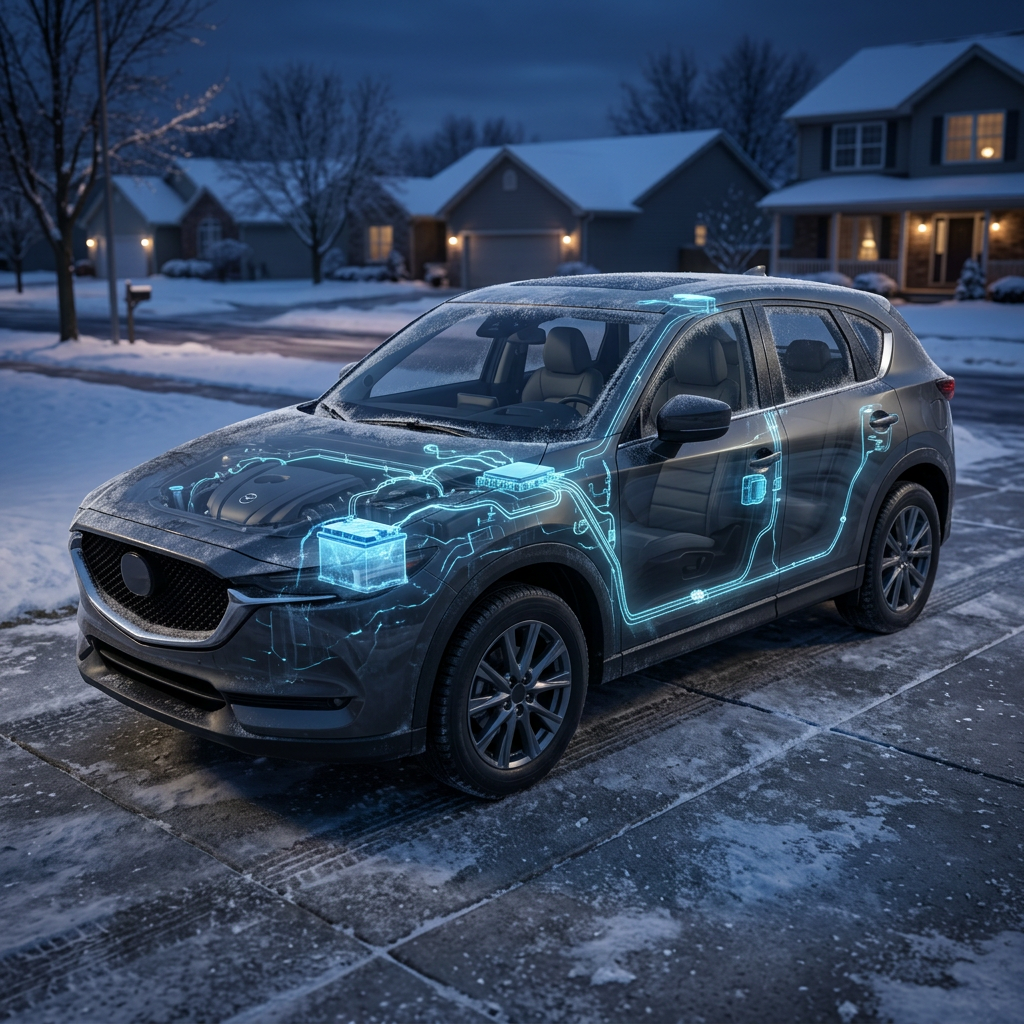
The short answer is an unequivocal yes. When northern Illinois temperatures drop to freezing (32°F) and plunge further toward zero degrees in mid-winter, your Mazda CX-5's 12-volt lead-acid battery experiences a catastrophic drop in functional chemical efficiency. At 32°F, a conventional automotive battery loses roughly 20 to 35 percent of its maximum electrical capacity. Once sub-zero polar vortex conditions settle over Will County and temperatures dip to 0°F, available capacity plummets by 50 percent or more. At the exact moment your battery has half its normal muscle, the demands placed upon it skyrocket.
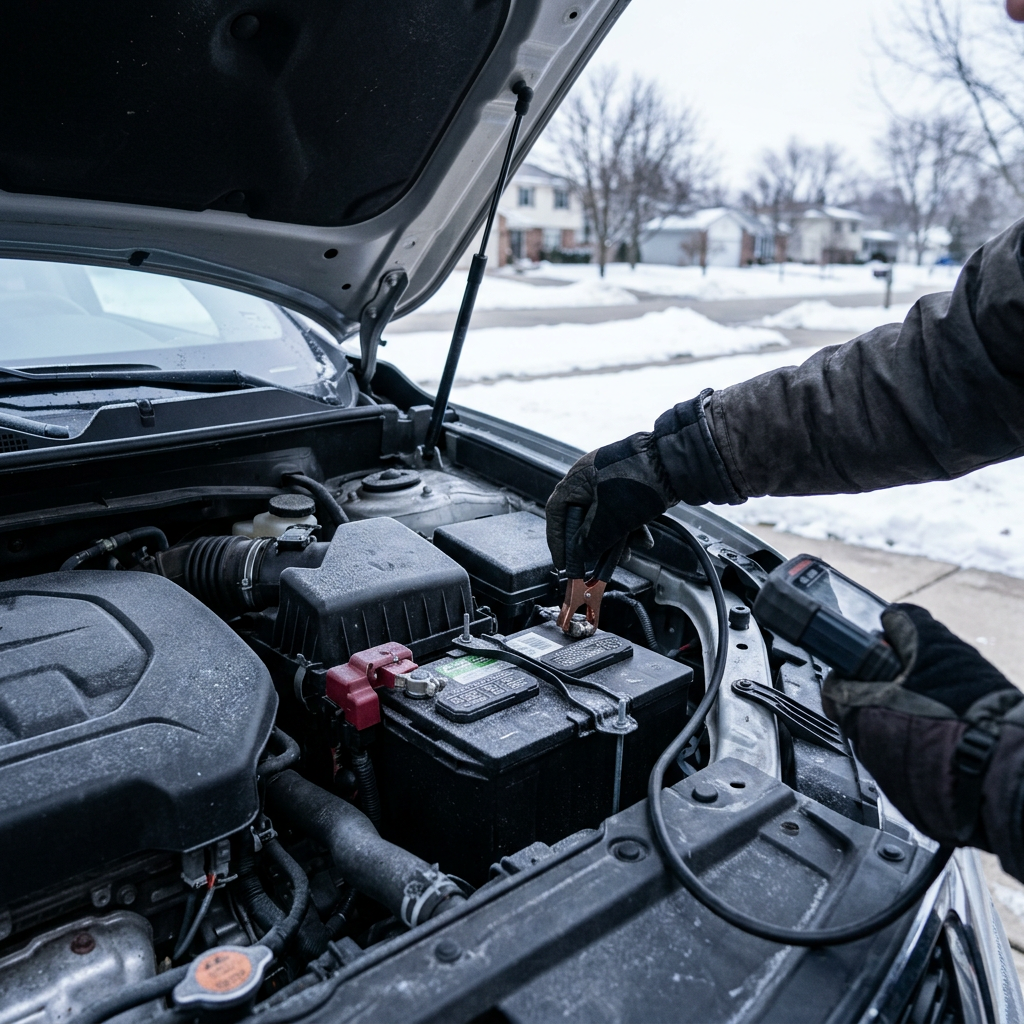
The winter reality for Plainfield drivers involves a compounding mechanical equation known to automotive master technicians as the "cold-crank deficit." While freezing ambient temperatures stifle the electrolyte chemistry inside the battery casing, engine oil thickens from a free-flowing fluid into a viscous, honey-like resistance layer. Turning over the high-compression Skyactiv-G 2.5L engine requires nearly twice the cranking amperage in winter compared to a mild summer morning. If your battery is more than three years old, that sudden loss of electrochemical capacity combined with doubled starting resistance is the primary reason CX-5 crossovers fail to start on frosty mornings.
Why Freezing Illinois Temperatures Siphon Cranking Amps from Your CX-5 Battery
Inside standard flooded lead-acid and Absorbent Glass Mat (AGM) 12-volt batteries, power is produced through a reversible chemical reaction between lead dioxide plates, sponge lead plates, and an aqueous sulfuric acid electrolyte solution. When cold weather hits Plainfield, thermal energy vanishes from this internal bath. Molecules slow down dramatically, which impedes the ion exchange necessary to produce electrical current. This physical drag manifests directly as a sharp increase in the battery's internal electrical resistance. As internal resistance spikes, the battery cannot discharge its rated Cold Cranking Amps (CCA) quickly enough to power the starter motor without a sharp, temporary drop in terminal voltage.
Mazda's Skyactiv-G 2.5-liter four-cylinder engine operates at an unusually high 13.0:1 compression ratio (or 10.5:1 on Dynamic Pressure Turbo models). High compression delivers outstanding thermal efficiency and responsive acceleration, but it also means the starter motor must exert immense mechanical torque against piston head resistance during initial rotation. When freezing temperatures drag battery CCA below critical operating thresholds, the starter motor draws massive amperage while spinning slower than normal. This voltage sag starves delicate onboard powertrain control modules (PCM) of baseline voltage during ignition, preventing reliable fuel injection spray timing and spark discharge even before the engine completes its first cycle.
Recognizing the Warning Signs of a Failing Mazda CX-5 Battery Before a Cold Snap
1. Sluggish Cranking Audio
Listen closely to your starter sound during first ignition of the day. A healthy CX-5 starter fires in brisk, crisp rhythmic pulses lasting under 1.5 seconds. If you notice a strained, dragging "rurr-rurr" cadence where the engine hesitates before catching, your battery's resting voltage has dropped below 12.2 volts, indicating imminent cell degradation.
2. Electronic Anomalies
Modern Mazdas aggressively protect core powertrain computing by shedding secondary accessory voltage. If you notice the 10.25-inch Mazda Connect center screen flickering during startup, sluggish movement of the power rear liftgate, or dimming ambient LED headlights at idle, the 12-volt battery cannot sustain baseline load distribution.
3. Instrument Cluster Alerts
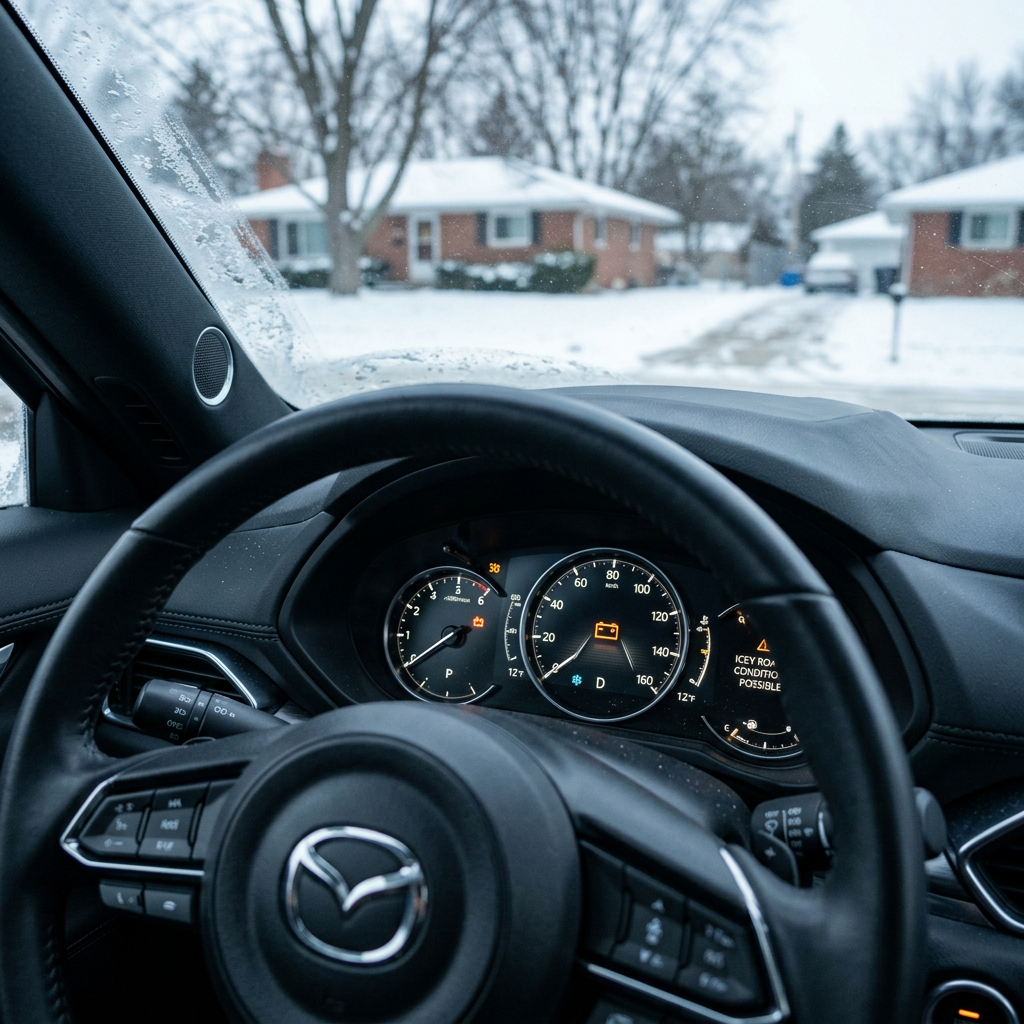
Keep an eye on the instrument cluster display for battery management alerts or an amber i-Stop warning. When current state of charge (SoC) drops below roughly 75%, Mazda's integrated battery sensor triggers warning codes to disable automatic stop-start cycling, serving as an early notice that a cold snap will leave you stranded.
Can You Remote Start the Mazda CX-5 to Warm It Up in Winter and Charge the Battery?
Using the MyMazda App connected services to remote start your CX-5 from the warmth of your kitchen is one of winter's greatest luxuries. It defrosts icy glass, heats the cabin, and pre-conditions engine fluids. However, relying on brief remote start sessions to "charge" a low battery is an expensive misconception that catches many drivers off guard. Cold-cranking a frozen 2.5L engine consumes massive battery energy in seconds. At idle—especially with high-draw accessories like rear defrosters, heated seats, heated steering wheels, and cabin blower fans running simultaneously—the vehicle's alternator directs most output toward powering these active loads rather than pushing charging current back into the frozen chemical battery core.
In sub-freezing weather, an idling engine requires at least 25 to 35 minutes of steady operation simply to replace the electrical energy consumed during the initial cold start. A short 5-to-10-minute factory remote start cycle actually leaves the 12-volt battery in a lower net state of charge than before ignition. If your routine consists only of quick jaunts down Route 59 or brief idling in the driveway, your CX-5's battery suffers cumulative discharge. To replenish normal voltage, your vehicle needs regular sustained driving speeds of 45 mph or greater for at least 30 minutes. Need a certified battery health check or replacement accessories? You can easily order genuine Mazda parts directly through our Plainfield store.
Overnight Parasitic Draw: How Modern Mazda Electronics Compound Cold-Weather Battery Loss
Even when your Mazda CX-5 is parked and turned off overnight in an unheated Plainfield garage or open driveway, it is never truly asleep. Modern CX-5 models feature sophisticated networked electronic control modules that maintain a low-voltage heartbeat 24 hours a day. Keyless advanced entry antennas continually listen for smart key fobs in proximity. Connected vehicle telematics transceivers communicate with cellular networks to report status to the MyMazda cloud server. Anti-theft immobilizers and memory storage modules draw steady current. Under normal circumstances, this normal "parasitic draw" measures an acceptable 30 to 50 milliamps, easily handled by a warm, healthy battery. However, when overnight outdoor temperatures hover near single digits, electrochemical capacity decays while parasitic consumption remains constant. Over a 48-hour weekend parked outdoors in sub-freezing air, parasitic draw can sap 15 to 25 percent of total resting reserve, turning an already cold-stiffened battery into an unstartable unit by Monday morning.
Is All-Wheel Drive Standard on the Mazda CX-5 and Does It Increase Cold-Start Strain?
Yes, Mazda made its advanced i-Activ AWD® standard equipment across every single Mazda CX-5 trim level starting with the 2022 model year. Whether you drive the 2.5 S Select, Preferred, Carbon Edition, Premium Plus, or the high-output Turbo Signature, power is actively directed to all four wheels. While this provides class-leading stability on snowy roads, drivers often wonder whether all-wheel drive components affect winter cold-start performance.
Drivetrain Drag Resistance
AWD drivelines contain additional mechanical friction: a power take-off transfer case, prop shaft, and electronic rear differential coupling. While disengaged during initial neutral starter turnover, the heavy-weight gear lubricants inside these assemblies thicken below zero degrees, creating notable rotational parasitic drag as soon as the vehicle engages drive.
Electric Coupling Actuation
The rear differential of the i-Activ AWD system utilizes an electronically managed multi-plate clutch pack controlled by an integrated solenoid. This electromagnetic actuator requires stable 12-volt system voltage the moment the crossover rolls forward to pre-torque the rear wheels and prevent front slip on sheet ice.
12-Volt System Integrity
If the 12-volt battery suffers low resting voltage, the AWD control module may briefly disable four-wheel drive functionality upon first roll-out, illuminating an AWD warning light until the alternator stabilizes overall bus voltage. Maintaining top battery health ensures your i-Activ AWD operates immediately out of your driveway.
Mazda CX-5 Winter AWD Performance Insights: How Does i-Activ AWD Perform in Snow and Ice?
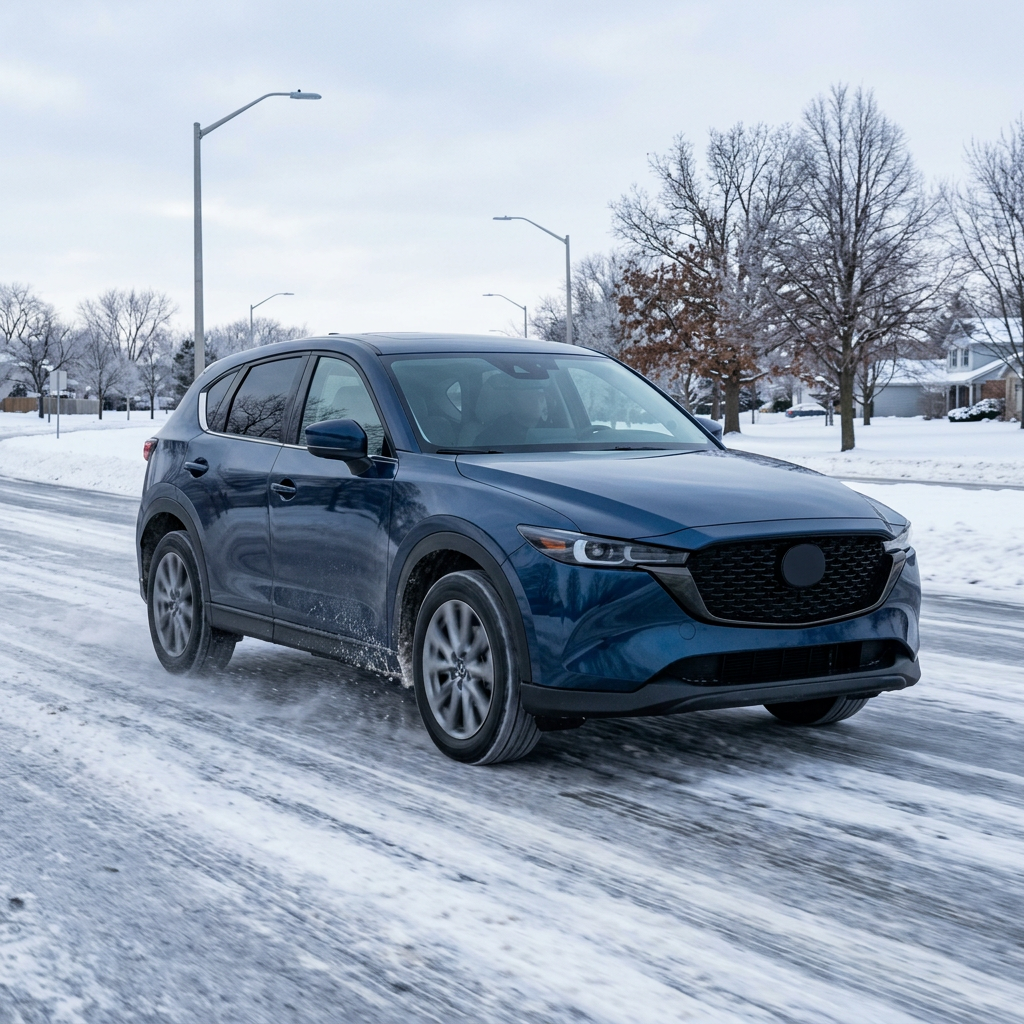
Unlike reactive AWD systems that wait for front tires to slip and spin on ice before shunting power rearward, Mazda's i-Activ AWD® is predictive. The system operates on a sophisticated algorithmic framework that reads 27 distinct sensor inputs at a staggering 200 checks per second. These sensors examine factors you might never suspect: outside ambient temperature, windshield wiper speed, driver steering wheel angle, individual wheel acceleration variations, yaw rates, and engine torque outputs. If the thermometers register 28°F and your wipers are on, i-Activ AWD knows the roadway is slick before your tires even lose grip. By adjusting electromagnetic multi-plate clutch engagement in the rear differential before wheel spin starts, the CX-5 delivers seamless traction when accelerating up icy intersections on Route 59 or merging onto slushy I-55 outside Plainfield. Explore our broad selection when you browse new Mazda inventory to test-drive i-Activ AWD yourself.
Which Vehicle Has Better Traction Control Intervention on Ice, Subaru or Mazda?
Automotive journalists frequently debate the winter supremacy of Subaru's Symmetrical AWD against Mazda's predictive i-Activ AWD with G-Vectoring Control Plus (GVC+). Both systems are engineering marvels for Midwest climates, but their electronic intervention philosophies on ice differ significantly.
|
Engineering Metric
|
Mazda CX-5 (i-Activ AWD + GVC+)
|
Subaru Forester (Symmetrical AWD)
|
|
AWD Activation Logic
|
Predictive (27 sensors monitoring 200x/sec)
|
Continuous full-time mechanical split (60:40 baseline)
|
|
Cornering Stabilization
|
G-Vectoring Control Plus (engine torque & subtle brake yaw control)
|
Vehicle Dynamics Control (VDC) reactive brake pulsing
|
|
Transmission Response
|
Direct 6-speed automatic (predictable gear engagement)
|
Lineartronic CVT (stepless ratio adjustment)
|
|
Driver Steering Feedback
|
Natural, communicative road feel without aggressive throttle cuts
|
Cautious safety throttle cuts when slip occurs
|
Subaru's Symmetrical AWD utilizes a continuous mechanical connection that excels in steady deep snow plowing. However, its stability control intervention can feel abrupt—chopping engine power dramatically when wheels spin on polished ice patches. This can cause momentum loss when climbing slick inclines. Mazda takes an active, performance-tuned approach with G-Vectoring Control Plus. When you enter an icy turn, GVC+ imperceptibly trims engine torque to shift weight to the front contact patches, optimizing steering bite. As you exit, it applies micro-braking to the outer front wheel to gently restore straight-line posture. The result is total driver composure without jarring throttle cuts.
Furthermore, the CX-5's conventional 6-speed Skyactiv-Drive automatic transmission provides positive, immediate gear engagement that drivers find far more intuitive on icy descents compared to a continuously variable transmission (CVT), which can struggle with ratio hunting on low-friction road surfaces. Curious how the CX-5 handles in real-world conditions? Our knowledgeable advisors are ready to walk you through every engineering feature. Check out our current showroom arrivals or check our certified pre-owned Mazda lineup right here in Plainfield.
How Does Mazda CX-5 Ground Clearance Affect Driving in Deep Snow and Drifts?
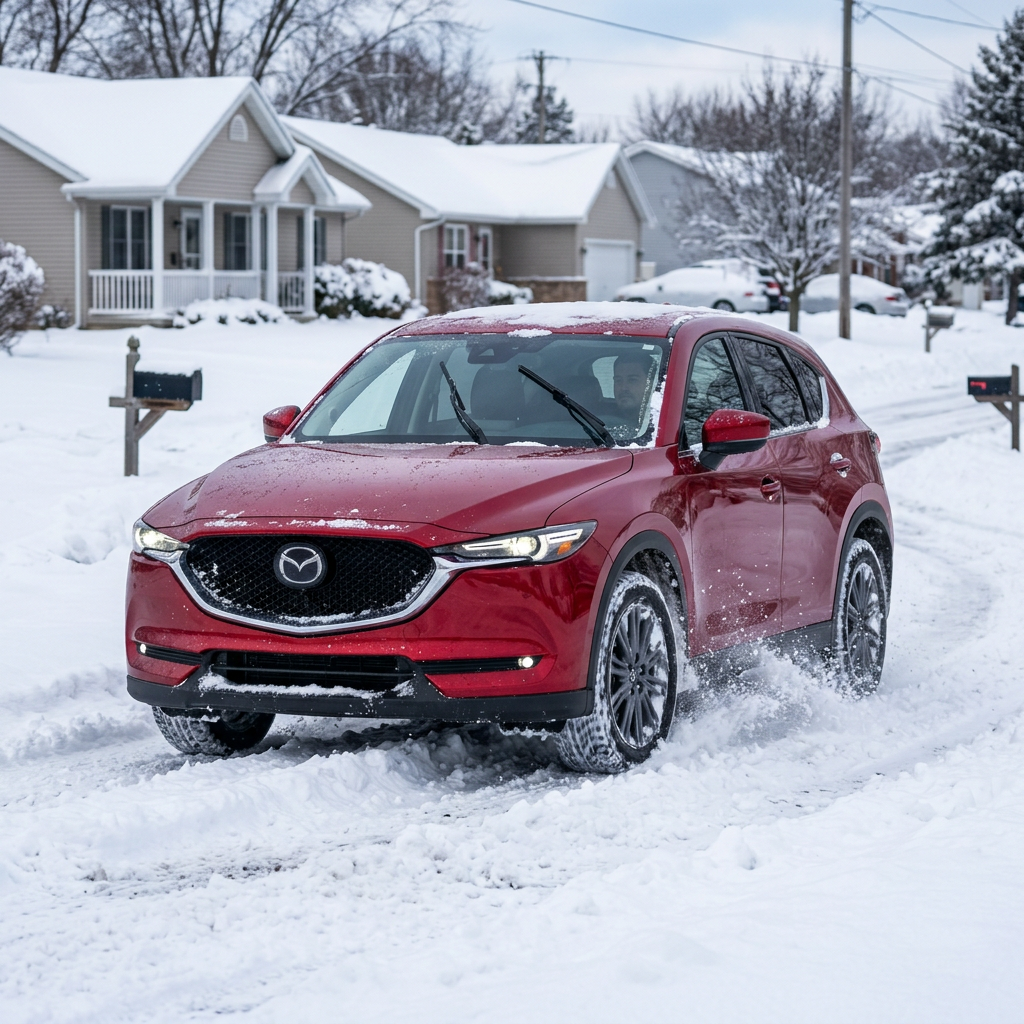
When heavy Lake Michigan lake-effect snow or blizzards blanket Plainfield subdivisions before snowplows can clear neighborhood routes, physical ground clearance becomes the ultimate determining factor between driving through or getting stranded. The Mazda CX-5 boasts a generous 7.6 to 7.9 inches of unladen ground clearance depending on wheel and trim specification. This stance strikes a purposeful engineering balance: it provides enough lift to ride comfortably over unplowed snow ridges and icy street berms without creating an unwieldy center of gravity that compromises Mazda's signature handling dynamics. Crucially, adequate ground clearance prevents high-centering—the hazard where deep snow packs densely underneath the crossover's belly, lifting tire contact patches off the asphalt and causing all four wheels to spin helplessly.
From an electrical and mechanical protection perspective, the CX-5's undercarriage shielding plays an equally essential role in battery longevity. A well-designed belly pan diverts sub-zero slush, corrosive liquid magnesium chloride road brine, and packed snow away from the lower engine bay and alternator casing. By keeping freezing splash water off wiring harnesses and the 12-volt battery tray, the vehicle mitigates terminal oxidation and protects grounding leads against parasitic voltage leaks throughout bitter winter months.
What Tire Size Fits the Mazda CX-5 for Winter Wheel Packages?
While all-wheel drive controls torque distribution, tires represent your only physical connection to frozen Illinois asphalt. Selecting the right winter tire package maximizes both mechanical grip and rim protection during freeze-thaw cycles.
Factory 19-Inch Setup
Higher trims like the 2.5 Turbo Signature and Premium Plus leave the factory on 225/55R19 all-season tires on 19x7J alloy rims. While winter-rated tires exist in this 19-inch dimension, low profile 55-series sidewalls offer less cushion against deep Chicago-area winter potholes and hidden frost heaves.
The Minus-One Strategy
Our service experts strongly recommend "minus-sizing" to the CX-5's alternative OEM spec: 225/65R17 on 17x7J steel or alloy wheels. This size retains exact overall rolling diameter within 0.2%, preserving speedometer accuracy, transmission shift timing, and i-Activ AWD rotational calibration.
Winter Dynamics Benefit
The 65-series sidewall adds nearly an inch of flexible rubber protection between brittle rims and jagged ice chunks. Dedicated winter rubber compounds (such as Bridgestone Blizzak or Michelin X-Ice) remain pliable below 45°F, dramatically reducing braking distance on black ice.
A Complete Winterization and Battery Care Checklist for Plainfield Drivers
Preparing your Mazda CX-5 for the bitter months ahead requires methodical preventative attention. Use this checklist before temperatures drop consistently below freezing: • Test Resting Open-Circuit Voltage: Using a digital multimeter, check battery voltage after resting overnight. A healthy battery registers 12.6 to 12.8 volts. If your meter reads 12.2V or lower, the battery is at 50% state of charge or worse. • Scrub Terminal Posts: Inspect battery terminals for chalky white or blue lead sulfate corrosion. Clean with a wire brush and apply protective dielectric grease to guarantee unbroken electrical connection. • Inspect the Serpentine Belt: Cold rubber stiffens and slips. Ensure the alternator drive belt possesses correct tension and shows no micro-cracking across its ribs. • Deploy a Smart Trickle Tender: If you work from home or leave your CX-5 parked for several consecutive days in winter, plug in a smart microprocessor-controlled 12V maintainer to neutralize parasitic draw. • Observe the 3-to-4 Year Replacement Rule: Automotive batteries rarely survive a fourth severe Illinois winter. Proactively replacing an aging OEM battery saves hundreds in towing fees.
Schedule Cold-Weather Battery Testing and Winter Service at Hawk Mazda
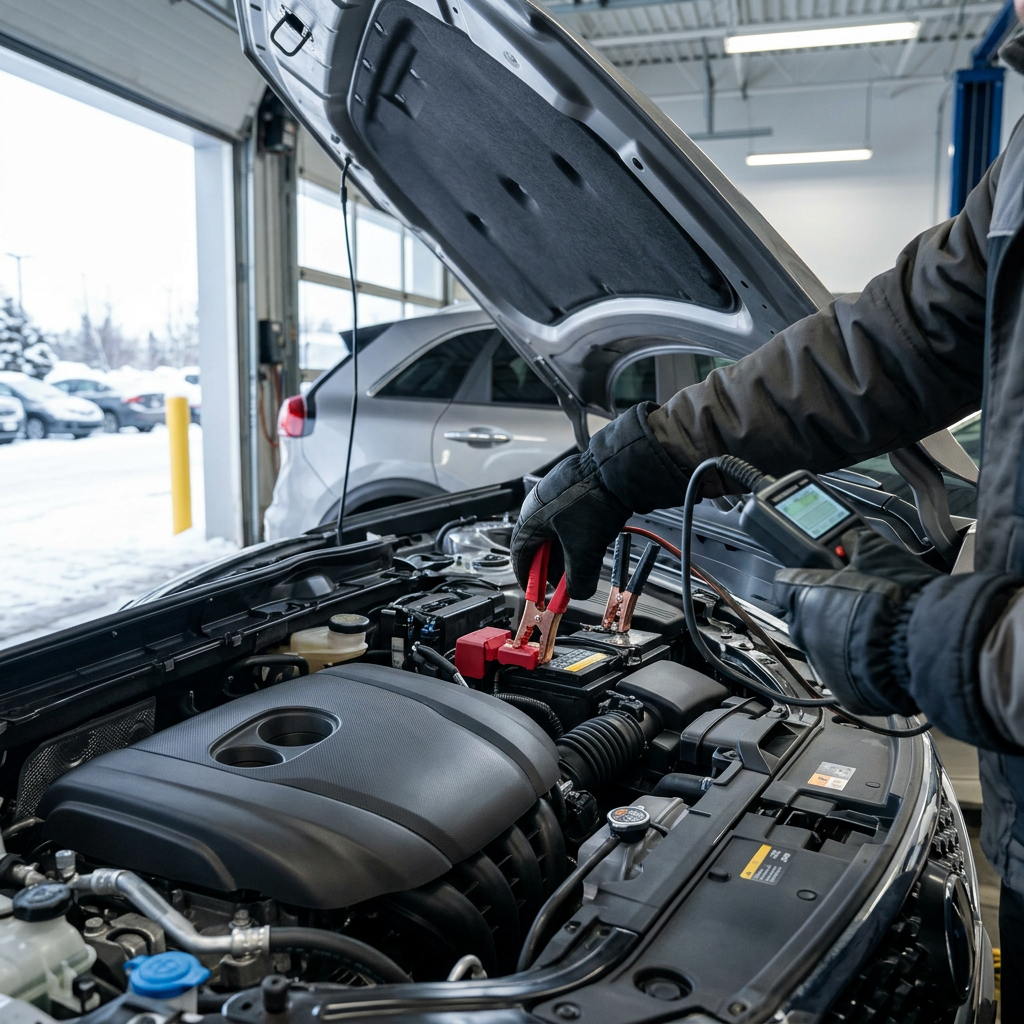
Don't let a sub-zero Illinois morning leave you stranded with a clicking starter. The factory-trained technicians at Hawk Mazda are here to ensure your Mazda CX-5 is primed for every winter challenge. Our advanced diagnostic equipment tests internal conductance, reserve capacity, and cold cranking amp output under simulated load, pinpointing hidden weak cells before they leave you in the cold. Whether you need a genuine high-CCA Mazda replacement battery, winter wheel and tire mounting, fresh synthetic differential fluid, or a comprehensive multi-point inspection, our state-of-the-art facility provides expert care with quick turnarounds. When you are ready to visit us, simply get directions to Hawk Mazda at 2421 S Route 59 in Plainfield, or call (779) 260-6502 to speak with a dedicated service advisor today. Thinking about upgrading for the snowy season ahead? You can also check our used vehicle inventory or get your trade-in value online in seconds.