What Should You Do Immediately When a Blowout Occurs on the Highway?
A high-speed tire blowout on a busy interstate like I-55 or I-80 is one of the most jarring emergencies a driver can face. In less than a quarter of a second, an exploding tire transforms a smooth, predictable commute into a high-stakes battle for vehicle control. When pneumatic decompression happens at 65 mph, instinct often betrays driver safety. The natural urge is to slam on the brakes and jerk the steering wheel toward the shoulder. However, doing so instantly destabilizes the vehicle, frequently causing a rollover or a sudden spin across multiple active traffic lanes.
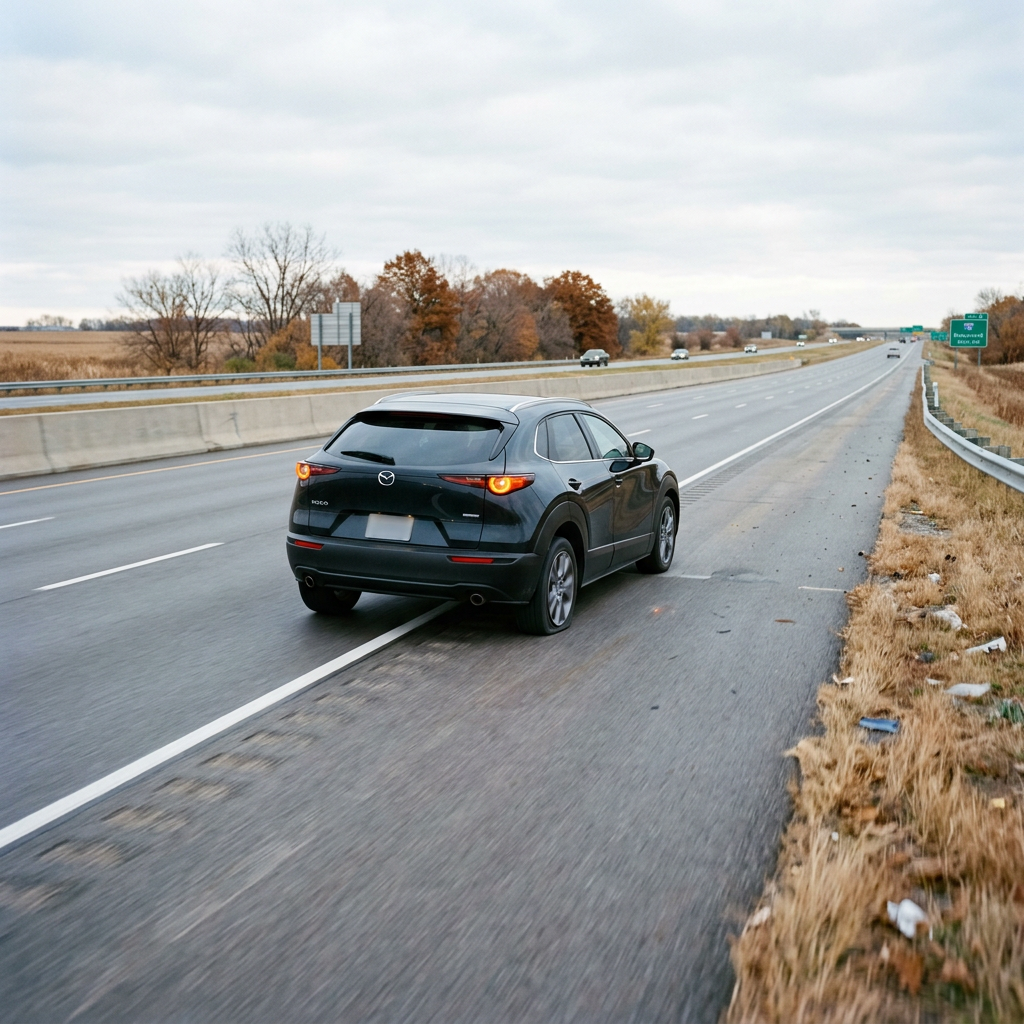
The immediate, single most critical rule during a highway blowout is counterintuitive: maintain a firm, two-handed grip on the steering wheel, resist the urge to step on the brake pedal, and press gently on the accelerator pedal for 1 to 2 seconds. Maintaining slight throttle momentum provides immediate forward drag counter-force, stabilizing vehicle yaw and preventing the sudden weight transfer that causes loss of directional control. Once the vehicle's trajectory is locked straight, activate your hazard lights and gradually ease off the gas pedal, allowing engine braking to bleed off speed until you drop below 30 mph. Only then should you smoothly steer toward a wide right-side emergency shoulder.
How Vehicle Control Differs During a Sudden Blowout Versus a Slow Leak
Explosive Pneumatic Decompression
A sudden highway blowout represents an explosive release of pressurized air. When a tire's structural core fails at high speed, the loss of air pressure is near-instantaneous (occurring in roughly 0.1 seconds). This creates an immediate asymmetrical drag force on the affected corner of the car. Drivers will experience a sharp, violent pull on the steering wheel toward the side of the compromised tire, accompanied by aggressive chassis shuddering and dynamic vehicle yaw. On fast-moving corridors near Plainfield, this instantaneous friction imbalance demands calm, precise counter-steering without sudden inputs.
Gradual Pressure Loss & Auditory Warnings
In contrast, a slow puncture caused by a nail or small rim seal flaw results in a gradual decline in pressure over miles or hours. Drivers usually notice subtle mechanical symptoms long before critical failure: a progressive drifting alignment, a dull rhythmic thumping sound, or an illuminated Tire Pressure Monitoring System (TPMS) alert on the instrument cluster. While a slow leak gives you ample time to pull off safely at an upcoming exit, an explosive blowout offers zero advance warning, requiring immediate muscle memory execution.
Step-by-Step Emergency Response Checklist When a Tire Blows Out at High Speed
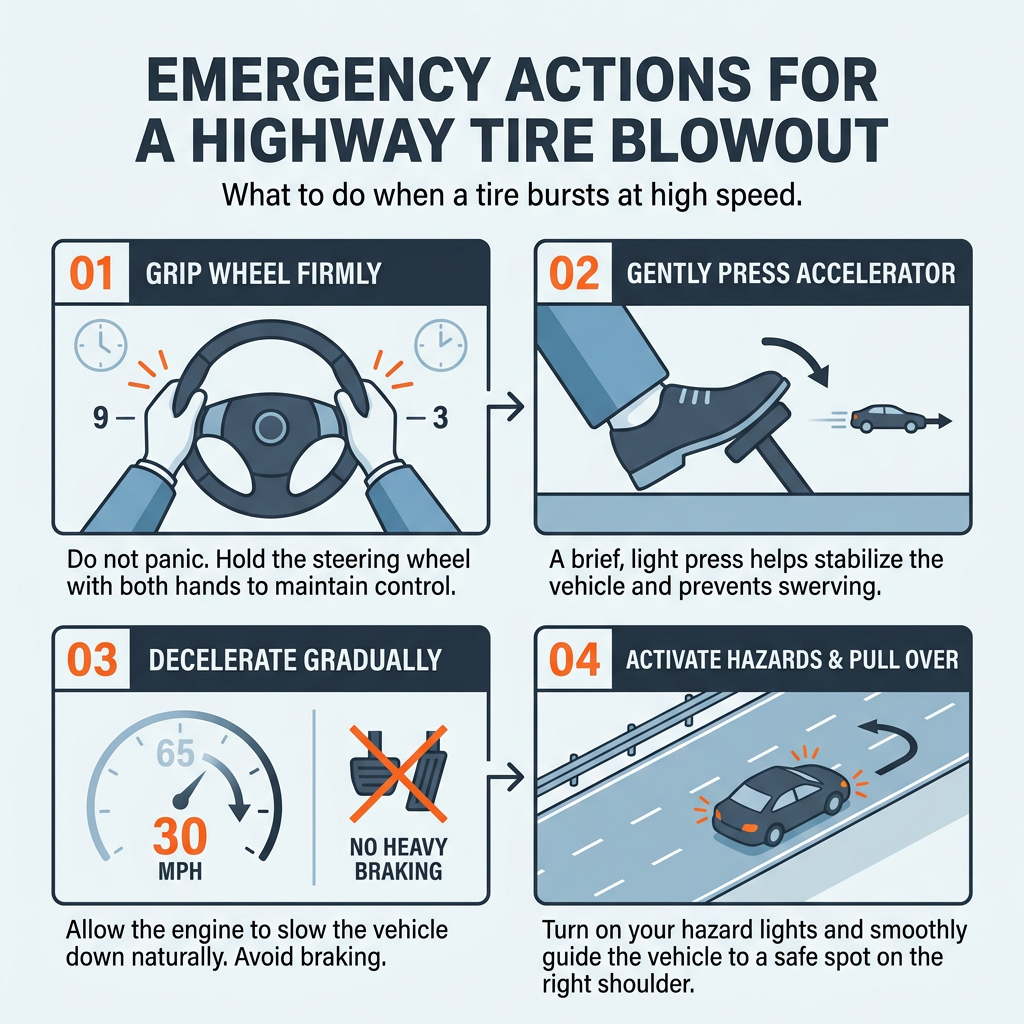
Steps 1 & 2: Control & Stabilization
1. Stiffen Grip at 9 and 3 O'Clock: Instantly lock your wrists and firmly grip the steering wheel with both hands to resist pulling forces.
2. Maintain Gentle Throttle: Do not slam the brakes. Briefly maintain or slightly press the accelerator to stabilize vehicle momentum and keep the vehicle tracking straight.
Steps 3 & 4: Deceleration & Signaling
3. Allow Engine Braking: Ease your foot completely off the gas pedal. Let wind resistance and engine drag gradually reduce your speed from 65 mph down to 30 mph.
4. Activate Hazards & Signal: Turn on emergency blinkers to alert surrounding commuters that your vehicle is experiencing a critical malfunction.
Final Safe Shoulder Exit
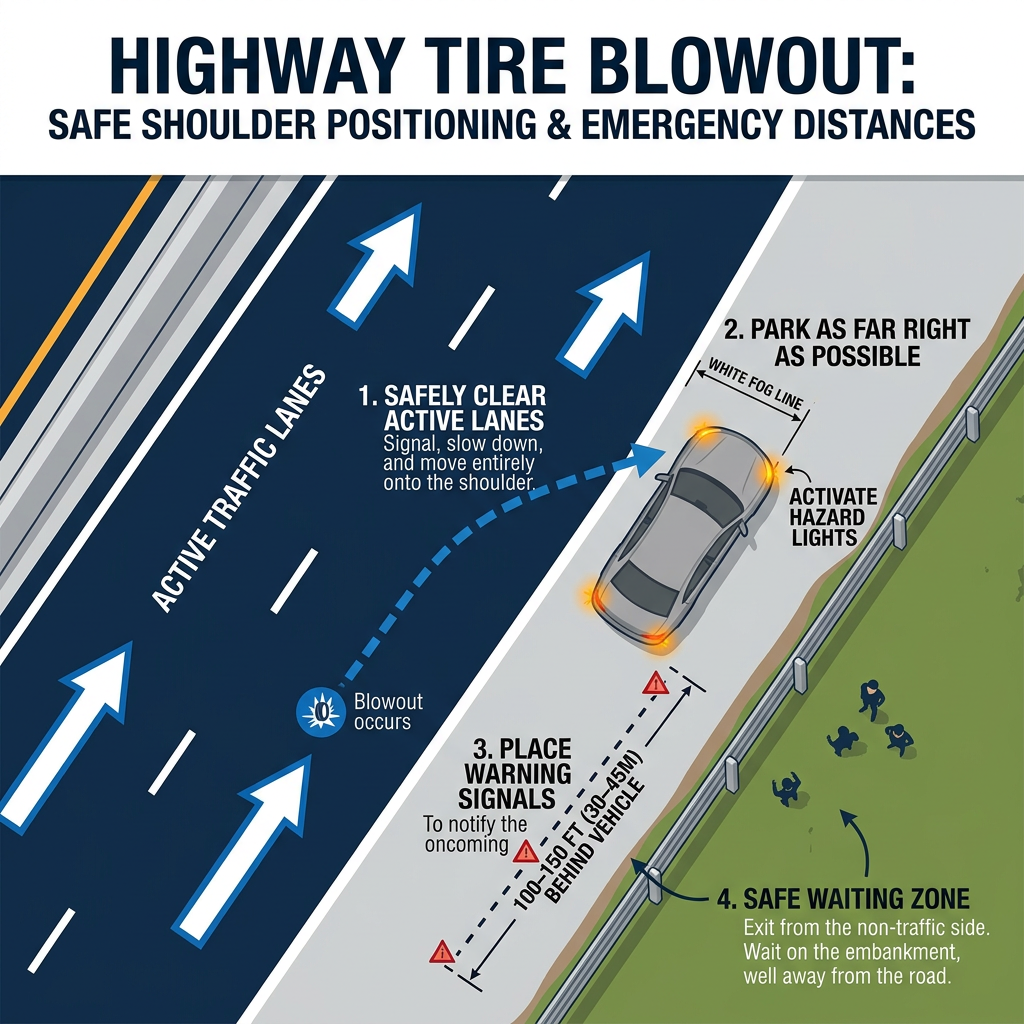
Once momentum has dissipated below 30 mph, look in your mirrors and guide the vehicle smoothly toward a wide shoulder or safety zone. Steer gently—sharp turning motions while traveling on a rim can cause wheel slip or rim binding. Park as far right as possible, turn off the engine, set the parking brake, and remain buckled inside.
What Happens When You Drive On a Flat Tire Beyond the Emergency Pull-Off Zone?
Continuing to drive on a completely deflated tire past the initial emergency pull-off zone triggers rapid, destructive mechanical friction. Standard pneumatic tires rely on compressed air to support vehicle weight and maintain sidewall rigidity. Without air pressure, the entire weight of the vehicle crushes the rubber sidewall against the metal lip of the wheel rim.
Within just a few hundred yards of rolling motion at speed, internal friction creates temperatures exceeding 300°F inside the tire cavity. This extreme thermal load vaporizes the rubber bonding agents, causing the inner liner to disintegrate into fine black dust and shredding the steel belts. What might have been a minor puncture repairable for under $40 becomes a complete structural failure requiring full tire replacement.
What Physical Damage Occurs to a Car When You Drive On a Flat Tire?
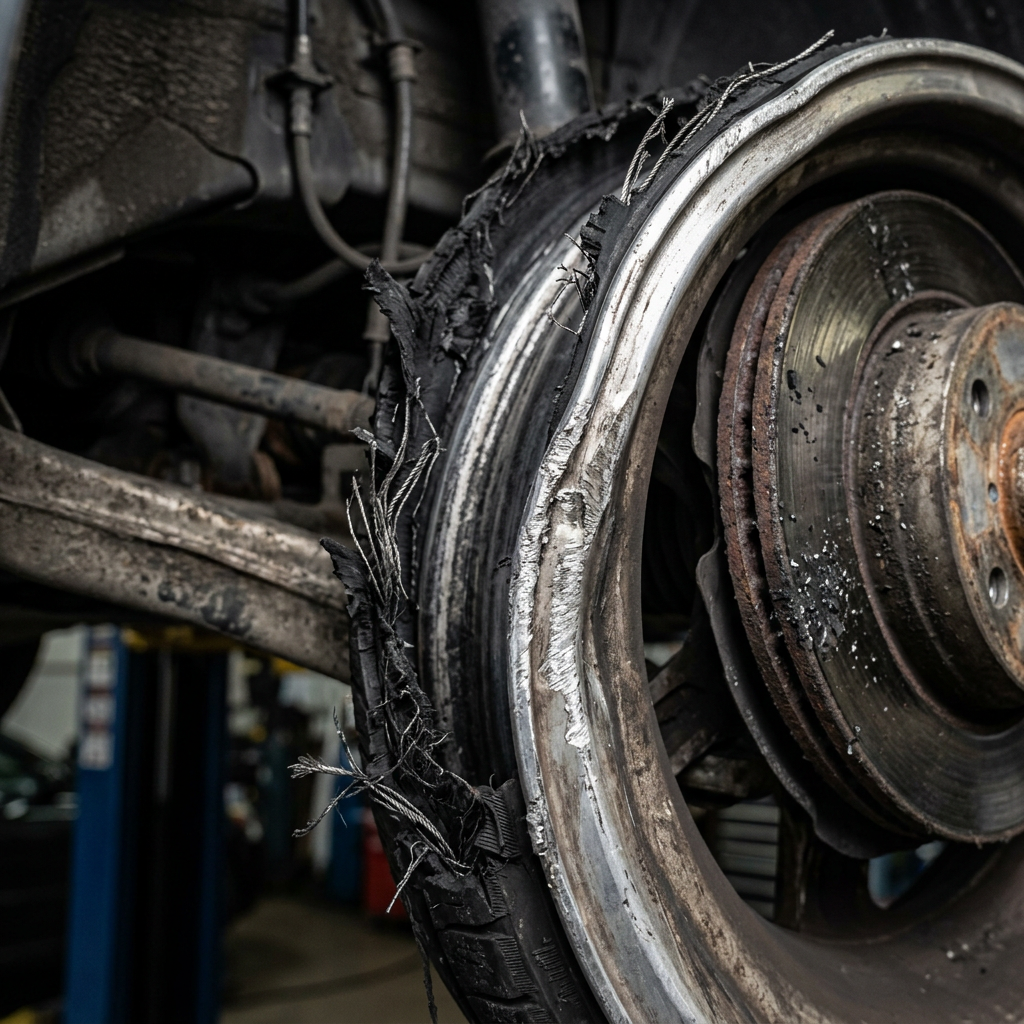
Alloy Wheels & TPMS Sensors
When rubber padding degrades, the aluminum alloy wheel rim strikes raw pavement directly. High-impact road shocks instantly warp, crack, or bend the precision lip of the rim. Additionally, modern internal TPMS pressure sensors attached to the valve stem are crushed and destroyed by tumbling rubber debris within seconds.
Brake Lines & Wheel Liners
As high-speed tire tread separates from the carcass, heavy steel-braided rubber fragments act like a high-speed flail inside the wheel arch. These whipping remnants violently tear apart plastic fender liners, slice open hydraulic brake fluid lines, and sever ABS wheel speed sensor wiring harnesses.
Suspension & Steering Arms
Uncushioned rim impacts transmit massive kinetic energy into steering knuckles, lower control arms, tie rod ends, and struts. Impacting potholes or expansion joints without tire air pressure easily bends forged control arms and throws steering alignment out by several degrees.
The Cost Difference Between Fixing a Simple Puncture Versus Replacing a Damaged Rim and Tire
Stopping immediately when a tire loses pressure preserves the tire carcass and rim structure, limiting repair costs to a quick, affordable plug-and-patch procedure. However, driving even a short distance on a flat tire multiplies potential repair bills exponentially. Understanding the stark financial contrast highlights why pull-off safety is vital.
|
Repair Category
|
Immediate Pull-Off (Simple Puncture)
|
Driven On Flat (Secondary Component Damage)
|
|
Tire Service
|
$30 - $50 (Patch & Plug Repair)
|
$180 - $380 (New OEM Replacement Tire)
|
|
Wheel / Rim Expense
|
$0 (Rim Preserved)
|
$350 - $850 (Replacement Alloy Rim)
|
|
TPMS Sensor
|
$0 (Sensor Reused)
|
$75 - $150 (Replacement & Recalibration)
|
|
Wheel Alignment & Suspension
|
$0 (Geometry Unaffected)
|
$150 - $450 (Alignment & Control Arm Repair)
|
|
Total Cost Range
|
$30 - $50
|
$755 - $1,830+
|
How Far Can You Safely Drive on a Completely Flat Tire?
On standard pneumatic tires, the absolute maximum distance you can drive on a completely flat tire is only a few hundred feet—just enough to clear active highway travel lanes and clear the white fog line. Attempting to roll half a mile to the next exit along Route 59 or near Shorewood on a fully deflated standard tire guarantees rim destruction and dangerous loss of vehicle steering stability.
If you are stuck on a narrow shoulder near Plainfield, IL, do not attempt to limp the vehicle to a service station. Park safely, turn on your hazard lights, remain inside your seatbelt, and contact certified assistance. You can easily Schedule Your Service Today with certified professionals or reach roadside dispatch for safe vehicle flatbed transport.
How Do Run-Flat Tires Work Compared to Standard Pneumatic Tires?
Self-Supporting Sidewall Technology
Run-flat tire systems (RFT) feature thick, heat-resistant synthetic rubber inserts embedded within their sidewalls. In the event of complete pressure loss, these reinforced sidewalls prevent the wheel rim from crushing down onto the pavement, maintaining structural wheel height and allowing steering control during puncture events.
Strict 50/50 Operating Parameters
While run-flat tires enable drivers to continue driving after a blowout, they operate under strict mechanical limits: a maximum speed of 50 mph and a maximum distance of 50 miles. Driving beyond these limits generates intense thermal degradation, eventually destroying the core carcass and requiring full replacement.
Essential Safety Equipment and Roadside Emergency Kits for Chicagoland Drivers
High Visibility & Flares
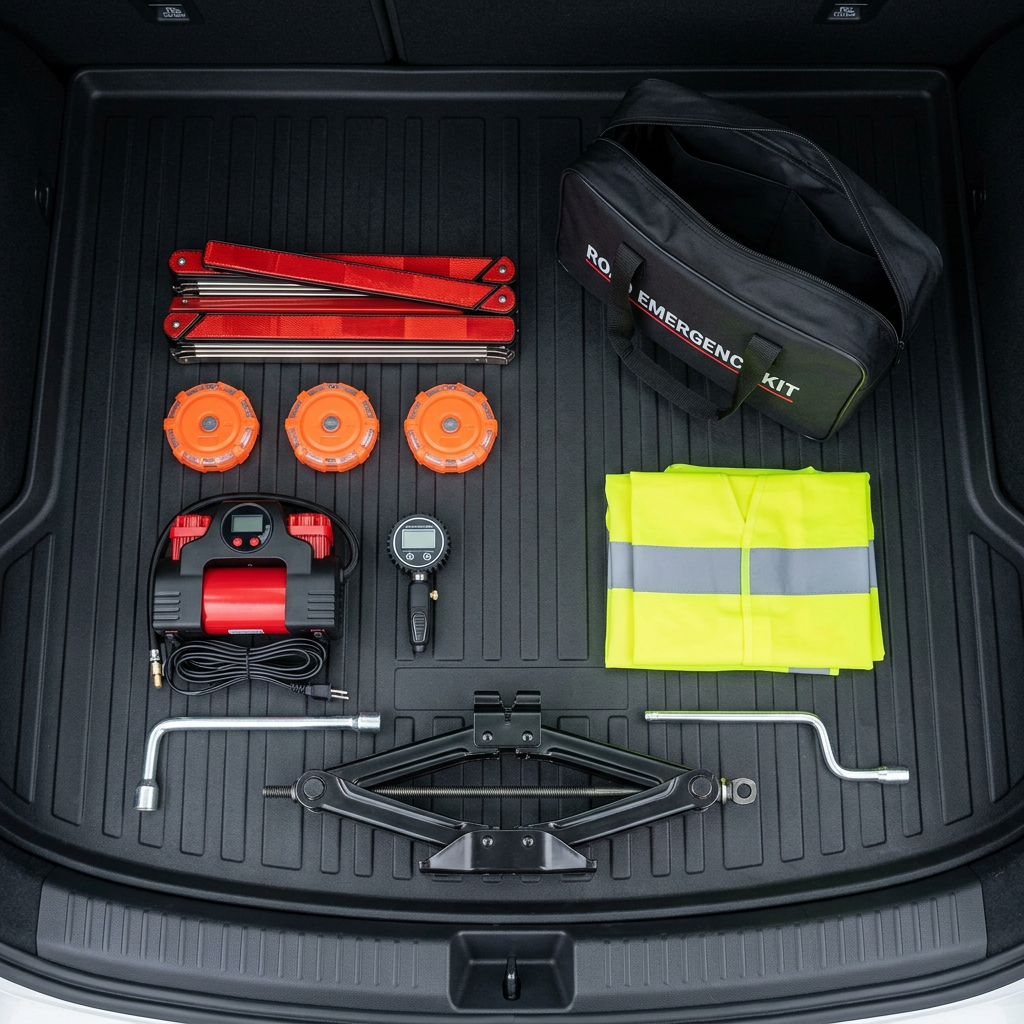
Northeastern Illinois highways experience low-visibility fog and winter storms. Carry reflective warning triangles, a high-visibility safety vest, and battery-powered LED electronic flares to alert approaching drivers when stopped along I-55.
Pressure Gauges & Compressors
Keep an accurate digital tire pressure gauge and a 12V portable tire inflator in your trunk. Checking pressure monthly—especially during sudden autumn temperature drops—prevents underinflation blowouts.
Heavy-Duty Jack & Spare
Verify that your temporary compact spare tire is inflated to its recommended pressure (typically 60 PSI). Ensure your wheel lug wrench and scissor jack are rust-free and functioning smoothly.
Preventative Tire Maintenance: Spotting Early Warning Signs of Tread Failure and Sidewall Rot
Most highway blowouts are preventable events caused by chronic underinflation, tread wear down to the steel cords, or severe sidewall dry rot. Chicagoland's intense temperature swings—from scorching summer pavement to sub-zero winter cold—cause rapid expansion and contraction of rubber compounds, accelerating micro-cracking.
Inspect your tires regularly for sidewall egg-shaped bulges (which indicate internal belt separation), cracking along the tread grooves, or tread depth below 3/22 inches. If you notice persistent pressure loss or steering vibration, visit a factory-trained technician immediately.
Why Professional Wheel Alignment and Suspension Checks Are Vital After Highway Blowouts
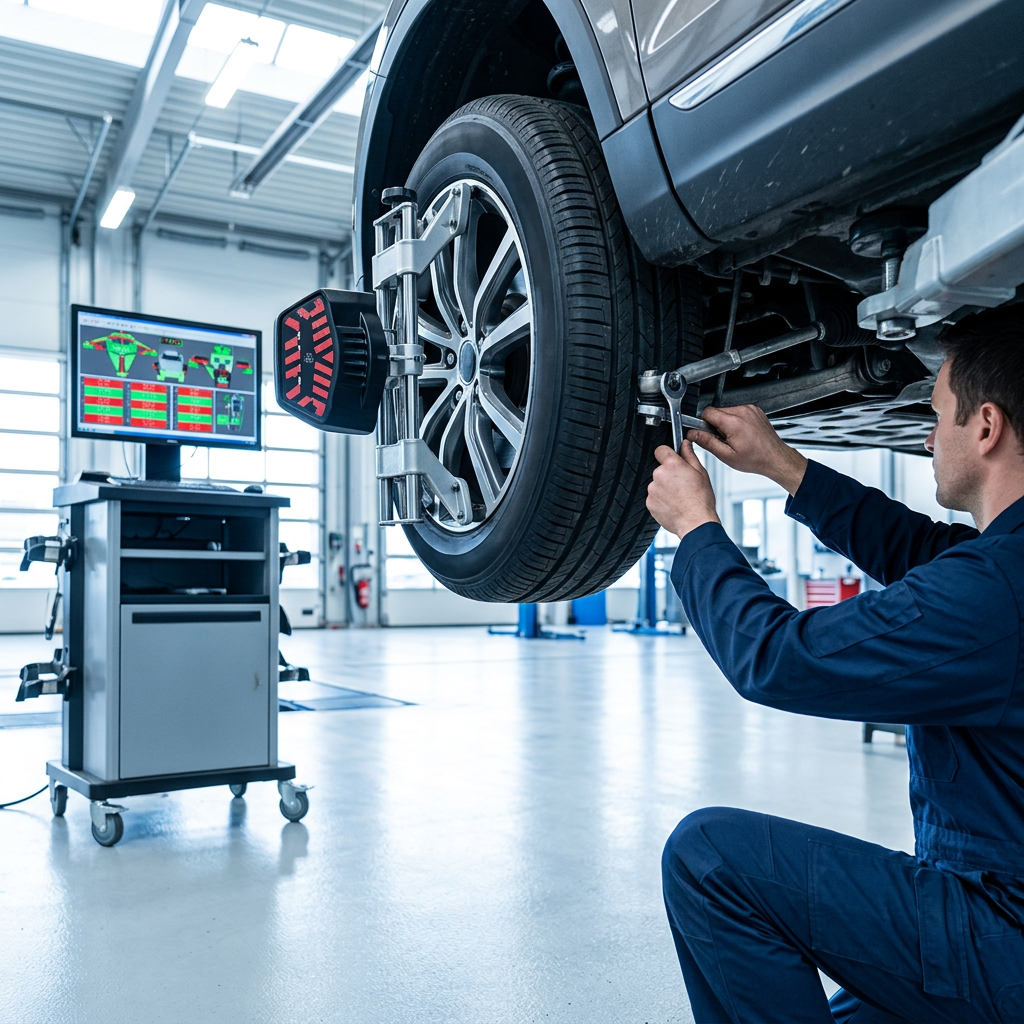
Simply mounting a new replacement tire after a high-speed blowout is not enough to guarantee long-term driving safety. The immense shock load transmitted during an explosive deflation frequently knocks wheel camber, caster, and toe angles out of factory specification. Running a fresh tire on misaligned steering geometry causes accelerated shoulder wear, cutting tire life in half.
Schedule Certified Tire Replacement and Safety Service at Hawk Mazda in Plainfield, IL
When tire emergencies happen, drivers throughout Plainfield, Shorewood, and Joliet trust the certified service center at Hawk Mazda. Our factory-trained technicians provide comprehensive tire health inspections, precision laser wheel alignments, OEM tire replacements, and rim runout assessments to ensure your vehicle returns to optimum road safety.
Visit us at 2421 S Rte 59, Plainfield, IL 60586 or speak with our service advisors directly by calling Call (779) 260-6502. Protect your investment and drive with complete confidence.