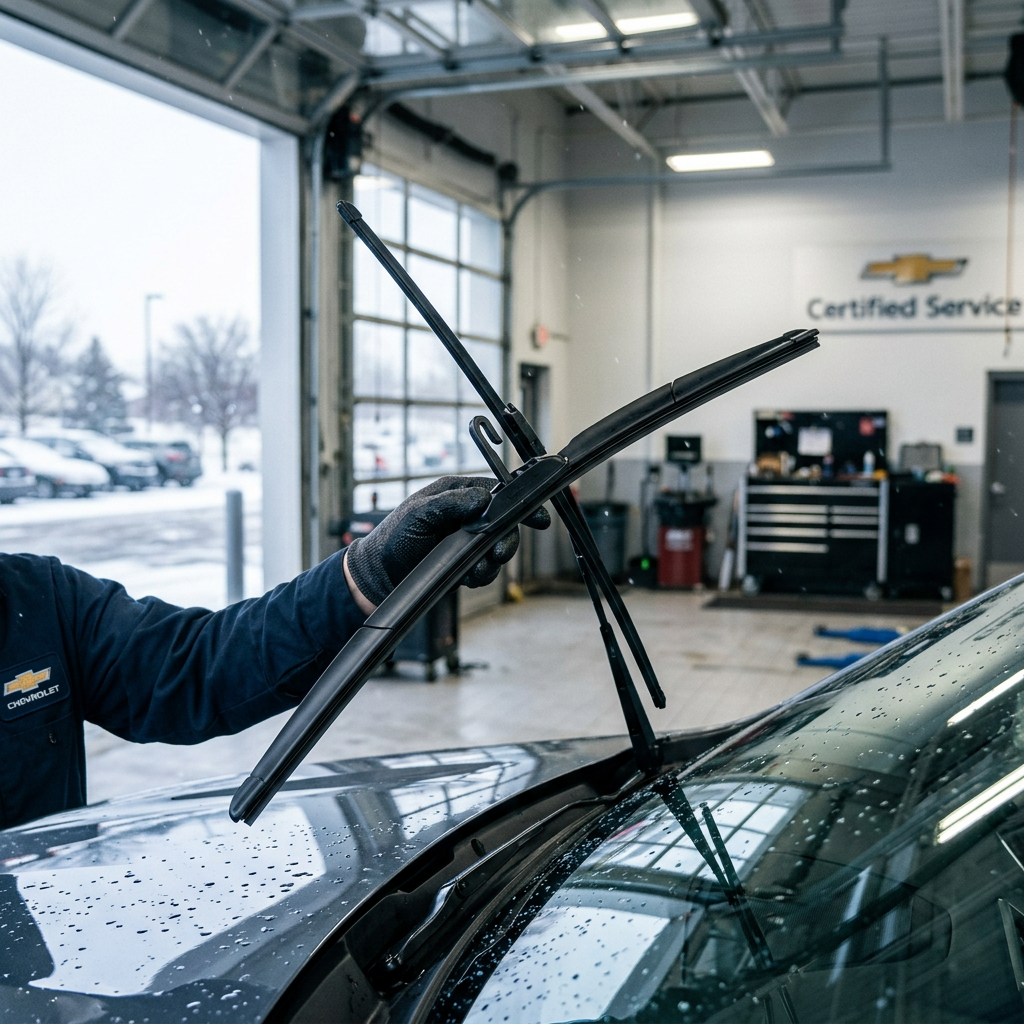
What Features Make Wiper Blades Best for Heavy Snow and Ice? Expert Winter Visibility Advice
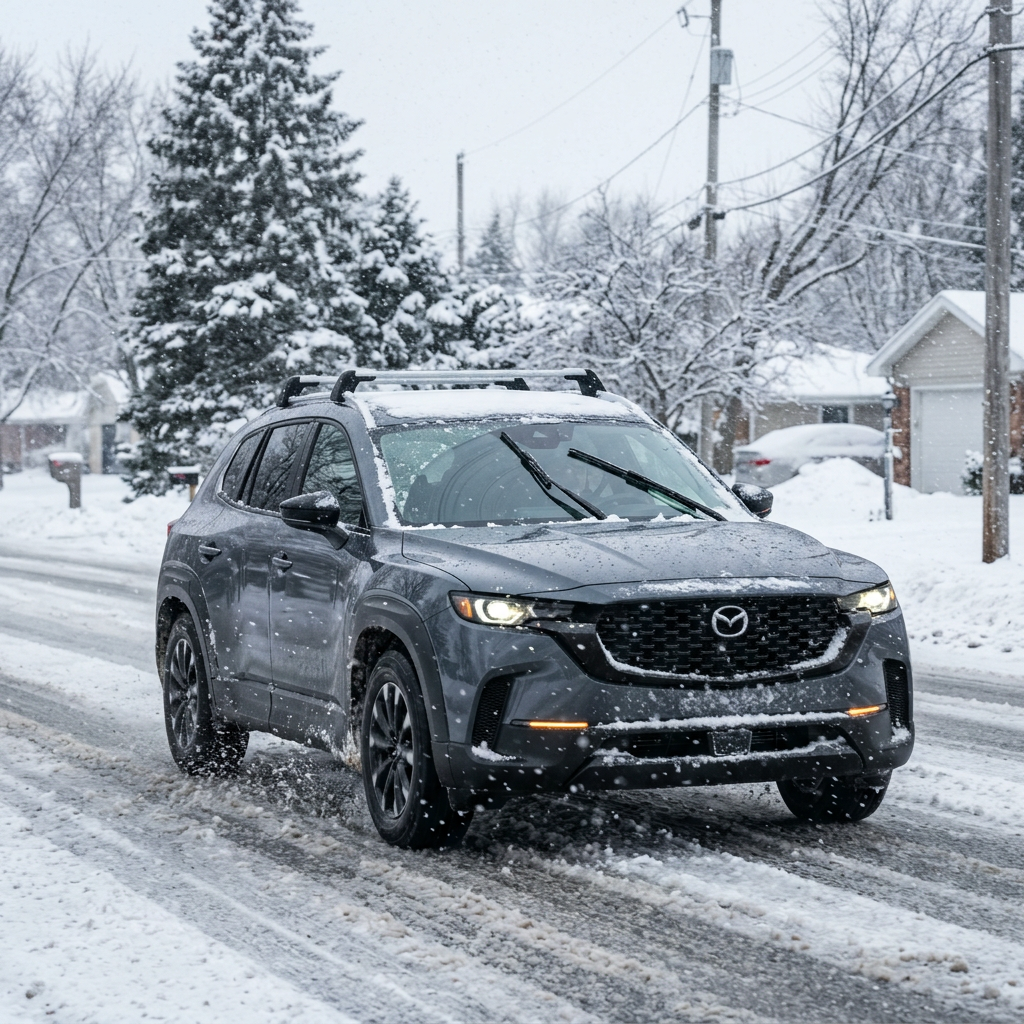
The Bottom Line from Our Service Advisor: Navigating a Northern Illinois blizzard along Interstate 55 or Route 59 requires uncompromising windshield visibility. The features that make a wiper blade perform exceptionally well in heavy snow and ice come down to three core design elements: frameless beam-style construction, extreme low-temperature synthetic silicone or graphite-treated rubber compounds, and heavy-duty protective armoring or integrated aerodynamic spoilers. Unlike traditional wiper blades that rely on exposed metal skeleton frames—which freeze up, clog with slush, and lift off the glass at highway speeds—the ideal winter wiper blade maintains uniform curvature pressure across your windshield even at sub-zero temperatures. In this comprehensive Q&A interview, our senior Service Advisor at Hawk Mazda in Plainfield, IL breaks down the exact mechanics of cold-weather wiper blade engineering, material science, top brand performance comparisons, and real-world maintenance routines to keep your family safe throughout the harsh Midwestern winter.
Q: What is the difference between winter wiper blades and regular wiper blades?
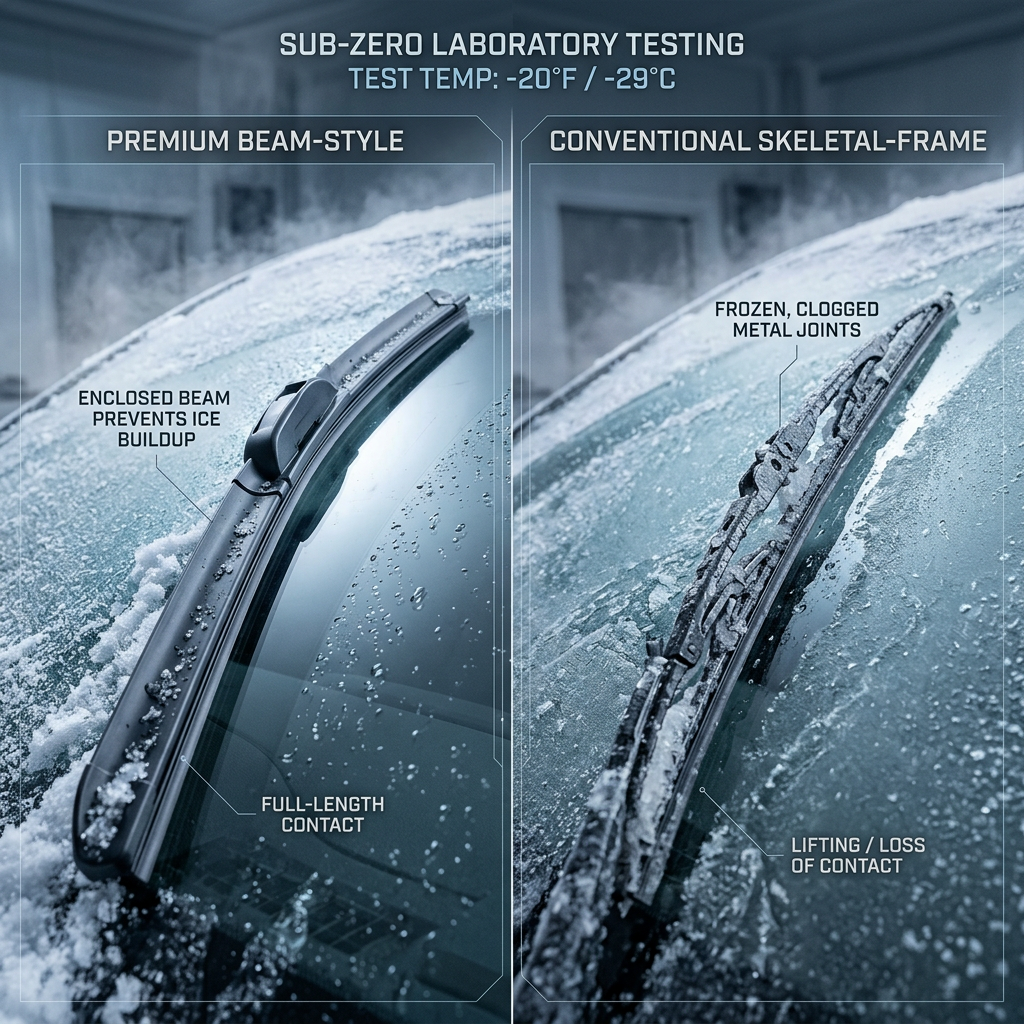
Interviewer: Drivers often wonder why their standard factory or standard conventional wipers start chattering and leaving dangerous streaks the moment freezing rain and wet snow hit Plainfield. What structural differences set true winter wiper blades apart from conventional summer blades? Service Advisor: It all starts with how ice interacts with mechanical movement. Standard conventional wipers use a series of exposed metal linkage arms and pressure points—often called a 'conventional frame'—to hold the rubber squeegee against your glass. During a Midwestern winter, wet snow packs into those metal joints and freezes solid. Once those linkages freeze, the blade becomes rigid and cannot flex to match the curve of your Mazda windshield. That leaves massive un-wiped patches right in your line of sight. Dedicated winter wiper blades solve this in one of two ways: traditional boots or beam designs. Older style winter blades encase the entire metal frame in a sealed, protective rubber sheath or 'boot.' This boot prevents slush and moisture from reaching the mechanical joints. Modern premium winter wipers take it a step further by eliminating external frame linkages altogether in favor of a single-piece beam structure.
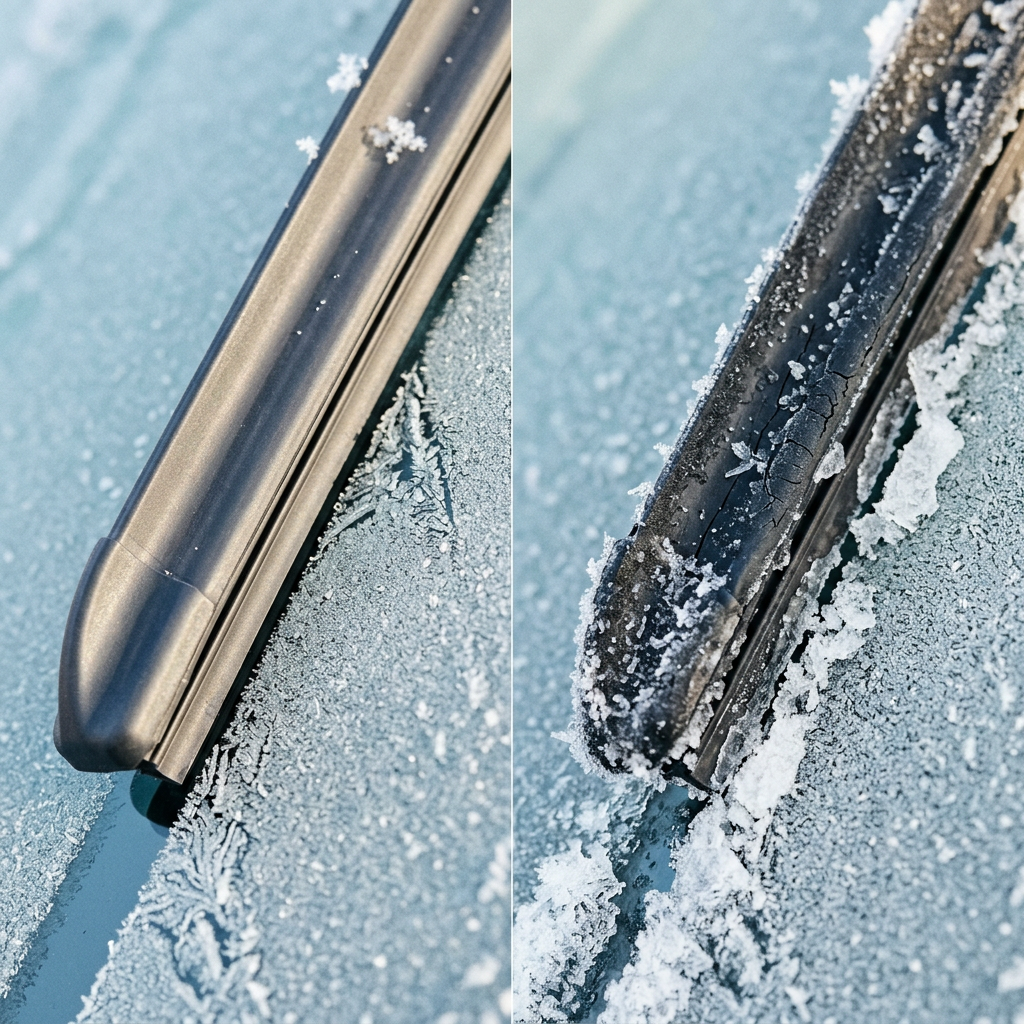
Service Advisor (continued): Beyond structural framework, the rubber compound itself is completely different. Standard summer wiper blades use natural rubber compounds engineered for warm temperatures. When temperatures drop below freezing, standard natural rubber hardens, becomes brittle, and loses its elasticity. Instead of gliding smoothly, frozen rubber chatters across the glass, skips over packed snow, and tears easily along frozen wiper tracks. Purpose-built winter wiper blades utilize specialized synthetic rubber compounds infused with silicone, graphite, or synthetic polymers. These materials are engineered to stay pliable and soft even when temperatures dip well below zero degrees Fahrenheit across Joliet and Will County. Furthermore, winter squeegees feature a thicker, squarer edge cut designed to plow heavy, wet snow loads off the glass rather than riding over top of the slush pack. If you want seamless winter clearing, moving away from conventional exposed frame wipers is step number one.
Q: Does silicone rubber stay flexible in extreme cold compared to natural rubber?
Natural Rubber Limitations
Standard natural rubber blades perform well in moderate rain, but sub-zero temperatures cause organic polymer chains to stiffen rapidly. As elasticity drops, micro-cracks form along the wiping edge. Frozen natural rubber cannot contour to modern aerodynamic windshield curvature, leaving dangerous streaks and blurred streaks right across your driving vision during night snowstorms.
Synthetic Silicone Advantages
Synthetic silicone rubber maintains high flexibility across extreme thermal spectrums—from -40°F up to 180°F. Silicone does not absorb moisture, meaning ice will not bond directly to the blade edge. As silicone wipers sweep, they deposit an invisible hydrophobic layer on your glass that actively repels freezing rain, sleet, and road slush.
Service Advisor Insight: High-grade silicone blades typically outlast natural rubber by up to 2x or 3x in Northern Illinois winter trials. They resist UV breakdown and withstand scraping against icy windshield edges without tearing.
Q: Are beam-style wipers superior to traditional framed blades in freezing weather?
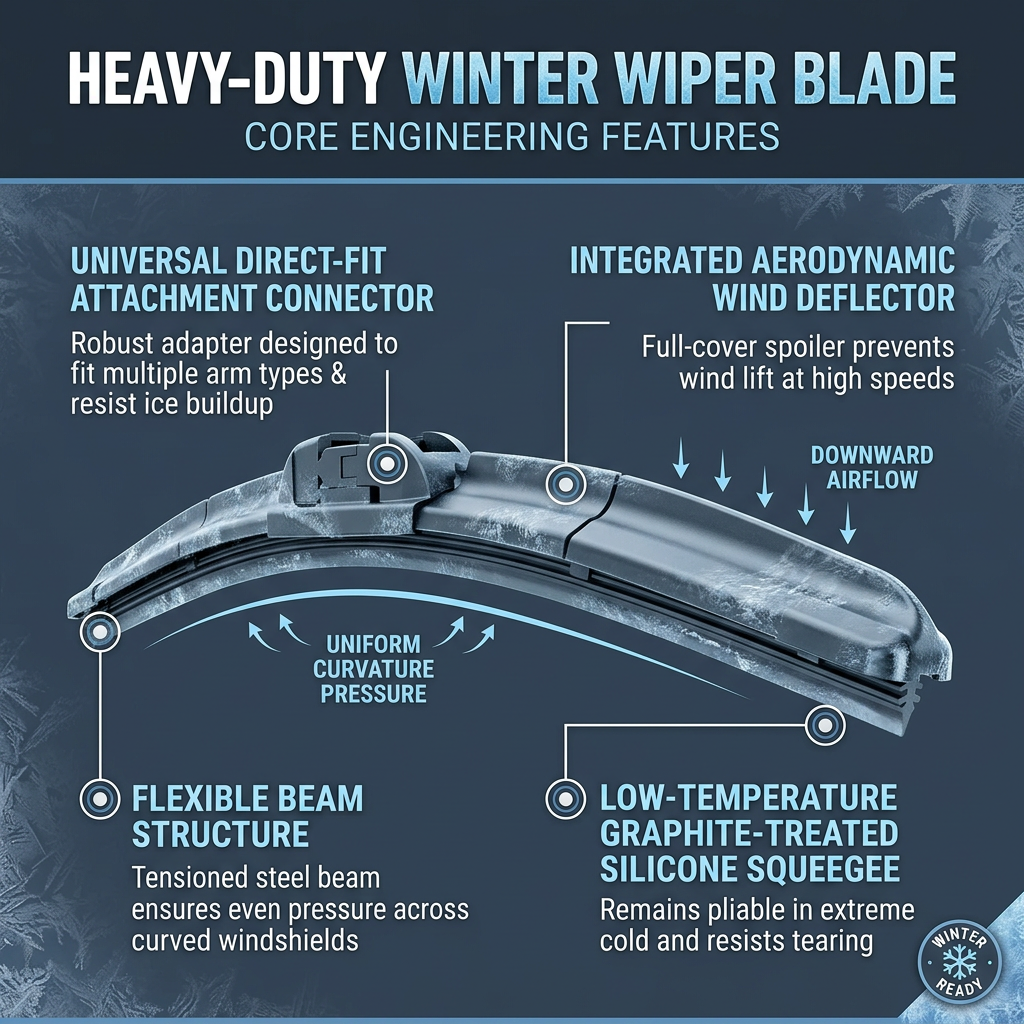
Interviewer: Beam blades have become increasingly popular on modern crossovers like the Mazda CX-5 and CX-90. Why are beam wipers considered superior when dealing with severe ice pack? Service Advisor: Without a doubt, beam-style wipers are the absolute gold standard for winter driving in Chicagoland. A beam blade consists of a curved steel beam embedded inside a sleek rubber housing. Because there are zero exposed brackets, pivots, or metal hinges, there is literally nowhere for ice, slush, or freezing rain to accumulate and freeze solid. Traditional framed wipers rely on 4 to 8 discrete pressure points along the blade. In cold weather, pressure between those points drops dramatically, causing middle sections of the blade to lift off the glass. Beam blades, by contrast, utilize memory-curve steel beams designed to distribute uniform, continuous pressure across the entire length of the blade. This matches the exact aerodynamic curve of your Mazda windshield, ensuring a clean sweep from edge to edge.
Service Advisor (continued): Another huge advantage of beam blades during heavy blizzards is aerodynamic wind resistance. When driving down I-55 in 40 mph crosswinds with heavy snow falling, conventional bracketed blades catch the wind like a sail, causing wind lift and severe streaking. Beam blades incorporate an integrated aerodynamic wind spoiler along the top spine. As air flows over the moving vehicle, the spoiler uses that airflow to press the blade even tighter against the glass. At our Plainfield service center, we stock Genuine OEM Mazda beam wipers engineered specifically to match the arm tension specs of your vehicle. You can easily Order Genuine Mazda Parts online or consult with our parts team to get exact OEM beam replacements before the next major winter storm hits.
Q: How do top brands compare—does Rain-X Latitude handle ice buildup better than Bosch ICON?
Interviewer: When drivers walk into an auto parts department or consult with our service team, they often ask about top premium brands like Bosch ICON, Rain-X Latitude, and OEM Mazda replacements. How do these high-end options perform head-to-head in extreme freezing rain? Service Advisor: Both Bosch ICON and Rain-X Latitude are top-tier beam blades, but they solve winter visibility using slightly different engineering philosophies. The Bosch ICON utilizes exclusive dual-rubber compound technology (FX dual rubber) paired with an enclosed tension spring. It excels primarily in extreme longevity and resistance to ozone/cold cracking. Its heavy-duty rubber edge handles ice scraper friction exceptionally well, making it a favorite for drivers commuting daily through heavy winter road salt. The Rain-X Latitude Water Repellency blade embeds a hydrophobic water-beading coating directly into the synthetic rubber matrix. As the wipers operate, they coat your glass with a water-repellent barrier that causes sleet, freezing rain, and road spray to bead up and blow off automatically. However, in heavy ice pack situations, genuine OEM Mazda heavy-duty beam blades often outperform both because the arm connector and spring tension are precisely calibrated to your windshield's factory glass curve.
Below is a side-by-side performance feature matrix comparing conventional blades against premium winter options tested under harsh Midwestern freeze-thaw conditions.
Wiper Blade Feature
Conventional Frame
Rain-X Latitude
Bosch ICON
OEM Mazda Heavy-Duty Beam
Structure Type
Exposed Metal Linkage
Contoured Beam
Enclosed Tension Beam
Precision-Matched OEM Beam
Rubber Compound
Standard Natural Rubber
Synthetic + Hydrophobic Coating
FX Dual Rubber (Silicone/EPDM)
Cold-Resistant Synthetic Graphite
Sub-Zero Flexibility (-20°F)
Poor (Stiff / Rigid)
Excellent
Exceptional
Exceptional
Ice-Clogging Resistance
Very Low
High
Very High
Maximum
Wind Lift Resistance
Low
High (Aero Spoiler)
High (Asymmetric Spoiler)
Optimized OEM Aero Fit
Expected Winter Lifespan
3 to 6 Months
9 to 12 Months
12 to 18 Months
12 to 18 Months
Q: Are expensive winter wiper blades worth the extra money for local drivers?
1. Driver Safety & Clarity ROI
Driving at 65 mph on I-55 during a severe slush storm means your vehicle covers nearly 100 feet per second. Spending an extra $15–$25 on premium winter beam blades pays for itself instantly by eliminating sudden blinded streaks when semi-trucks splash heavy wet road salt onto your windshield.
2. Extended Service Life
Cheap bargain-bin wiper blades frequently tear or chatter after the very first freezing rain event. Premium silicone and beam wipers resist tearing when clearing light frost, meaning you replace blades far less frequently—saving you money across multiple Chicagoland seasons.
3. Protection for Windshield Glass
When cheap framed wipers freeze up and break, exposed metal claws can drag directly across your glass, causing deep windshield scratches that cost hundreds to repair. Premium enclosed winter blades eliminate metal-on-glass friction risks entirely.
Q: What key features should drivers look for when shopping for the best winter wiper blades?
Interviewer: When shopping for replacement winter wiper blades at Hawk Mazda or online, what is the ultimate buyer's checklist drivers should follow? Service Advisor: Keep these 4 key design criteria top of mind: 1. Frameless Beam or Sealed Boot Construction: Never buy open-frame wipers for Northern Illinois winter driving. Ensure the blade is either a frameless beam style or fully enclosed in a weather-tight protective boot. 2. Low-Temperature Silicone or Graphite Rubber: Look specifically for compounds explicitly rated for sub-zero operation. Graphite coating helps squeegees glide effortlessly across frost without chatter. 3. Integrated Aerodynamic Airfoil / Wind Deflector: Heavy winter winds will lift lightweight blades off the glass. An asymmetric wind spoiler uses oncoming airflow to force the wiper firm against the windshield. 4. Direct-Fit Connector Adapters: Ensure the mounting mechanism matches your vehicle arm (J-Hook, Top Lock, Side Pin, or Mazda OEM pinch tab). Ill-fitting universal adapters can snap off in heavy snow.
Q: How often should winter wiper blades be replaced, and what are the warning signs of failure?
Service Advisor Recommendation: As a general rule of thumb for Midwestern vehicle owners, wiper blades should be replaced every 6 to 12 months, ideally right before winter kicks into gear in late autumn. Even high-end blades degrade due to summer sun UV exposure, road grime, and salt pitting. Key Warning Signs Your Wiper Blades Need Immediate Replacement:• Streaking or Smearing: Continuous bands of water or blurred film left across the glass in your direct line of sight. • Loud Chatter and Vibration: The wiper arm stutters and jumps across the windshield rather than making smooth, silent contact. • Missed Zones & Edge Lifting: Large unwashed sections remaining on the glass, particularly along the outer edges or center radius. • Splitting or Torn Rubber: Physical separation of the rubber edge from the main wiping blade arm. If you notice any of these symptoms while driving around Shorewood or Plainfield, pop into our service drive. You can quickly Schedule Your Service Today and our certified technicians will inspect your blades, washer nozzles, and fluid heating systems in minutes.
Q: What maintenance habits prevent ice damage and extend wiper blade life?
1. Lift Arms Before Ice Storms
When heavy freezing rain or overnight snowfall is forecast in Plainfield, pull your wiper arms up into the service position away from the glass. This simple habit prevents the rubber squeegee from freezing solid to the windshield, protecting the motor and wiper rubber when starting your engine.
2. Fully Defrost Before Wiping
Never turn on your wipers to clear thick frost or hard ice. Running rubber squeegees over sharp, jagged ice acts like sandpaper on the blade edge, tearing micro-grooves into the silicone. Allow your Mazda vehicle's windshield defroster to warm the glass first, and use a plastic scraper gently.
3. Use Sub-Zero Washer Fluid
Switch to winter washer fluid rated for -20°F or -30°F containing de-icer additives. Summer washer fluid will freeze instantly upon contact with cold windshield glass, freezing your wiper blades in place while driving down the highway.
Q: How do I ensure correct winter wiper blade fitment for my Mazda vehicle?
Interviewer: Wiper blade sizes vary significantly across different vehicle lineups, such as the Mazda CX-30, CX-5, CX-50, and three-row CX-90. Driver side and passenger side blades are almost always different lengths. How can local drivers be 100% sure they get the exact right fitment? Service Advisor: Mazda vehicles use specialized aerodynamic wiper arms designed for whisper-quiet high-speed performance. Installing mismatched aftermarket sizes can lead to wiper blades overlapping, hitting the A-pillar trim, or leaving an un-wiped triangle right in front of your lane-keep assist windshield cameras (i-Activesense).
Service Advisor (continued): To guarantee exact fitment, always reference your vehicle owner's manual or visit our certified parts team at Hawk Mazda. Our parts department matches exact factory length specs (e.g., 24-inch driver side paired with 18-inch passenger side) and includes factory direct-fit connectors that snap securely into place without bulky plastic universal adapters. If you ever need help, feel free to Call (779) 260-6502 to speak directly with our parts department!
Upgrade Your Winter Visibility: Schedule Wiper Service or Order OEM Blades at Hawk Mazda
Don't let a sudden Northern Illinois winter storm compromise your family's safety on the road. Whether you need a set of heavy-duty OEM beam wiper blades, high-performance sub-zero washer fluid, or a complete multi-point winter vehicle inspection, the expert team at Hawk Mazda is here to serve you. Visit our state-of-the-art service facility at 2421 S Rte 59, Plainfield, IL 60586 or contact our team online today!