How Mazda i-Activ AWD Predicts Loss of Traction on Black Ice Before You Slip
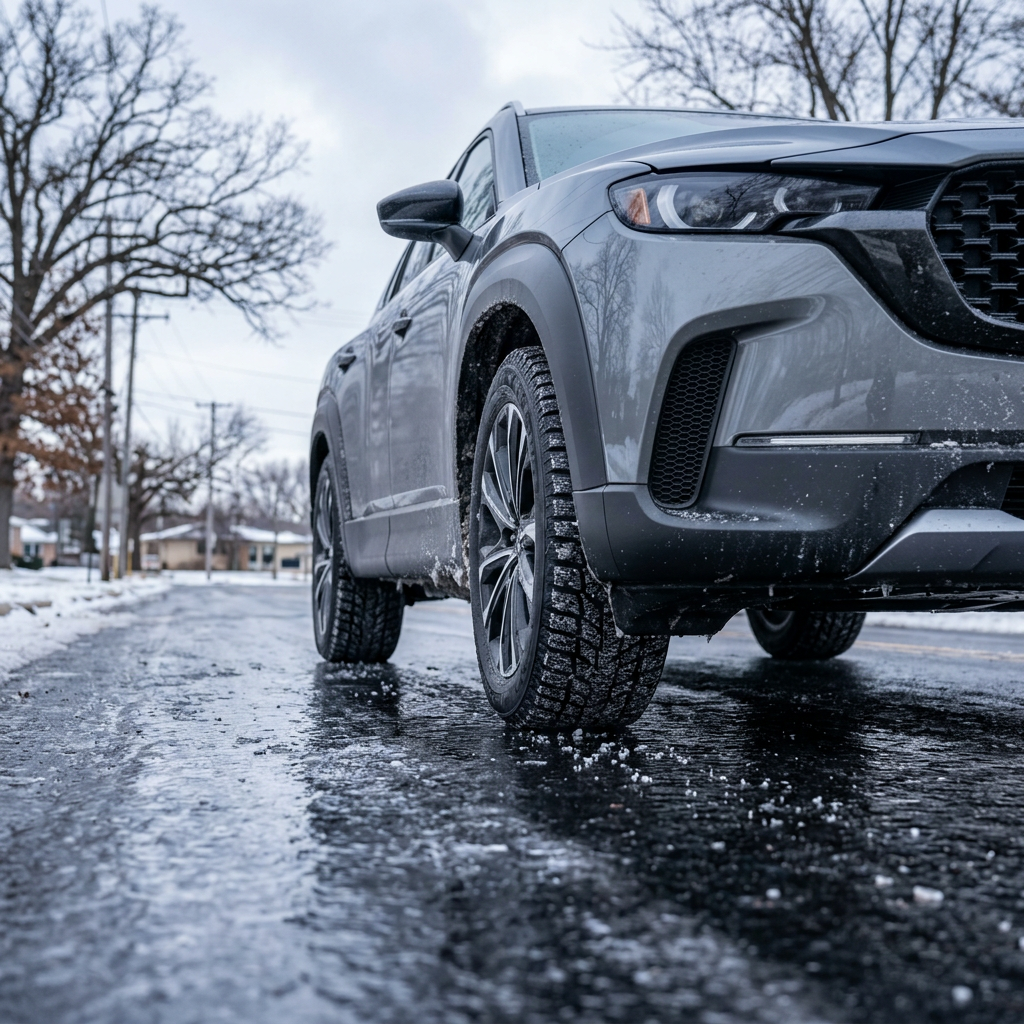
Winter driving across Northern Illinois poses a unique set of challenges, non more treacherous than black ice. Unlike visible packed snow or deep slush, black ice is a microscopic layer of transparent frozen moisture that coats asphalt without warning—often forming when ambient moisture freezes instantly on sub-freezing pavement. Conventional all-wheel drive systems operate on a reactive principle: they wait until a tire loses grip, spins out of sync, and sends a slip signal to the central differential before diverting engine power to the remaining wheels. By the time a reactive system responds on a patch of black ice along Route 59 or Interstate 80, the vehicle has already initiated a slide, forcing the driver and stability control systems into an emergency recovery posture.
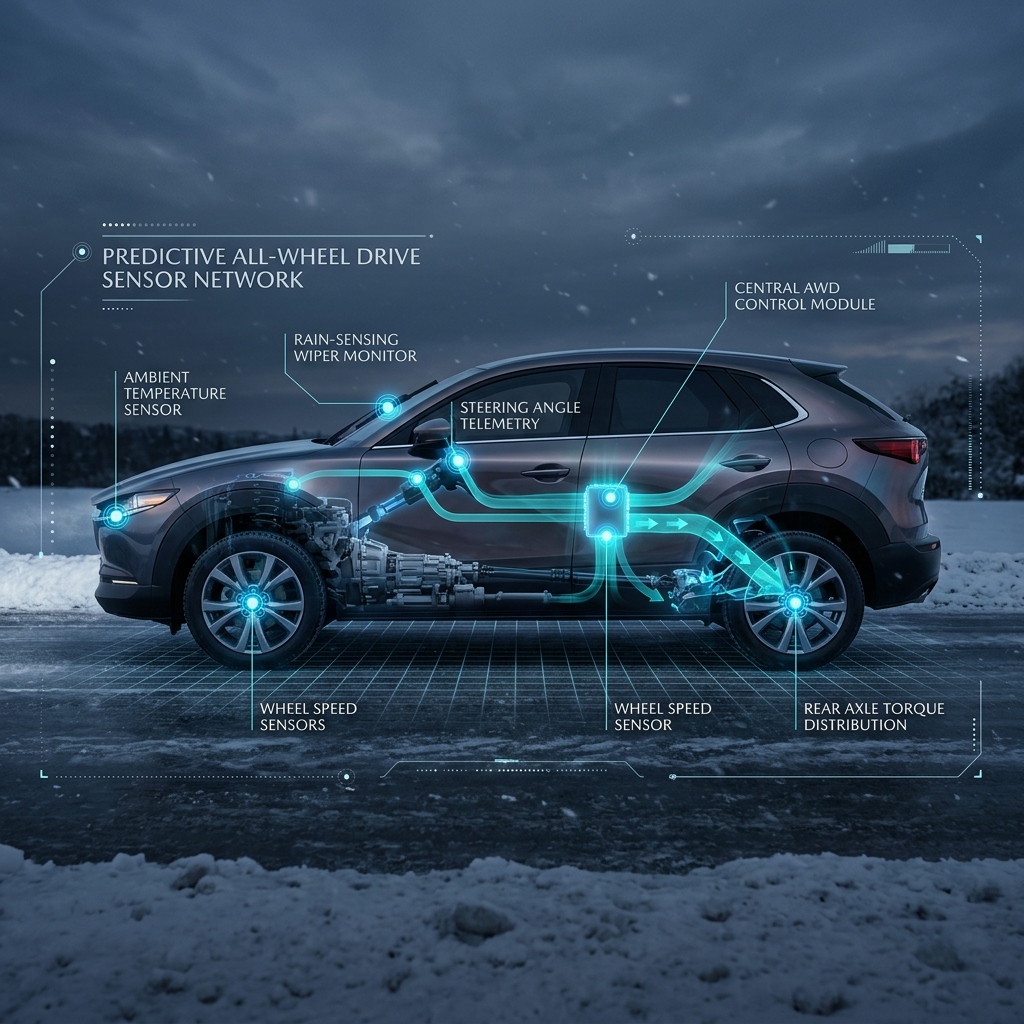
Mazda's proprietary i-Activ AWD® system takes an entirely different philosophy to winter vehicle dynamics: active prediction. Rather than waiting for a mechanical loss of traction to occur, i-Activ AWD continuously monitors a sophisticated array of 27 micro-sensors evaluating ambient weather, road environment, vehicle telemetry, and driver input signals 200 times per second. By processing thousands of micro-data points every second, the system detects subtle environmental precursors—such as freezing ambient temperatures, active windshield wiper frequency, steering column micro-adjustments, and tiny changes in engine torque demand—that indicate slick surface conditions long before a tire loses physical adhesion.

When these environmental and driving variables signal high surface slipperiness, i-Activ AWD calculates the exact micro-amount of rear axle torque required to stabilize the vehicle, pre-engaging the electro-magnetic coupling before noticeable traction loss takes place. However, even the most sophisticated engineering cannot break the laws of physics. While predictive AWD drastically enhances vehicle stability, power delivery, and driver confidence on icy commutes through Plainfield and Shorewood, it does not override fundamental coefficient of friction limits on zero-grip black ice. Maintaining safe speeds, allowing generous following distances, and equipping dedicated winter tires remain absolute imperatives for complete cold-weather safety.
How 27 Sensors Track Temperature, Wipers, and Steering to Spot Ice Early
The intelligence of Mazda's i-Activ AWD lies in its holistic sensor fusion algorithm. While standard AWD setups only read wheel speed sensors, i-Activ AWD networks data from across the entire vehicle to construct a real-time model of road surface friction.
1. Outdoor Ambient Temperature Sensors: Black ice formation hinges directly on thermal thresholds. The system continually feeds outside air temperature into the control module. When temperatures hover near or below 32°F (0°C), the algorithm primes rear-wheel torque readiness. 2. Rain-Sensing Windshield Wipers: Wet asphalt combined with freezing air is the primary formula for glaze ice. By monitoring wiper activation and blade frequency, i-Activ AWD knows immediately whether precipitation is falling, adjusting slip probability calculations upward. 3. Steering Angle & Lateral G-Force Sensors: Drivers make subtle, subconscious steering corrections when feeling a road surface soften or slip. Micro-adjustments in the steering column, combined with yaw-rate and multi-axis G sensors, reveal dynamic balance changes before tire breakaway.
4. Individual Wheel Speed & Torque Telemetry: By comparing rotation speeds across all four wheels against transmission output torque and brake fluid pressure, the control unit identifies micro-rpm disparities between front and rear axles that precede full wheel spin by milliseconds. 5. Incline & Braking Line Pressure: Elevation changes alter vehicle weight distribution. Monitoring brake pressure and road incline ensures that power is redistributed to the rear wheels during uphill acceleration or downhill engine braking on slippery grades.
How G-Vectoring Control Plus Works with i-Activ AWD on Icy Highway Curves
Turn-In Weight Transfer & Steering Precision: Navigating frozen curves—such as the sweeping off-ramps connecting I-80 to I-55 in Joliet—requires gentle chassis balance. Standard vehicles often experience understeer when entering an icy curve because the front tires lack downforce grip. Mazda's integrated G-Vectoring Control Plus (GVC Plus) resolves this by momentarily reducing engine torque by a minute fraction upon initial steering wheel turn-in. This microscopic reduction in engine torque seamlessly shifts a slight fraction of vehicle weight onto the front wheels, increasing front-tire contact patch pressure. With more weight pressed down on the front rubber, the vehicle responds with crisp, predictable turn-in fidelity, avoiding the sudden initial slip that triggers understeer on black ice.
Corner-Exit Stabilization via Light Outer-Wheel Braking: As you unwind the steering wheel to exit an icy curve, GVC Plus works in direct synchronicity with i-Activ AWD. If the system detects any rotational instability or tail-wagging as you reapply acceleration, GVC Plus applies a whisper-light braking force to the outer wheels. This light outer-wheel braking creates a stabilizing moment that pulls the vehicle back into a straight trajectory, perfectly dampening unwanted body sway. Meanwhile, i-Activ AWD smoothly channels torque between the front and rear axles to maintain forward momentum without spinning out. Together, these systems operate so smoothly that drivers simply feel a confident, planted vehicle tracking effortlessly along frozen curves.
Does i-Activ AWD Stay Engaged Full-Time or Disengage to Front-Wheel Drive When Cruising?
Drivers often wonder whether Mazda's i-Activ AWD operates continuously like heavy traditional 4WD systems or completely disengages like basic slip-and-grip units. The answer lies in Mazda's intelligent torque distribution management.
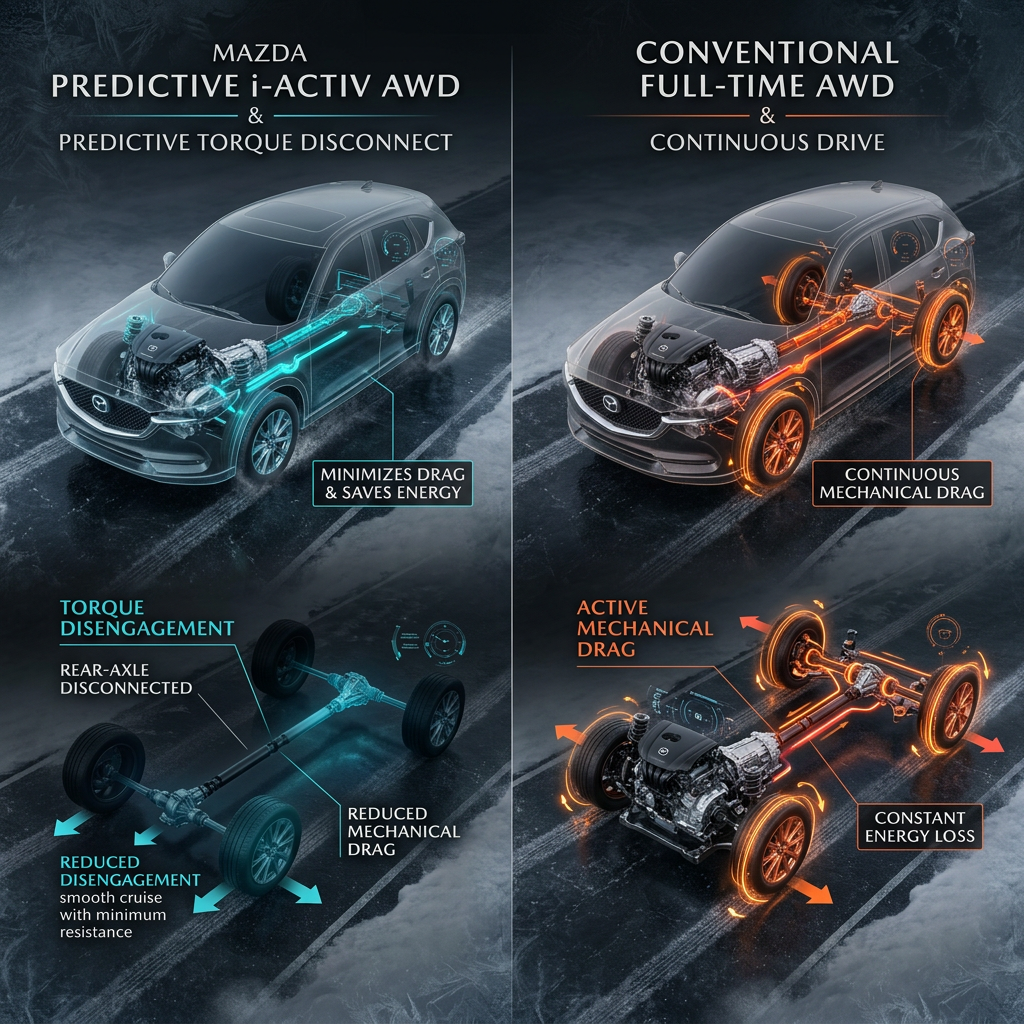
100% Front-Wheel Drive Cruising: When cruising at steady highway speeds on dry, ambient-warm stretches of Route 59, the i-Activ AWD system reduces torque output to the rear wheels to near-zero levels (~99% front-wheel drive). This eliminates mechanical drag through the driveline, providing the exceptional fuel efficiency expected from a front-wheel-drive vehicle.
Pre-Emptive Torque Priming: Even when 99% of engine torque is routed to the front wheels, the system remains in active standby. It maintains just enough coupling pressure in the rear differential to eliminate mechanical lag. If cold temperatures or rain wiper speeds signal potential ice, rear torque increases pre-emptively before slipping begins.
Dynamic 50:50 Torque Split: Upon encountering standing water, snowpack, or low-friction ice during hard acceleration, i-Activ AWD seamlessly routes up to 50% of available engine torque to the rear wheels. This step-less transition happens in milliseconds without any driver intervention or mechanical clunking.
Looking to upgrade your winter commute with predictive all-wheel drive stability? You can Browse New Mazda Inventory at Hawk Mazda in Plainfield to test drive the latest i-Activ AWD models today.
Can Mazda i-Activ AWD Completely Prevent Loss of Control on Black Ice?
To address the critical safety question directly: No system can completely prevent loss of control on black ice if physical traction limits are exceeded. Mazda explicitly describes i-Activ AWD as a predictive support system, but vehicle engineering cannot alter the fundamental friction coefficients governed by physics. Black ice often presents a coefficient of friction (µ) as low as 0.05 to 0.10—compared to dry asphalt's 0.80. At those near-zero friction thresholds, tire rubber cannot generate mechanical adhesion regardless of how intelligently torque is balanced.
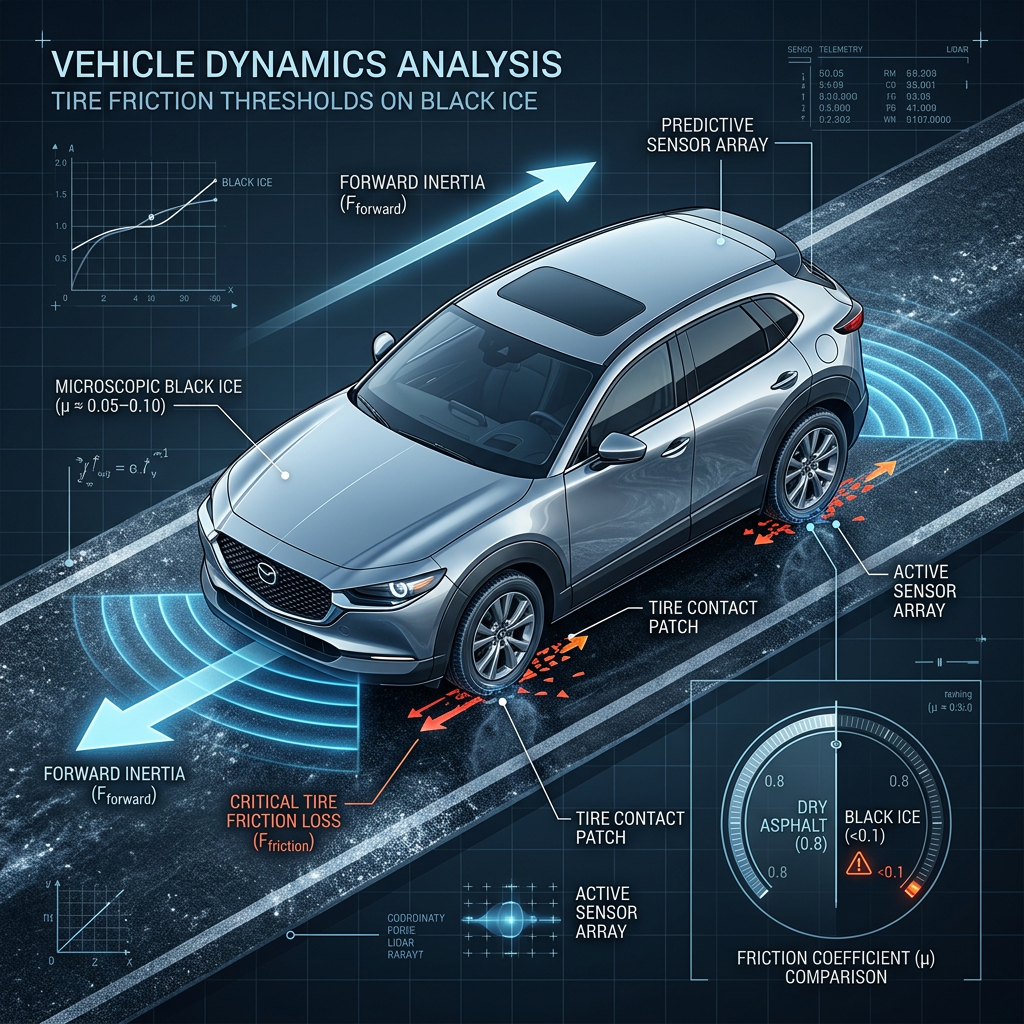
Furthermore, while i-Activ AWD optimizes motive traction (power applied during acceleration and cornering torque distribution), all-wheel drive does not assist in vehicle braking distance. When four tires are locked on glaze ice during an emergency stop, a 4,000-pound SUV with AWD stops no faster than a front-wheel-drive sedan. Driving safely on northern Will County routes during freezing rain requires reducing travel speeds, extending braking buffers, remaining hyper-aware of bridge deck freezing, and respecting physical traction boundaries.
Why Standard All-Season Tires Perform Poorly on Black Ice Regardless of AWD Capability
Rubber Compound Hardening Below 45°F: All-season tires rely on rubber compounds formulated for long tread life across summer heat and mild temperatures. However, when ambient temperatures drop below 45°F (7°C), the rubber polymers in all-season tires reach their glass transition phase—hardening like hockey pucks. Hard, glass-like rubber cannot conform to the microscopic roughness of ice or frozen pavement, resulting in a dramatic loss of chemical adhesion regardless of how advanced your vehicle's AWD transfer case might be.
Tread Siping & Microscopic Bite: Black ice features a microscopic layer of pressure-melted water across its surface. Standard all-season tread blocks lack the high-density microscopic 3D siping (tiny zig-zag slits) needed to cut through that surface water layer and create mechanical interlocking. AWD controls power distribution to the wheels, but tires control friction with the earth; sending 50% engine torque to a hard, slick rear tire yields zero additional forward thrust.
What Is the Optimal Combination for Safety on Black Ice Along Northern Illinois Routes?
1. Dedicated Cold-Weather Rubber: Pairing Mazda i-Activ AWD with top-tier winter tires (such as Bridgestone Blizzak WS90 or Michelin X-Ice Snow) is the gold standard for Plainfield commuters. Winter compounds stay soft in sub-zero temperatures, providing physical grip on glaze ice.
2. Maximized Electronic Response: When soft winter rubber creates micro-traction on black ice, i-Activ AWD's predictive sensor interventions become exponentially more effective. The system can transfer torque instantly into actual forward momentum rather than spinning hard compound rubber.
3. OEM Parts & Wheel Assemblies: Using Mazda OEM winter wheel and tire packages maintains precise wheel rolling circumferences, preserving calibrated sensor accuracy across speed sensors, GVC Plus software, and differential control units.
Prepare your vehicle for Chicagoland's winter freeze by equipping genuine accessories and winter wheel packages. You can easily Order Genuine Mazda Parts directly through Hawk Mazda.
Navigating Black Ice on Route 59 and I-80: How Mazda i-Activ AWD Responds to Winter Conditions
Route 59 Corridor & DuPage River Valley Hazards: Commuting along Route 59 through Plainfield exposes drivers to localized micro-climates. As the highway dips near the DuPage River valley, cold air pools near low elevations while humidity rises off open water. Moisture settles on bridge decks and shaded stretches near Lockport Street, freezing into treacherous black ice even when main roads seem dry. As your Mazda enters these cold river valley zones, the ambient temperature sensors log rapid temperature drops while rain/moisture sensors detect elevated mist. i-Activ AWD pre-engages rear differential pressure before you reach the bridge deck, maintaining stability across high-risk surface transitions.
I-80 & I-55 Elevated Flyover Ramps: The high-speed elevated interchange ramps connecting I-80 and I-55 in Joliet and Shorewood are notorious winter bottleneck hazard zones. Exposed underneath to freezing prairie winds, elevated concrete ramps cool rapidly, forming invisible clear freeze ice on curved geometry. Here, GVC Plus and i-Activ AWD operate in tandem. When steering onto the ramp, torque is tailored to load the front tires, preventing initial front-end push. As lateral forces build on the turn, i-Activ AWD continuously balances torque split to prevent rear-end stepping, giving Will County drivers serene control.
Which AWD System Delivers Better Fuel Economy in Mixed Highway Driving, Mazda or Subaru?
Mazda Predictive Drag Elimination: Subaru's Symmetrical AWD is renowned, but it relies on a full-time continuous power split (typically 60:40) that constantly turns heavy mechanical components. Mazda i-Activ AWD reduces rear axle load to near-zero when predictive risk is absent, saving significant fuel on long commutes.
Subaru Continuous Drag Penalty: Because Subaru's system constantly routes active torque to all four wheels, internal gear friction and viscous/hydraulic drag remain active constantly. This results in a persistent 2 to 3 MPG penalty during dry highway cruising.
The Real-World Commoter Verdict: In real-world Chicagoland winter driving—where highways transition rapidly between dry pavement and icy patches—Mazda's predictive model delivers superior fuel economy while matching maximum traction interventions when ice appears.
|
System Feature
|
Mazda i-Activ AWD®
|
Subaru Symmetrical AWD
|
|
Primary Operating Principle
|
Predictive (27 sensors monitoring 200x/sec)
|
Reactive / Full-Time Continuous
|
|
Cruising Efficiency Mode
|
Disengages rear torque (~99% FWD) when slip potential is zero
|
Continuous mechanical drag across all 4 wheels
|
|
Torque Split Range
|
100:0 (front-heavy cruise) to 50:50 (high-slip intervention)
|
60:40 (default) to 50:50 continuous distribution
|
|
Chassis Vectoring Integration
|
Integrated G-Vectoring Control Plus (Engine torque + outer brake control)
|
Active Torque Vectoring (Brake-based only on select trims)
|
|
Real-World MPG Penalty vs FWD
|
Minimal (~1 MPG difference on highway)
|
Noticeable (~2-3 MPG drag penalty)
|
Preparing Your AWD Mazda for Chicagoland Winters: Fluid Checks and Sensor Maintenance
1. Rear Differential & Transfer Case Fluid Inspection: The electro-magnetic clutch in Mazda's rear differential relies on clean synthetic fluid to maintain instant lockup torque. Breakdown or moisture contamination in differential fluid hinders quick response times on winter ice. 2. Front Windshield Camera & Radar Module Cleaning: Because i-Activ AWD references rain sensors, camera data, and ambient temperature sensors, keeping your windshield clean near the rearview mirror housing is critical. Road salt build-up or slush accumulation can blind optical sensors.
3. Tire Pressure Monitoring in Sub-Zero Temperature Drops: For every 10°F drop in ambient temperature, tire pressure decreases by approximately 1 PSI. Underinflated tires alter the rolling radius between axles, causing improper wheel-speed sensor telemetry and reducing AWD accuracy. 4. Brake Pad & Rotor Surface Inspection: Because GVC Plus uses subtle brake force to stabilize cornering on icy curves, ensuring healthy brake pad friction material and rust-free rotor surfaces is crucial prior to winter.
Ensure your vehicle's AWD sensors, fluids, and winter tires are fully inspected by factory-trained technicians. You can easily Schedule Your Service Today at Hawk Mazda.
Which i-Activ AWD Mazda Crossover or SUV Best Fits Your Commute Between Shorewood and Chicago?
Mazda CX-30 & CX-5: Ideal for suburban commuters navigating daily Route 59 traffic or parking garages in downtown Chicago. Compact footprints combined with 8.0 inches of ground clearance provide effortless maneuvering through un-plowed side streets and icy city intersections.
Mazda CX-50: Engineered with a wider stance, high ground clearance, and specialized Mi-Drive Off-Road/Towing modes. Perfect for winter weekend trips to northern Wisconsin or tackling severe rural snowdrifts across Will and Kendall counties.
Mazda CX-90: Mazda's flagship 3-row crossover built on a longitudinal rear-wheel-drive biased platform. Offers supreme high-speed tracking, exceptional long-wheelbase stability on icy highways, and spacious comfort for larger families.
Experience Mazda i-Activ AWD Confidence at Hawk Mazda in Plainfield
When winter weather strikes Northern Illinois, having absolute confidence behind the wheel makes all the difference. Mazda's i-Activ AWD system combines 27 predictive sensors, G-Vectoring Control Plus, and continuous torque management to give you unparalleled control across black ice, slush, and snow.
Whether you are interested in exploring our inventory of brand-new AWD crossovers or upgrading your current vehicle with dedicated winter tires and maintenance, the expert team at Hawk Mazda is here to assist you. Conveniently located at 2421 S Rte 59 in Plainfield, IL 60586, we serve drivers throughout Joliet, Shorewood, Naperville, and surrounding Will County communities. Ready to get started? Feel free to Call (779) 260-6502 or Get Directions to Hawk Mazda to visit our showroom and experience i-Activ AWD for yourself.