Why Does Cold Fall Weather Trigger Your Mazda Low Tire Pressure Light?
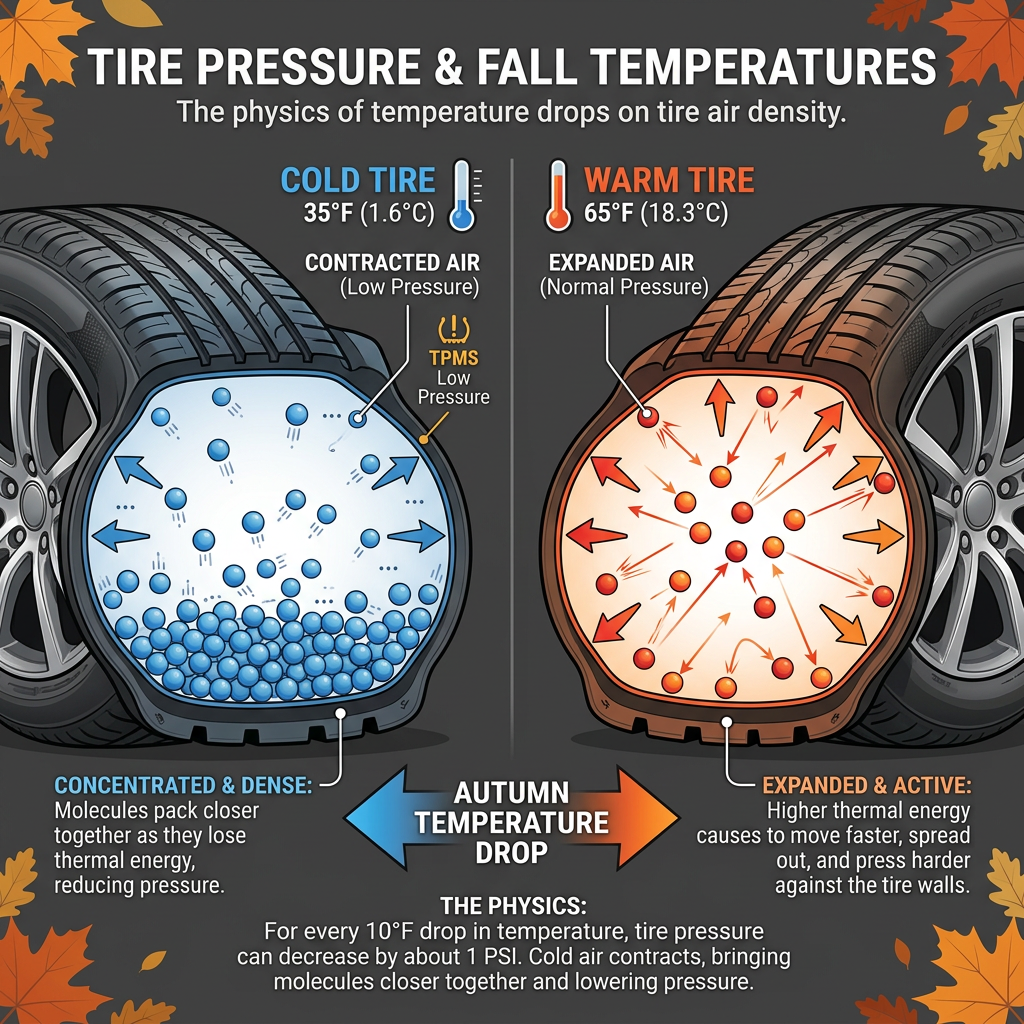
As autumn arrives across Plainfield and Northern Illinois, driver dashboards frequently illuminate with an illuminated orange warning symbol shaped like a flat tire with an exclamation mark. If you start your Mazda on a crisp 35°F October morning and see this indicator on your instrument cluster, don't panic—your tires likely haven't sustained a puncture. Instead, you are experiencing a universal physical reaction to seasonal temperature drops. For every 10°F drop in ambient temperature, the air trapped inside your tires contracts, causing inflation pressure to drop by approximately 1 PSI (pound per square inch).
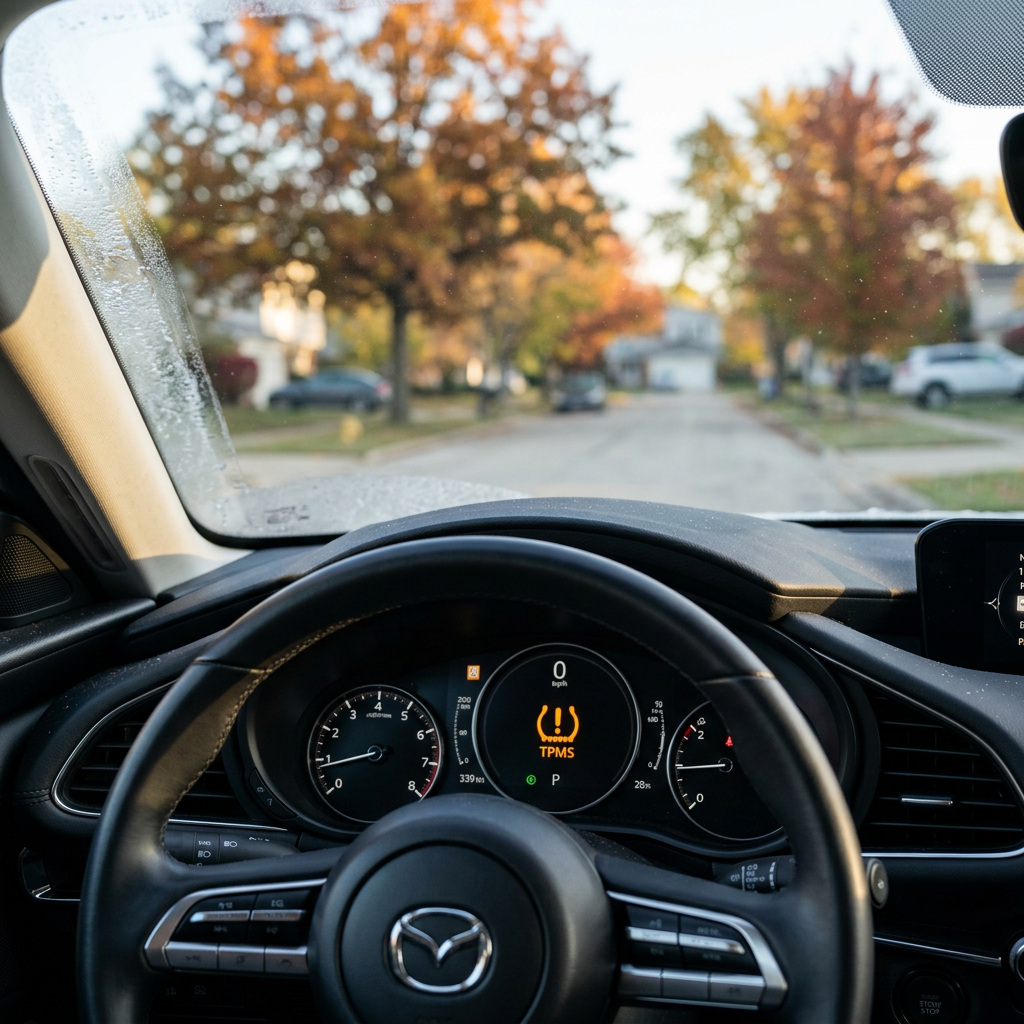
When temperatures swing from a pleasant 65°F during an early autumn afternoon down to 35°F overnight, your tires instantly lose roughly 3 PSI. Because Mazda's Tire Pressure Monitoring System (TPMS) is engineered to alert you whenever inflation drops 25% below the factory-recommended cold pressure rating, this sudden thermal contraction triggers the dashboard icon before you even back out of your driveway.
|
Ambient Temperature Change
|
Approximate PSI Impact
|
TPMS Warning Status
|
|
Drop of 10°F
|
-1.0 PSI Loss
|
Normal operating variance
|
|
Drop of 20°F
|
-2.0 PSI Loss
|
Borderline notification range
|
|
Drop of 30°F (Typical Fall Overnight)
|
-3.0 to -3.5 PSI Loss
|
Triggers Mazda TPMS Indicator
|
The Physics Behind Fall Tire Pressure Drops: Gas Laws and Ambient Temperature
The sudden drop in tire pressure during autumn is governed by fundamental thermodynamic principles, specifically Gay-Lussac's Law of Ideal Gases. This law dictates that the pressure exerted by a fixed mass of gas is directly proportional to its absolute temperature when volume remains constant. Inside your vehicle's tires, pressurized air molecules move constantly. Warm air molecules possess high kinetic energy, bouncing off internal tire walls with greater frequency and force, which maintains higher pressure. As fall cold snaps sweep through Will County, the thermal energy inside your tire decreases. The air molecules slow down, condense closer together, and exert significantly less force against the inner liner, resulting in reduced PSI.
It is important to remember that driving your vehicle generates friction, heating the air inside the tire and temporarily raising pressure by 3 to 5 PSI. However, relying on driving heat to clear your TPMS light is dangerous. Cold inflation pressure—measured after your car has sat parked for at least three hours—is the true safety metric listed on your vehicle's driver-side door jamb placard.
How Direct and Indirect Mazda TPMS Systems Detect Low Pressure
Direct TPMS Systems
Direct TPMS utilizes individual pressure hardware sensors mounted inside each wheel valve stem. These sensors transmit real-time telemetry directly to your Mazda central computer. When autumn cold drops actual PSI below threshold limits, Direct TPMS flags the specific wheel or overall low pressure status immediately.
Indirect TPMS Systems
Indirect TPMS does not use pressure sensors inside the wheel. Instead, it relies on Anti-lock Braking System (ABS) wheel speed sensors to measure rotational velocity differences. An under-inflated tire has a slightly smaller overall diameter and must spin faster than properly inflated tires to cover the same distance.
Recalibration Rules
Indirect systems require manual recalibration whenever you adjust tire pressure or rotate tires. Because cold ambient weather shrinks all four tires uniformly, Indirect TPMS may sometimes take longer to register cold drop warnings unless one tire experiences differential speed variations during turning maneuvers.
How to Correct Tire Pressure and Reset the Low Tire Light on Your Mazda
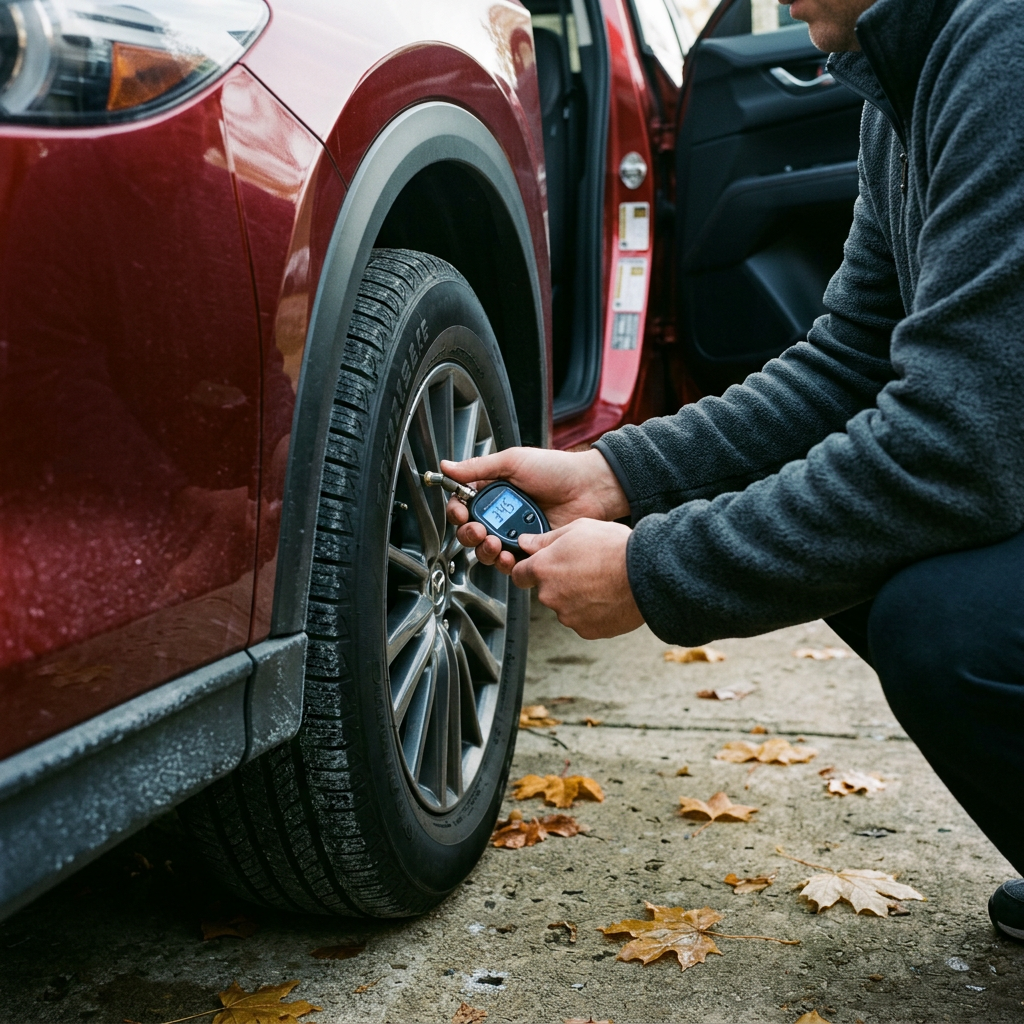
Follow this simple step-by-step process to safely restore proper tire pressure and reset your Mazda warning system: 1. Measure Pressure Cold: Always check inflation first thing in the morning before driving or at least 3 hours after parking. 2. Check the Door Placard: Open the driver's door and inspect the B-pillar sticker for exact factory specification (typically 34-36 PSI for Mazda CX-5 and Mazda3 models). Never use the maximum PSI stamped on the tire sidewall. 3. Inflate Accurately: Use a reliable digital pressure gauge and add air until all four tires hit exact spec. 4. Reset the System: On Mazda models equipped with a physical TPMS button, press and hold it while parked until the light flashes twice and beeps. On models using Mazda Connect, navigate to Vehicle Status Monitor > Information > Tire Pressure Monitor Service > Recalibrate.
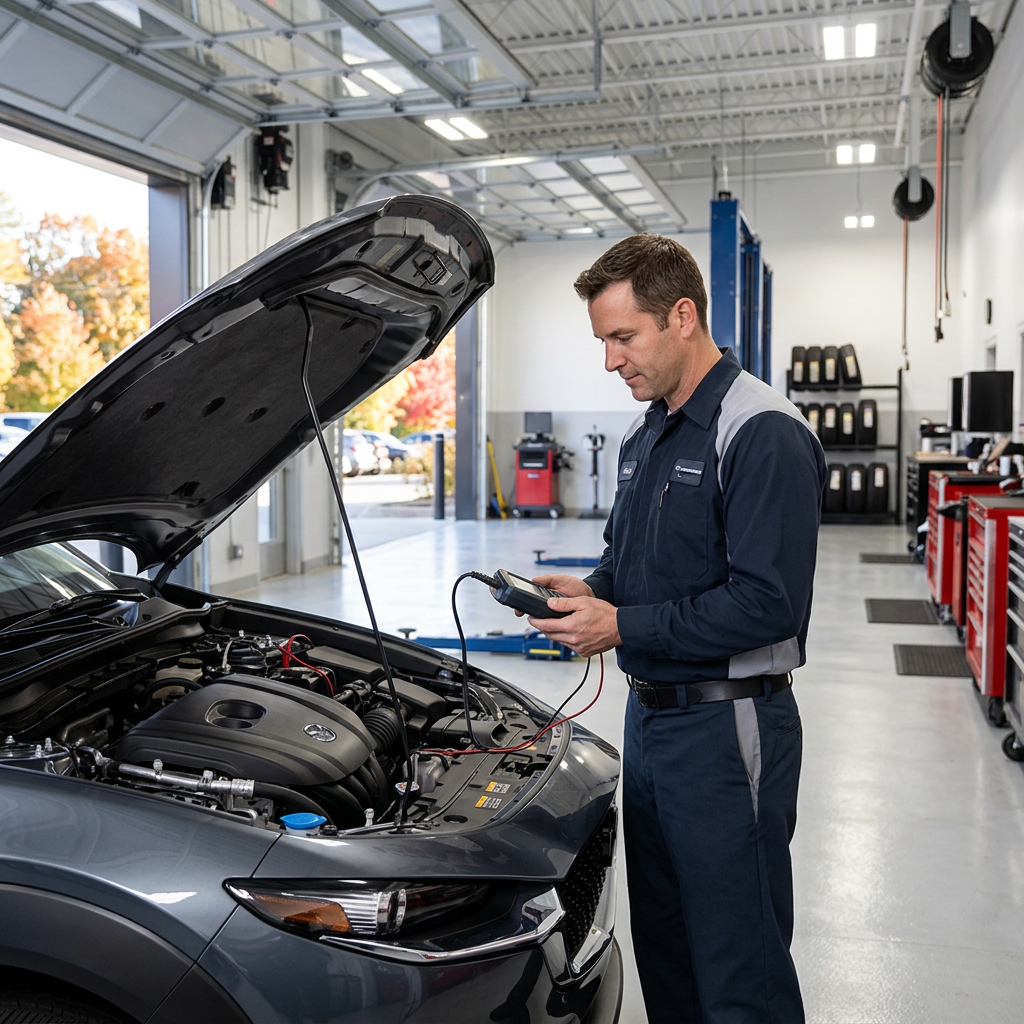
If your TPMS warning remains illuminated after driving 10-15 miles following inflation, you may have a slow nail puncture or a faulty sensor battery. The certified service team at Hawk Mazda can inspect your wheel assembly in minutes.
What Is the Safe Tread Depth Threshold for Replacing Mazda Tires Before Fall Rain?
Legal Minimum: 2/32
While 2/32 inches is the legal minimum tread depth across Illinois, driving on autumn roads at this threshold severely compromises safety. Tires at 2/32" have virtually no channel capacity to clear water away from the contact patch, dramatically increasing stopping distances.
Wet Fall Safety: 4/32
Automotive safety experts recommend replacing tires once tread wears down to 4/32 inches before fall rainstorms hit. Rain-slicked asphalt requires deep circumferential grooves to channel water out from beneath the tire tread footprint to maintain mechanical traction.
Snow Prep: 5/32
If you plan to drive through early Will County winter slush or light snow, 5/32 inches is the minimum safe depth. You can perform a quick test using a Washington quarter: insert Washington's head upside down into the tread. If the top of his head is visible, your tires are below 4/32" and need replacement.
How Should You Adjust Your Driving When Plainfield Roads Are Covered with Wet Fall Leaves?
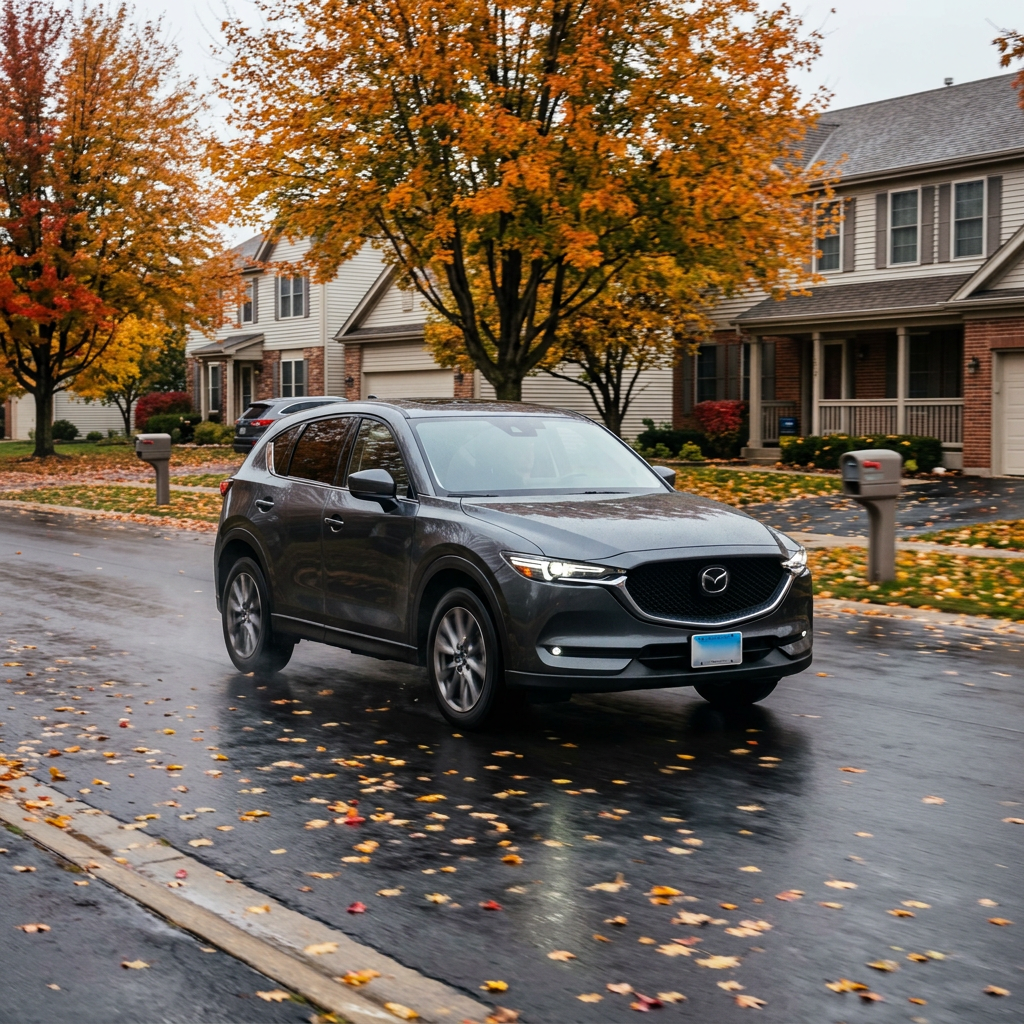
Autumn foliage along Route 59, 119th Street, and winding corridors near the DuPage River creates picturesque views, but wet fallen leaves present severe traction hazards. When wet leaves accumulate on pavement, decaying organic matter produces a slick tannic oil film. Combined with trapped moisture, wet leaf piles create a friction coefficient nearly identical to driving on solid black ice. To navigate leaf-covered Plainfield roads safely, drivers should increase following distances from 3 seconds to 5-6 seconds. Avoid hard braking while traveling directly over leaf patches, and complete all necessary deceleration before initiating turns.
Furthermore, leaf piles can easily conceal deep potholes, curb edges, or sharp road debris. Maintaining steady, moderate speeds and avoiding abrupt steering inputs ensures your Mazda stays securely planted on slippery autumn surfaces.
How Mazda i-Activ AWD Maintains Traction on Leaf-Covered and Rain-Slicked Roads
Unlike conventional all-wheel drive systems that only react after front wheels begin to spin, Mazda's predictive i-Activ AWD® continuously monitors environmental and driving conditions 200 times per second. By evaluating external ambient temperature sensors, windshield wiper operation, steering wheel torque, individual wheel speeds, and g-force dynamics, i-Activ AWD calculates exact road traction conditions in real time.
When driving over unpredictable autumn leaf mats or sudden downpours in Plainfield, i-Activ AWD proactively transfers torque to the rear wheels before front wheel slip can occur. This seamless power redistribution provides confident stability, optimal cornering grip, and enhanced fuel efficiency. Interested in experiencing predictive handling during autumn weather? Browse New Mazda Inventory at Hawk Mazda to test drive our latest AWD crossover models.
What Mazda i-Activesense Safety Features Help with Driving in Autumn Fog or Heavy Rain?
Smart Brake Support & AFS
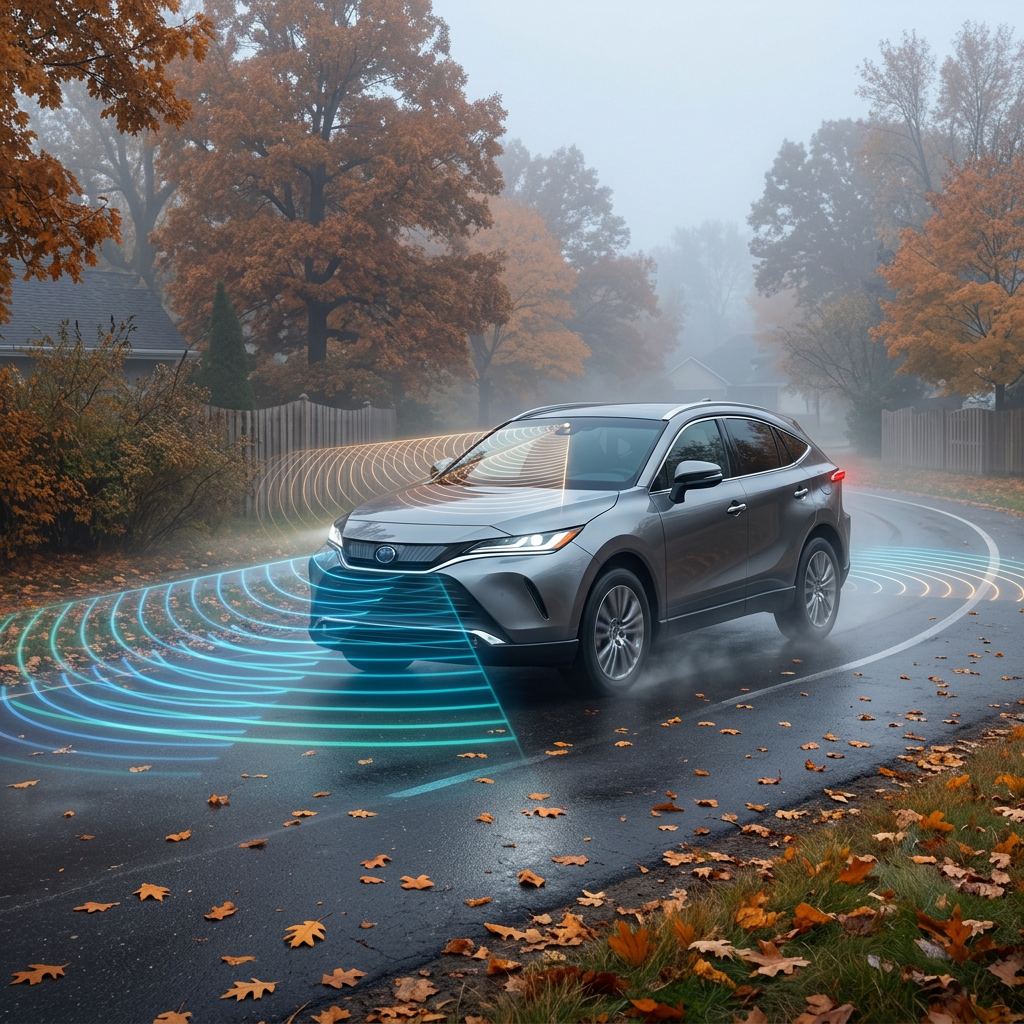
Smart Brake Support (SBS) uses millimeter-wave radar and forward sensing cameras to detect obstacles in low-visibility autumn fog. Paired with Adaptive Front-Lighting System (AFS), LED headlights swivel into turns to illuminate unlit rural curves.
High Beam Control & Lane-Keep
High Beam Control automatically toggles between high and low beams when oncoming headlights are detected during dark fall commutes. Lane-Keep Assist provides gentle steering corrections if wet pavement glare obscures lane markings.
Rain-Sensing Auto Wipers
Mazda rain-sensing wipers automatically adjust sweep frequency based on moisture density hitting the windshield. This allows drivers to keep both hands on the wheel when sudden heavy autumn downpours impair visibility.
When Should Mazda Windshield Wiper Fluid Be Switched to Winter Fluid?
October is the ideal time to purge summer bug-wash fluid and replace it with winter-grade windshield washer fluid. Summer washer formulas contain high water ratios designed for insect cleaning; when night temperatures in Plainfield, Shorewood, and Joliet drop below 32°F, summer fluid can freeze solid inside reservoir lines, pump nozzles, and across your windshield. Switch to a high-performance winter formula rated for -20°F or lower. Winter fluids contain methyl alcohol solutions that prevent line freezing and instantly dissolve morning frost.
Simultaneously inspect your wiper blades. Intense summer heat bakes rubber edges, causing splitting, chatter, and streaking. Fresh OEM Mazda wiper blades ensure crystal-clear visibility during autumnal rainstorms. Need replacement wiper blades or winter fluid? You can quickly Order Genuine Mazda Parts directly from Hawk Mazda.
What Fall Maintenance Services Does a Mazda Require Before Winter Arrives?
Battery & Electrical
Cold weather places heavy strain on 12V car batteries. Test cold-cranking amps (CCA) and clean terminal corrosion to prevent unexpected morning no-start conditions as temperatures drop.
Coolant & HVAC
Inspect engine coolant hydrometer density to ensure protection down to -35°F. Replace cabin air filters so defrosters can effectively clear foggy windshield condensation.
Brakes & Alignment
Verify brake pad friction thickness and measure wheel alignment angles. Proper alignment prevents uneven tire wear and ensures predictable emergency tracking on slick roads.
Navigating Autumn Commutes Across Plainfield, Shorewood, and Joliet
Autumn commuting throughout Will County presents distinct environmental challenges. Morning trips along Interstate 55 or Route 30 frequently feature heavy valley fog, frost patches on elevated overpasses, and sudden temperature shifts from 30°F at sunrise to 60°F by mid-afternoon. Shaded sections along Black Road often hold frost long after open highways have dried. Staying proactive with seasonal vehicle checks prevents inconvenient delays during busy morning rush hours. Keep a tire pressure gauge in your glovebox, monitor weather shifts, and address low TPMS lights promptly.
Hawk Mazda is proudly located right here in Plainfield to support local drivers across Joliet, Shorewood, and surrounding areas. Stop by our service facility anytime for quick tire pressure checks, free tread measurements, or seasonal advice. Need directions? Get Directions to Hawk Mazda.
Selecting the Right Tires and Genuine Mazda Fall Accessories
All-Season & Winter Tires
Choosing high-performance all-season or winter tires tailored for your Mazda CX-5, CX-30, CX-90, or Mazda3 guarantees ideal grip. Winter tires feature specialized rubber compounds that remain flexible in sub-freezing weather.
All-Weather Floor Mats
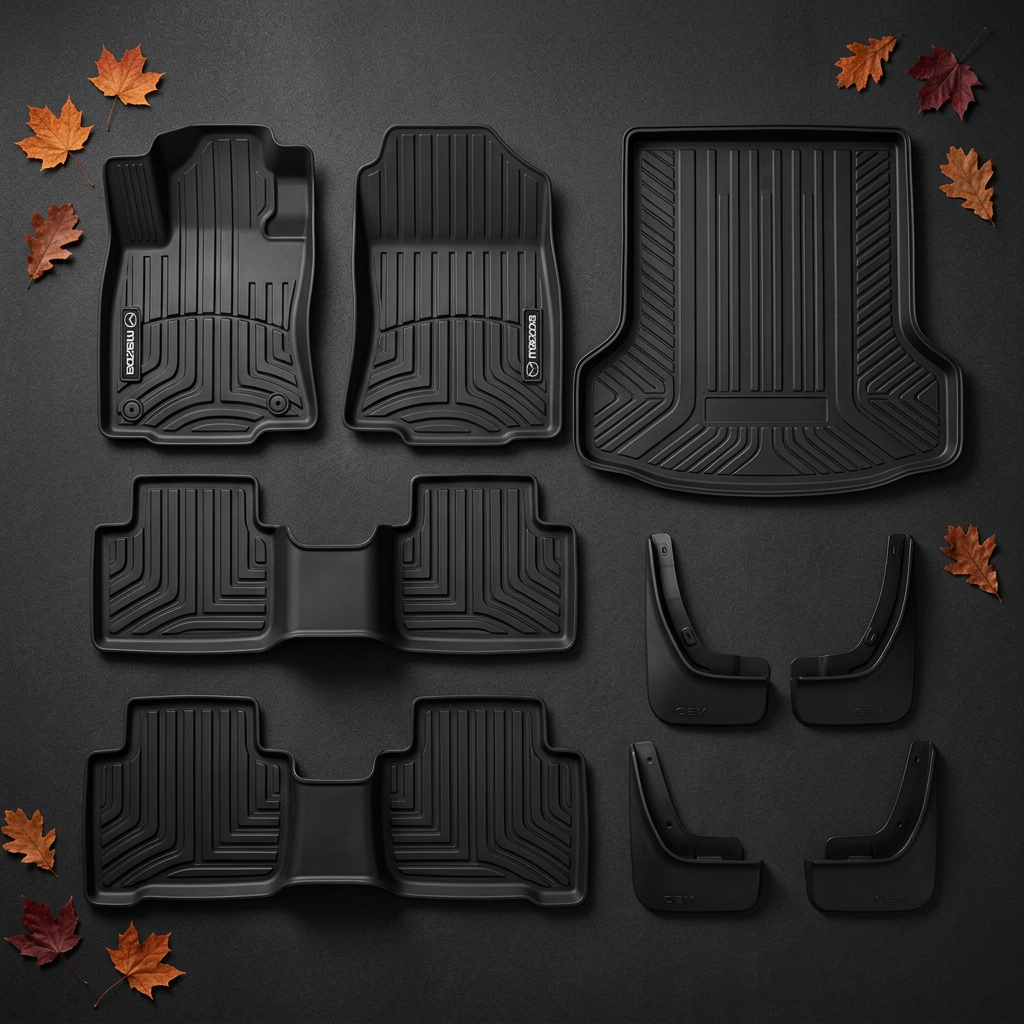
Protect your vehicle interior from autumnal mud, wet leaves, and incoming winter slush with genuine Mazda high-wall all-weather floor mats and molded heavy-duty cargo liners.
Splash Guards & Racks
Equip splash guards to protect lower door panels from road grit, and add roof rack crossbars for carrying autumn camping gear. You can easily Order Genuine Mazda Parts through our dealership catalog.
Schedule Fall Mazda Service and Tire Inspection at Hawk Mazda in Plainfield
Don't let autumn cold weather compromise your safety or driving peace of mind. If your Mazda low tire pressure light has turned on, or if you want to prepare your vehicle for wet fall roads and upcoming winter temperatures, the expert factory-trained technicians at Hawk Mazda are here to assist.