How Sub-Zero Plainfield Winters Impact Your Mazda Battery Health
Key Takeaway: Freezing temperatures at 0°F reduce a car battery's starting capacity by up to 50% while engine oil thickens, requiring up to twice as much electrical power to start your Mazda. To avoid sudden failure during a Northern Illinois freeze, Mazda batteries over 3 years old require regular Cold Cranking Amp (CCA) testing and proper state-of-charge maintenance.
As autumn transitions into the harsh realities of Northern Illinois winter, drivers throughout Plainfield, Shorewood, Naperville, and Joliet face unique automotive challenges. Among all the components in your Mazda—from the sophisticated i-Activ AWD® system to the skyactiv powertrain—the 12-volt battery is arguably the most vulnerable to steep temperature drops. When sub-zero polar vortex events sweep across Will County, your vehicle’s battery experiences a double-jeopardy effect: the internal chemical reaction slows down exponentially while the physical mechanical load required to turn over a cold engine doubles.
At 32°F (freezing), a standard automotive battery loses roughly 20% to 30% of its available starting power. When temperatures plummet to 0°F or lower—a common occurrence along the Route 59 corridor in January and February—that same battery retains only about 50% of its nominal electrical capacity. Simultaneously, engine oil thickens into a heavy viscous sludge, creating dramatic friction inside the crankshaft, pistons, and valvetrain. Your starter motor demands maximum amperage precisely when your battery is chemically crippled. Understanding these physical stressors allows you to take proactive measures before being stranded in a parking lot on a freezing Monday morning.
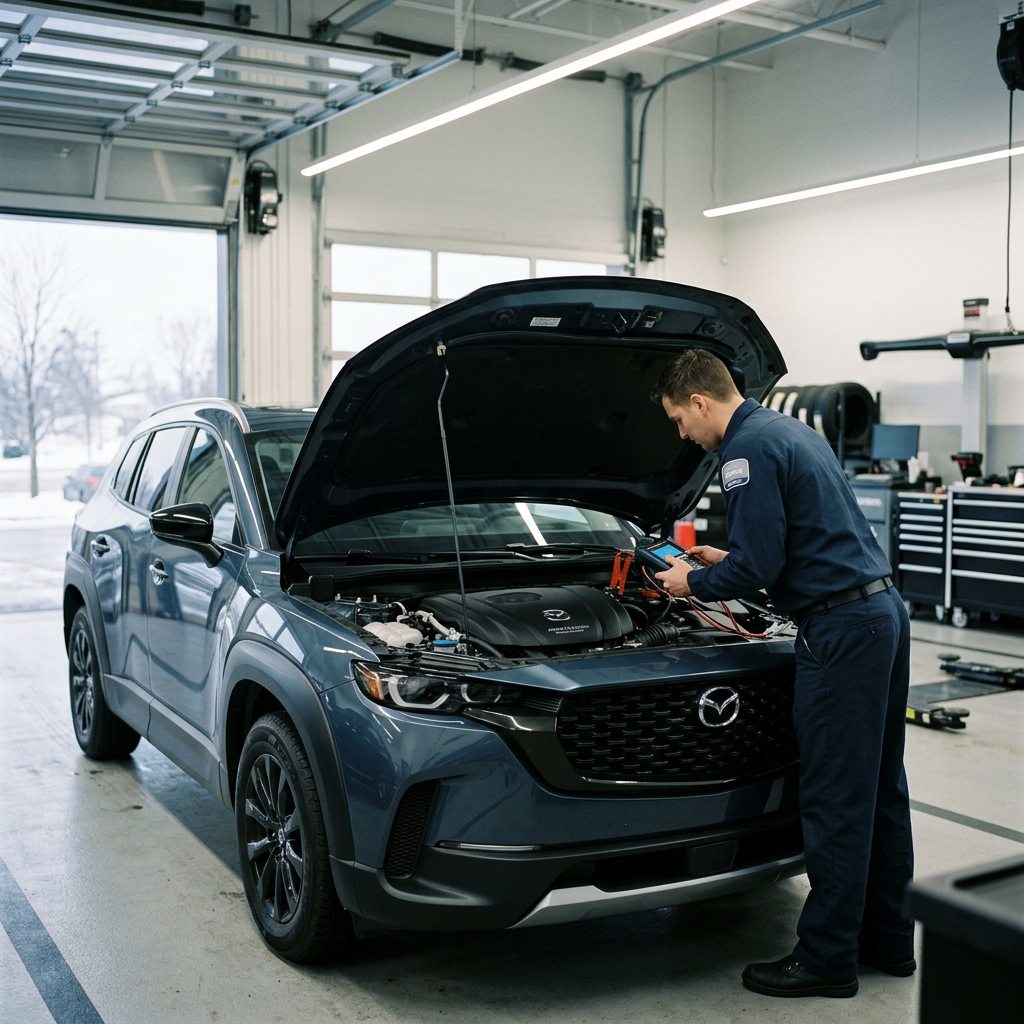
At Hawk Mazda, located right at 2421 S Rte 59, Plainfield, IL 60586, our certified technicians routinely see battery failures that could have been easily prevented with seasonal health checks. Modern Mazda vehicles are sophisticated rolling computers packed with safety suite sensors, heated seating grids, touchscreen infotainment, and automatic climate controls. These electronic conveniences demand clean, stable voltage. By mastering battery care, understanding Cold Cranking Amps (CCA), and knowing when to replace aging cells, you ensure your Mazda remains dependable through every sub-zero blizzard Illinois delivers.
How Freezing Temperatures in Plainfield Affect Cold Cranking Amps (CCA)
The Electrochemistry of Cold Weather Degradation
Inside a traditional lead-acid or Advanced Absorbed Glass Mat (AGM) battery, energy is stored chemically and converted to electrical current via interactions between lead dioxide plates, sponge lead plates, and an liquid or gel liquid electrolyte solution containing sulfuric acid. As ambient temperatures drop below freezing in Plainfield, Shorewood, and Joliet, the velocity of these chemical reactions slows down substantially.
This chemical sluggishness directly translates to higher internal electrical resistance. When internal resistance rises, the battery cannot release electrons quickly enough to sustain high current output. Cold Cranking Amps (CCA) is the industry standard rating that measures the number of amperes a 12-volt battery can deliver at 0°F (-18°C) for 30 seconds while maintaining a voltage of at least 7.2 volts. While a new factory battery might comfortably supply 550 to 700 CCA, an aging battery with sulfated internal plates may collapse to under 250 CCA during a severe freeze.
Furthermore, short commuter trips along Lincoln Highway or Lockport Street do not give the vehicle’s alternator sufficient time to replenish the heavy energy drain incurred during a cold morning start. Driving only 5 to 10 minutes with the rear defroster, heated steering wheel, seat warmers, and cabin blower running at maximum speed leaves the battery in a chronic state of undercharge, accelerating lead sulfate accumulation on the battery plates.
Severe Operating Load Demands in Northern Illinois
Modern Mazda vehicles rely heavily on complex electrical architectures. The i-Activ AWD® system continuously polls sensors measuring wheel speed, steering angle, ambient temperature, and wiper activity to predict loss of traction. When you press the Start/Stop ignition button on a sub-zero morning, the vehicle's Powertrain Control Module (PCM) initiates fuel injection pumps, high-pressure ignition coils, throttle actuators, and sensor grids before the starter motor even cranks the flywheel.
If battery terminal voltage drops below 9.6 volts during the cranking cycle due to diminished CCA, electronic modules can reset or log low-voltage fault codes. You might experience extended cranking times, sputtering starts, or flickering dashboard illumination. Over time, persistent low-voltage starts put undue thermal stress on the starter motor brushes and solenoid, leading to premature starter failure.
To learn more about keeping your vehicle in peak shape through extreme weather, you can Schedule Your Service Today with our factory-trained technicians who specialize in winter battery diagnostics and digital conductance load testing.
What Type of Battery Comes Standard in 2027 Mazda Vehicles?
Genuine OEM Mazda batteries feature heavy-duty plate grids and reinforced cell separators engineered for optimal cold-weather performance and high-cycle longevity.
Mazda engineers select specific battery chemistries tailored to each model’s engine size, electrical demand profile, and mild-hybrid or start-stop configurations. Standard flooded batteries of yesteryear are no longer sufficient for modern crossover lineups like the CX-5, CX-50, CX-90, or Mazda3 sedan and hatchback.
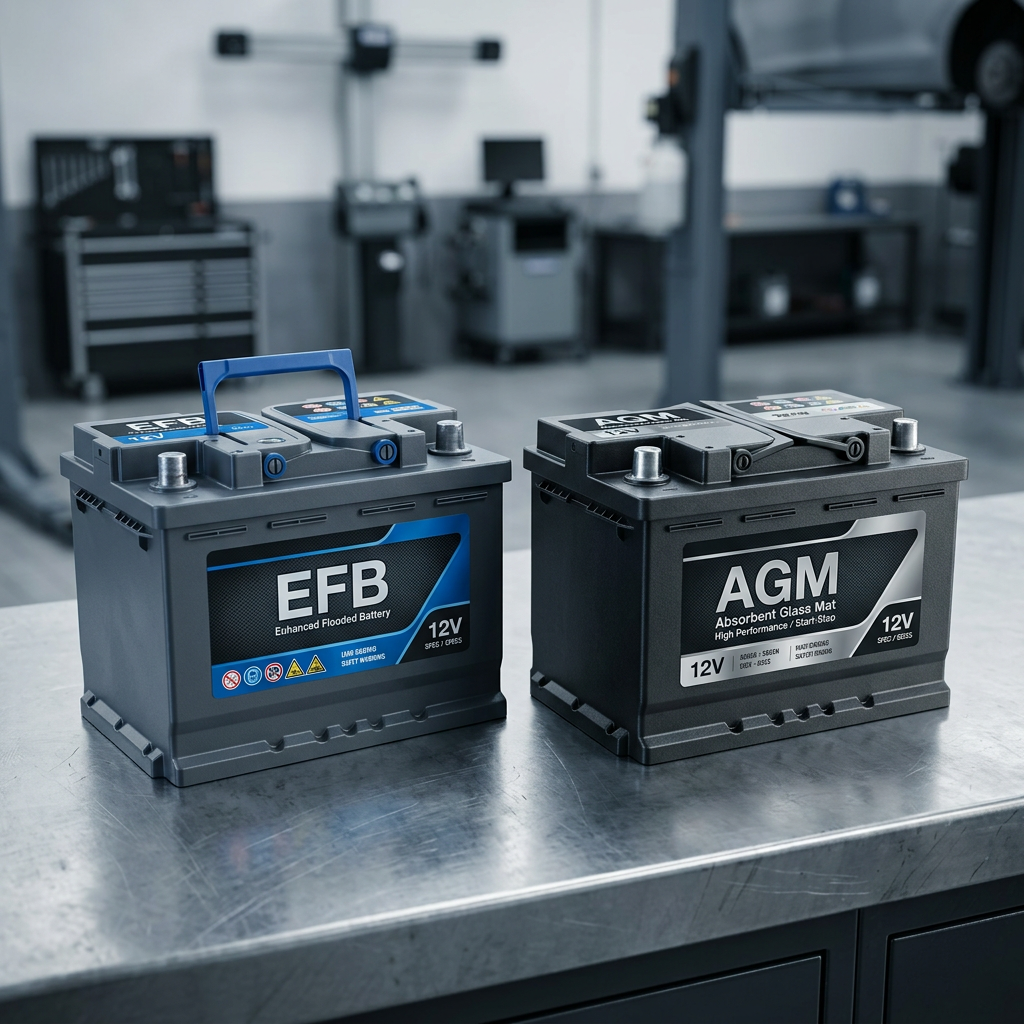
Enhanced Flooded Batteries (EFB): Equipped standard on many naturally aspirated Skyactiv®-G configurations, EFB technology features a polyester scrim material added to the positive plate surface. This retains active material, offering up to twice the cyclic resistance of conventional flooded batteries and superior charge acceptance during rapid winter recharge windows.
Absorbent Glass Mat (AGM) Batteries: Found in premium trim levels, high-output turbocharged models, and mild-hybrid configurations like the Mazda CX-90. AGM batteries suspend liquid electrolyte in ultra-thin fiberglass mesh mat separators. This sealed design renders them completely leak-proof, highly resistant to severe vibration, and capable of handling three to four times the micro-hybrid charge cycles of standard units.
|
Mazda Model Lineup
|
Engine / Drivetrain
|
Factory OEM Battery Type
|
Typical Reserve Capacity
|
|
Mazda3 / CX-30
|
Skyactiv-G 2.5L DOHC
|
Group 35 EFB / AGM
|
100 - 115 Mins
|
|
Mazda CX-5 / CX-50
|
2.5L Turbo / i-Activ AWD
|
Group 35 / 47 High-CCA EFB
|
110 - 125 Mins
|
|
Mazda CX-90
|
3.3L Turbo Inline-6 / M Hybrid Boost
|
Group 48 / H6 AGM
|
130 - 150 Mins
|
To explore our full vehicle lineup or upgrade your current vehicle, feel free to Browse New Mazda Inventory or review options with our team at Hawk Mazda.
Why Mazda i-Stop Models Require Specific EFB or AGM Batteries
Intelligent Cycle Frequency
Mazda's i-Stop intelligent engine stop-start system shuts down combustion when sitting idle at traffic lights along Route 59 or Route 126. While a conventional vehicle starts its engine a few times per trip, an i-Stop equipped vehicle can restart thousands of times per month. Standard flooded batteries experience active material shedding under this intense duty cycle.
Combustion Position Restart Technology
Unlike standard start-stop setups that rely solely on starter motor torque, i-Stop halts pistons in the precise compression/expansion stroke balance. It injects fuel directly into the cylinder and ignites it to initiate rotation, supported by a brief starter pulse. This requires ultra-precise voltage stability that only EFB and AGM chemistry can maintain.
Consequences of Mismatched Replacements
Installing a generic economy battery into an i-Stop Mazda results in rapid plate degradation, leading to early failure in as little as 6 to 12 months. Furthermore, the system may detect voltage instability and permanently disable i-Stop functionality, illuminating amber dashboard warning alerts.
5 Key Warning Signs Your Mazda Battery Is Failing Before the First Blizzard
1. Sluggish Engine Turnover
When pressing the engine start button, the engine turns over sluggishly, taking several extra seconds to fire. This 'rrmm... rrmm... vroom' cadence is a classic sign that CCA capacity has degraded and cannot spin the starter motor at normal operational RPM.
2. Dimming LED Headlights & Cabin Lights
If LED headlights dim during idle or interior ambient lighting flickers when you switch on heated seats or rear window defoggers, your battery is failing to cushion electrical load fluctuations, forcing the alternator to work overtime.
3. i-Stop or System Warning Icons
An amber 'i-Stop Ready' indicator light or direct battery warning symbol on your Mazda Connect display signals that the Powertrain Control Module detected resting voltage below acceptable operating thresholds.
4. Battery Case Swelling & Distortion
Extreme summer heat breaks down internal grid structures, while sub-zero freezing expands low-charge electrolyte. Inspect your battery under the hood—if the plastic casing appears bloated, cracked, or swollen, internal cell structural failure has occurred and replacement is urgent.
5. White Crusty Buildup at Terminal Posts
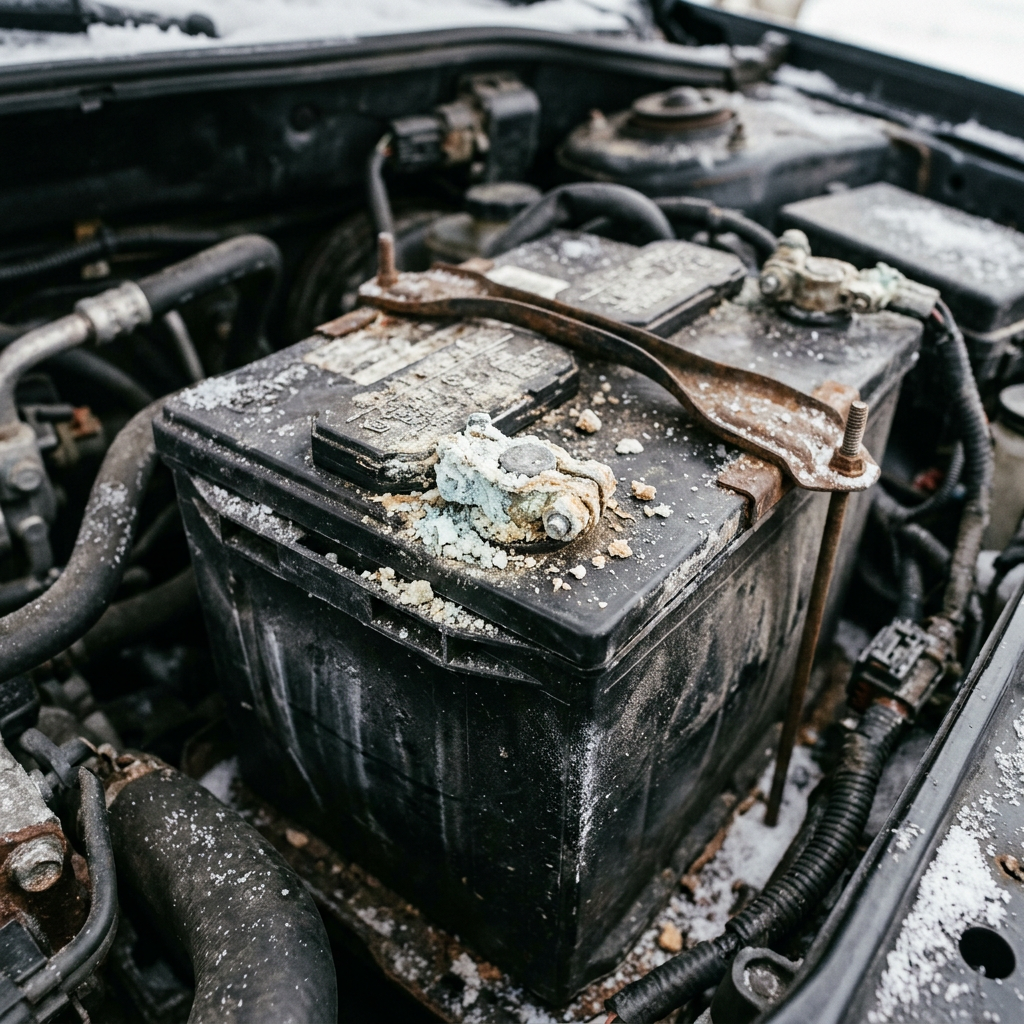
A crusty white, blue, or greenish powder around battery terminals indicates lead sulfate corrosion caused by off-gassing hydrogen. This corrosion creates high electrical contact resistance, inhibiting proper charging voltage from reaching the internal plates.
What Is the Difference Between a Battery Tender and a High-Amp Charger?
Smart Battery Tenders (Trickle Maintainers)
A battery tender (or smart maintainer) is a low-amperage charger typically supplying 0.75A to 2.0A of current. It features microprocessor-controlled multi-stage charging routines: bulk charging, absorption mode, and float maintenance.
Best Used For: Garaged vehicles, low-mileage weekend cars, or drivers leaving Plainfield during winter vacations. Smart tenders automatically shut off or drop to float mode when 100% capacity is reached, preventing electrolyte boiling, plate warping, or dangerous overcharging.
High-Amp Fast Chargers & Boosters
A high-amp fast charger pumps 10A, 25A, or up to 50A+ into a battery to rapidly restore depleted voltage or provide emergency jump-start torque.
Risks & Precautions: Unregulated high-amp chargers generate severe internal heat, which can damage delicate microprocessors inside modern Mazda PCM modules and AGM glass mat separators. Fast chargers should only be operated by qualified technicians using voltage-regulated equipment.
If you are replacing or selling a vehicle in your household before winter, explore your options to Get Your Trade-In Value with Hawk Mazda’s fair market appraisal tools.
Does the Mazda New Vehicle Limited Warranty Cover Battery Replacement?
Yes, factory battery coverage is integrated into the official Mazda New Vehicle Limited Warranty. Under standard terms, the original equipment battery installed in new Mazda vehicles is covered against manufacturing defects in material or workmanship for 36 months or 36,000 miles (whichever occurs first).
Should your original battery fail due to an internal defect within this 36-month/36,000-mile bumper-to-bumper warranty window, Hawk Mazda will replace the battery free of charge, including full diagnosis and installation labor.
When purchasing an authorized replacement OEM Mazda battery at our parts center, replacement warranties feature non-prorated free replacement windows (typically up to 36 months) followed by limited pro-rated coverage up to 60 months.
Does Installing an Aftermarket Battery Void Your Mazda Vehicle Warranty?
Under federal law—specifically the Magnuson-Moss Warranty Act of 1975—a vehicle manufacturer or dealership cannot legally void your entire vehicle warranty simply because you installed an aftermarket replacement battery. However, there are critical technical nuances that Mazda owners must understand before purchasing off-the-shelf retail store batteries.
If an incorrect aftermarket battery causes electrical damage—such as an improperly spec'd standard battery causing voltage spikes that burn out a Powertrain Control Module, or reverse polarity wiring damaging an i-Activsense® camera sensor—Mazda’s factory warranty will not cover repairs resulting from that third-party part.
Furthermore, many non-OEM batteries lack correct sensor mounting locations for Mazda's Battery State-of-Charge (SOC) current monitoring sensors attached to the negative post. installing an ill-fitting battery can disable intelligent battery management routines.
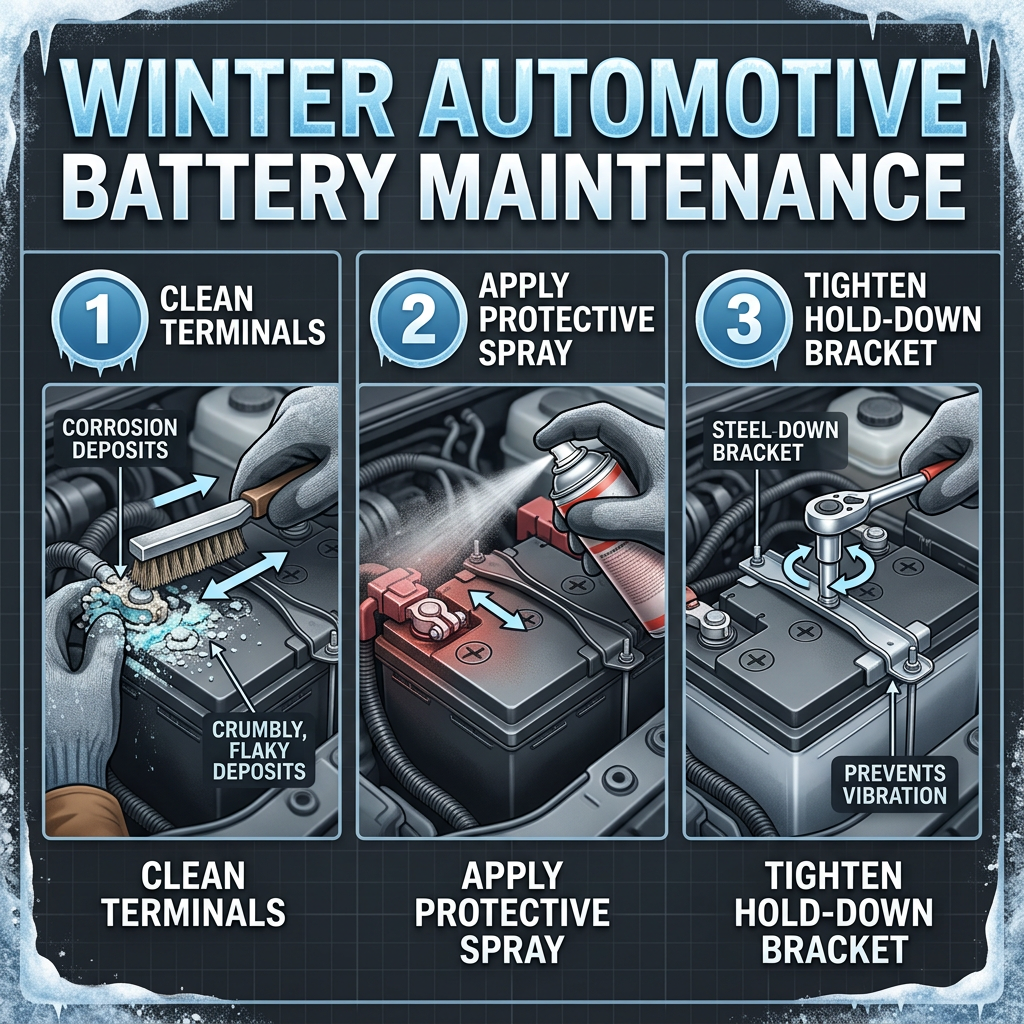
Winterizing Your Mazda Battery in Plainfield: A Step-by-Step Checklist
Step 1: Terminal Corrosion Removal
Mix 1 tablespoon of baking soda into 1 cup of warm water. Disconnect terminal cables (negative first, then positive) and scrub white/blue acid deposits using a wire terminal brush. Neutralize all corrosion residues and dry completely.
Step 2: Apply Anti-Corrosion Barrier
Install felt anti-corrosion washers over terminal posts and spray a high-grade terminal protectant or apply dielectric grease over tightened connection clamps to block atmospheric moisture and road salt vapor.
Step 3: Secure Hold-Down Bracket
Ensure the battery hold-down bracket bolts are securely tightened. A loose battery vibrates excessively over frost-heaved Plainfield roads, leading to internal plate detachment and short circuits.
Looking to upgrade your vehicle before deep winter arrives? Take a moment to Shop Certified Pre-Owned Mazda models for late-model peace of mind with full multi-point vehicle inspection reports.
Professional Battery Testing vs. DIY Multimeter Reading: What You Need to Know
DIY Multimeter Voltage Measurement
A basic handheld digital multimeter measures open-circuit resting voltage across the positive and negative posts. A fully charged healthy battery reads 12.6V to 12.8V resting. At 12.2V, it is 50% discharged, and at 11.9V, it is fully discharged.
The Multimeter Limitation: Voltage alone is misleading. A severely sulfated battery can show 12.6V resting voltage because static surface charge is present, yet collapse instantly to under 6V when subjected to starter motor load.
Professional Digital Conductance Testing
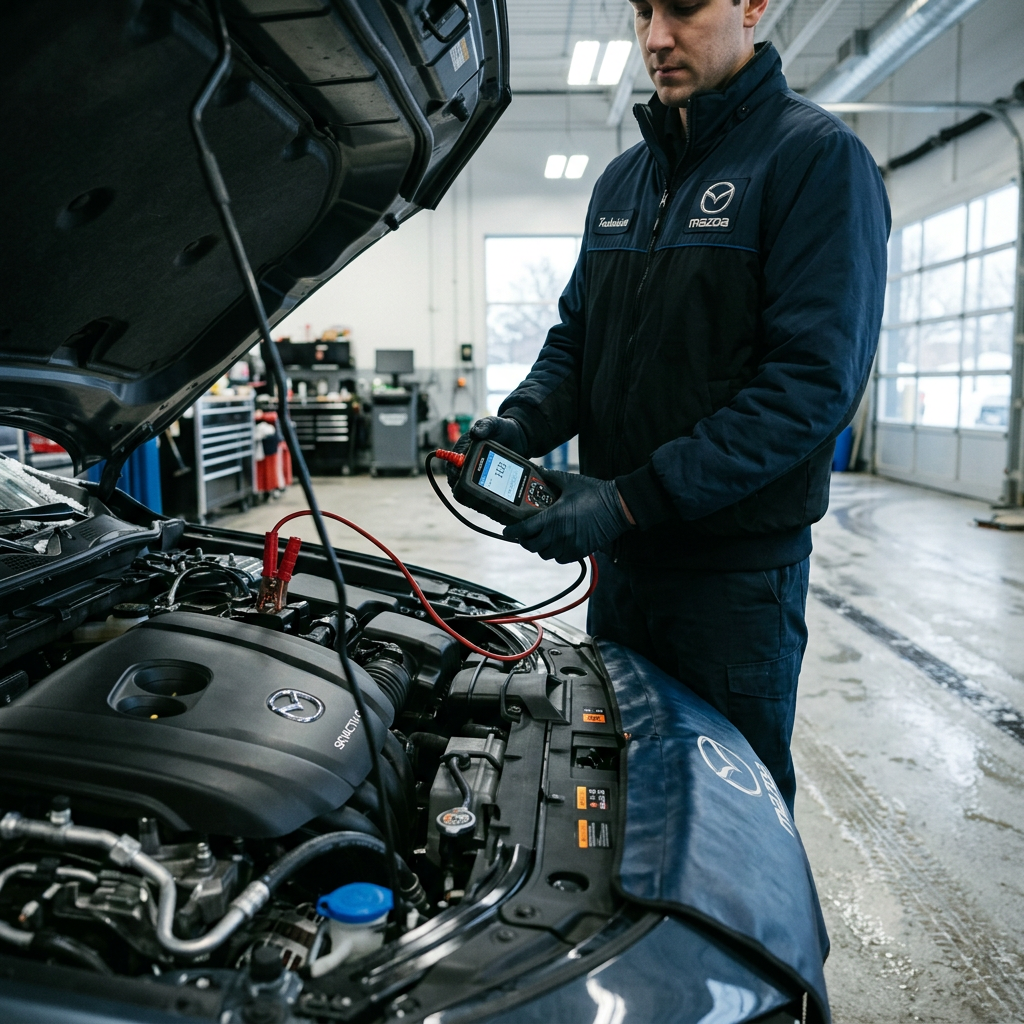
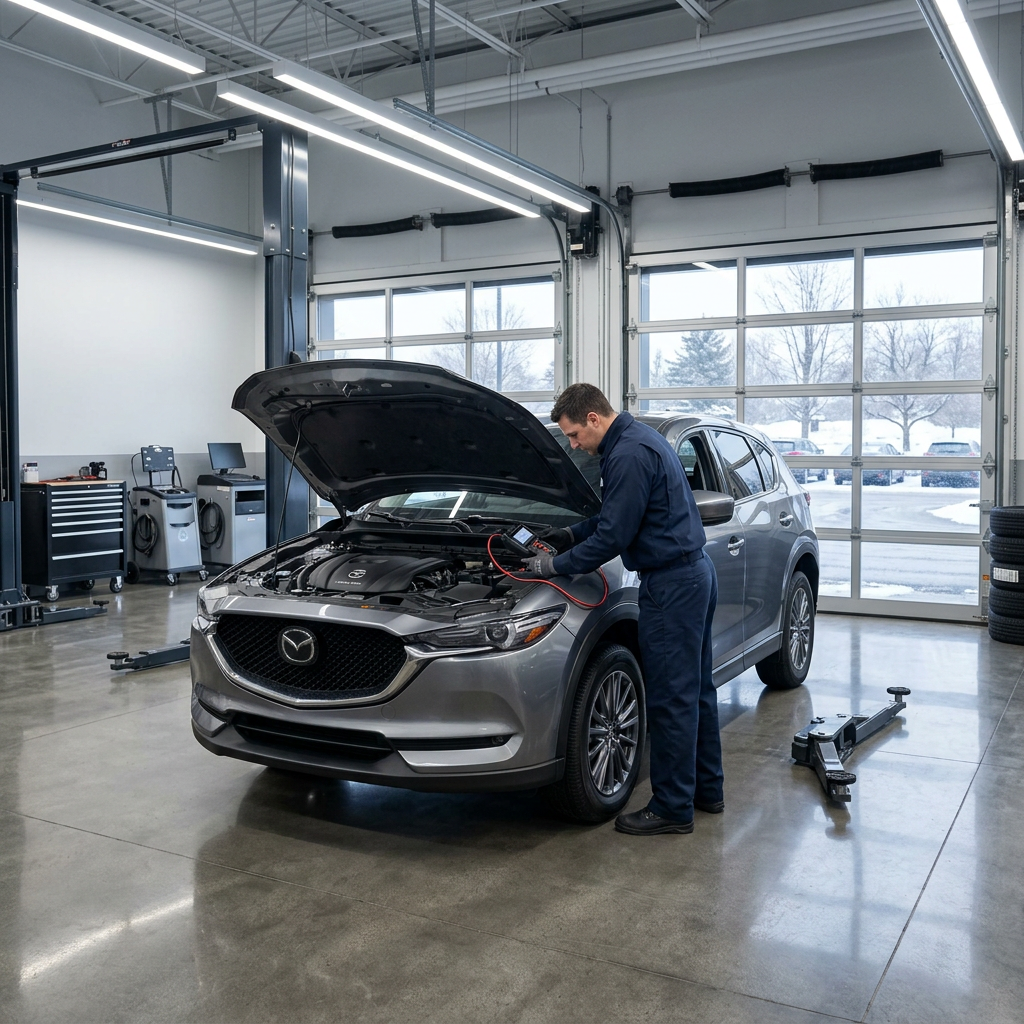
Hawk Mazda certified technicians utilize advanced micro-processor diagnostic equipment that sends a low-frequency AC signal through internal battery plates to measure dynamic electrical conductance.
This diagnostic test accurately reveals true Cold Cranking Amps capacity, internal plate resistance, cell degradation, and health trends without draining battery energy. It pinpoints impending failure weeks before you end up stranded in the cold.
Why Plainfield Drivers Rely on Hawk Mazda for Winter Battery Care
At Hawk Mazda, serving Plainfield, Shorewood, Joliet, and Naperville, winter vehicle safety is our top priority. When you bring your vehicle to our service bay, you benefit from:
• Factory-Trained & Certified Technicians: Experts who understand Skyactiv-G engine electronics, i-Stop systems, and Mazda-specific battery calibration requirements. • Genuine OEM Mazda Batteries: Engineered to match exact vehicle specifications with exceptional cold-cranking performance and long warranty coverage. • Battery Management System Recalibration: When a new battery is installed, our team resets the vehicle’s Powertrain Control Module (PCM) battery state-of-charge memory so the system charges properly.
Schedule Your Mazda Battery Health Inspection at Hawk Mazda Today
Don't wait for the first sub-zero blizzard to discover your battery is failing. Visit Hawk Mazda today for a comprehensive winter battery health check. Our quick digital conductance testing will give you definitive peace of mind for all your winter driving.