Does Mazda Skyactiv Technology Require Premium Fuel? The Direct Answer for Plainfield Drivers
If you drive or are considering purchasing a Mazda in the Plainfield and Shorewood area, one of the most common questions you might ask at the pump is whether high-tech engine engineering demands high-octane premium gasoline. The short, definitive answer is: No, standard naturally aspirated Mazda Skyactiv-G engines do not require premium fuel. They are engineered from the ground up to run safely, efficiently, and optimally on regular 87-octane unleaded gasoline.
However, if your Mazda vehicle is equipped with the powerful 2.5L Skyactiv-G Turbo engine, the answer is slightly more nuanced. Mazda’s turbocharged powertrains feature advanced dynamic pressure systems and smart ECU tuning that allow them to run completely safely on regular 87-octane gas while giving drivers the option to unlock full horsepower and torque capabilities when fueled with 93-octane premium gasoline. This flexible dual-octane calibration means you are never forced to buy premium fuel, but you can choose to do so whenever you want maximum performance.
|
Engine Type
|
Minimum Fuel Octane
|
Recommended Fuel Grade
|
Horsepower Output
|
Torque Output
|
|
Skyactiv-G 2.0L Naturally Aspirated
|
87 Octane (Regular)
|
87 Octane Regular Unleaded
|
158 hp
|
148 lb-ft
|
|
Skyactiv-G 2.5L Naturally Aspirated
|
87 Octane (Regular)
|
87 Octane Regular Unleaded
|
191 hp
|
186 lb-ft
|
|
Skyactiv-G 2.5T Turbocharged (87 Octane)
|
87 Octane (Regular)
|
87 Octane Regular Unleaded
|
227 hp
|
310 lb-ft
|
|
Skyactiv-G 2.5T Turbocharged (93 Octane)
|
87 Octane (Regular)
|
93 Octane Premium Unleaded
|
250 hp
|
320 lb-ft
|
Understanding how Mazda achieves impressive fuel economy without requiring costly premium fuel across its naturally aspirated lineup comes down to the core philosophy of Skyactiv engineering. Below, the team at Hawk Mazda breaks down every aspect of Skyactiv combustion mechanics, turbocharger sensors, real-world Illinois commuting fuel economy, and proper vehicle maintenance.
How Does Mazda Skyactiv Technology Work to Maximize Efficiency and Power?
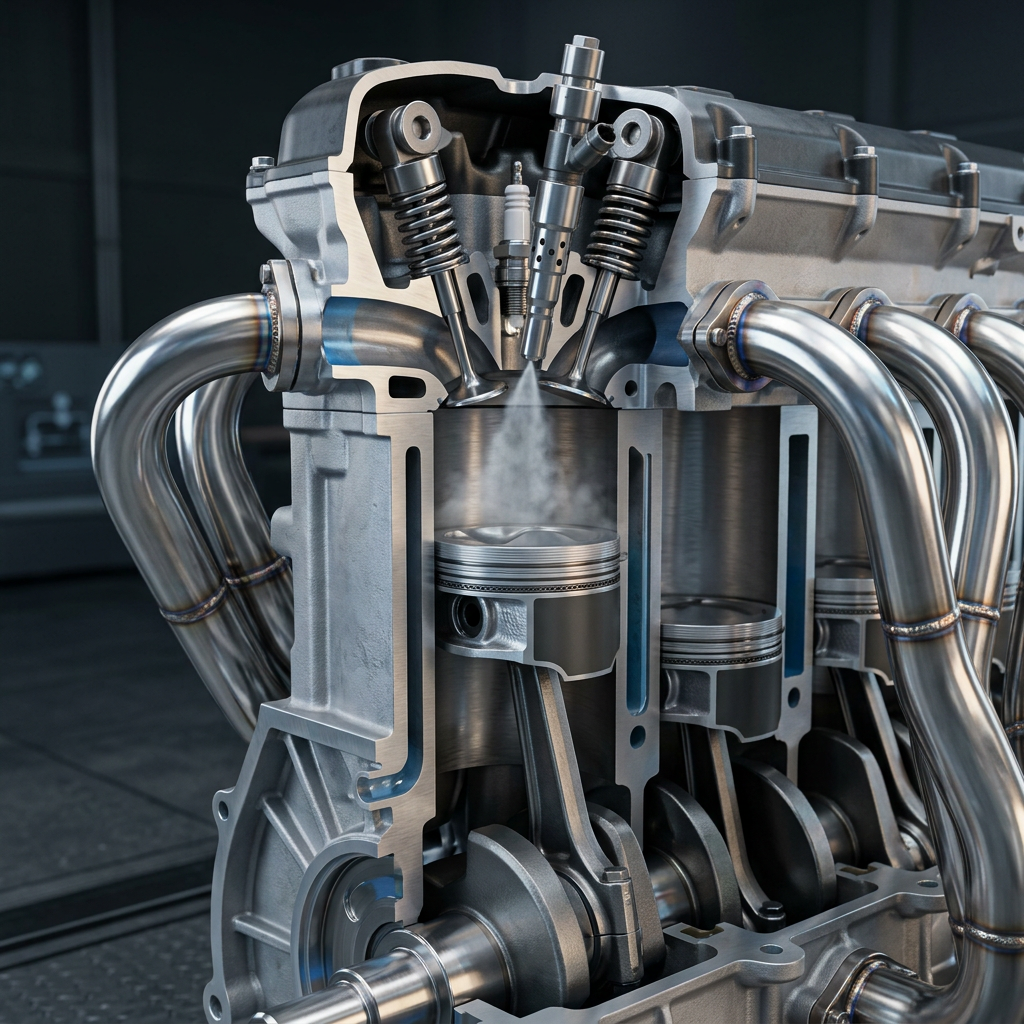
Traditionally in automotive engineering, high compression ratios inside internal combustion cylinders required high-octane premium fuel to prevent engine 'knocking' or pre-ignition. Engine knock occurs when the fuel-air mixture ignites prematurely due to excessive pressure and temperature before the spark plug fires. Mazda’s Skyactiv-G engineering team revolutionized gas engine design by achieving ultra-high compression ratios—ranging from 13.0:1 up to 14.0:1 in production vehicles—while using standard 87-octane regular gas. To accomplish this engineering feat, Mazda developed several key technological innovations: • 4-2-1 Long Exhaust Headers: Standard exhaust manifolds allow hot residual gases from one cylinder to flow back into adjacent cylinders during exhaust pulses. Mazda’s extended 4-2-1 exhaust system scavenges hot exhaust gas out of the cylinder head efficiently, keeping combustion chambers significantly cooler. • Multi-Hole Direct Fuel Injection: High-pressure direct injectors spray ultra-fine fuel mist straight into the combustion chamber. As this fuel vaporizes instantly, it creates an evaporative cooling effect inside the cylinder that lowers combustion temperatures. • Cavity Pistons: Specially shaped bowl-like piston heads guide early combustion flame fronts away from cylinder edges, suppressing residual gas detonation and promoting clean, complete flame propagation.
In addition to combustion chamber thermal control, Skyactiv architecture slashes mechanical friction throughout the valvetrain, crankshaft, and oil pump by up to 30%. By combining reduced internal drag with ultra-precise spark timing control, Mazda squeezes every drop of energy out of regular 87-octane fuel without needing higher-priced fuel grades to keep the engine safe.
Naturally Aspirated vs. Turbocharged: Fuel Requirements for Every Mazda Skyactiv Engine
Naturally Aspirated Skyactiv-G (2.0L & 2.5L)
For popular everyday Mazda vehicles like the Mazda3 sedan, CX-30, CX-5, and CX-50 equipped with standard naturally aspirated Skyactiv-G engines, premium fuel yields no benefit whatsoever. Mazda engineers tuned these 2.0L and 2.5L engines specifically for 87-octane gas. Filling a non-turbo Mazda with 91 or 93 octane gas will not add extra horsepower, nor will it increase fuel economy. The Powertrain Control Module (PCM) holds ignition timing at factory optimal parameters designed around regular fuel specs. Save your money at Will County gas pumps: if your vehicle lacks a turbo badge, sticking to regular unleaded 87-octane gas is the smart, engineer-approved choice.
Skyactiv-G 2.5T Turbocharged Powertrains
In turbocharged models such as the CX-5 Turbo, CX-50 Turbo, CX-90 Turbo, and Mazda3 2.5 Turbo, Mazda utilizes an innovative Dynamic Pressure Turbocharger coupled with real-time knock-detection sensors. Instead of forcing owners to buy premium gas, Mazda’s software constantly monitors knock frequency and fuel octane quality in real time. When the system detects regular 87-octane gas, it seamlessly makes minor adjustments to ignition timing and turbo boost pressures to prevent engine knock completely. When you pump 93-octane premium gas, the ECU advances spark timing and allows boost levels to increase, instantly delivering the full 250 horsepower output.
What Horsepower and Torque Output Does the 2.5L Skyactiv Turbo Produce on Regular vs. Premium Gas?
Regular 87 Octane
Output: 227 HP / 310 lb-ft Torque When fueled with 87-octane regular gas, the 2.5L Turbo produces an abundance of low-end grunt. Because maximum torque is available at low RPMs (around 2,000 RPM), daily driving across suburban Plainfield streets feels responsive, snappy, and effort-free.
Premium 93 Octane
Output: 250 HP / 320 lb-ft Torque Upgrading to 93-octane premium unleaded unlocks an extra 23 horsepower and 10 lb-ft of torque. You will notice this performance gain primarily at higher RPMs during aggressive highway merging on Interstate 55 or fast passing maneuvers.
Financial Evaluation
For daily suburban commuting, regular 87 octane provides more than enough pass-ability while saving you $0.60 to $0.90 per gallon. Many drivers choose regular for weekly work trips and fill up with 93 octane before road trips or performance driving weekend outings.
What is the Difference Between Skyactiv-G and Skyactiv-X Engines?
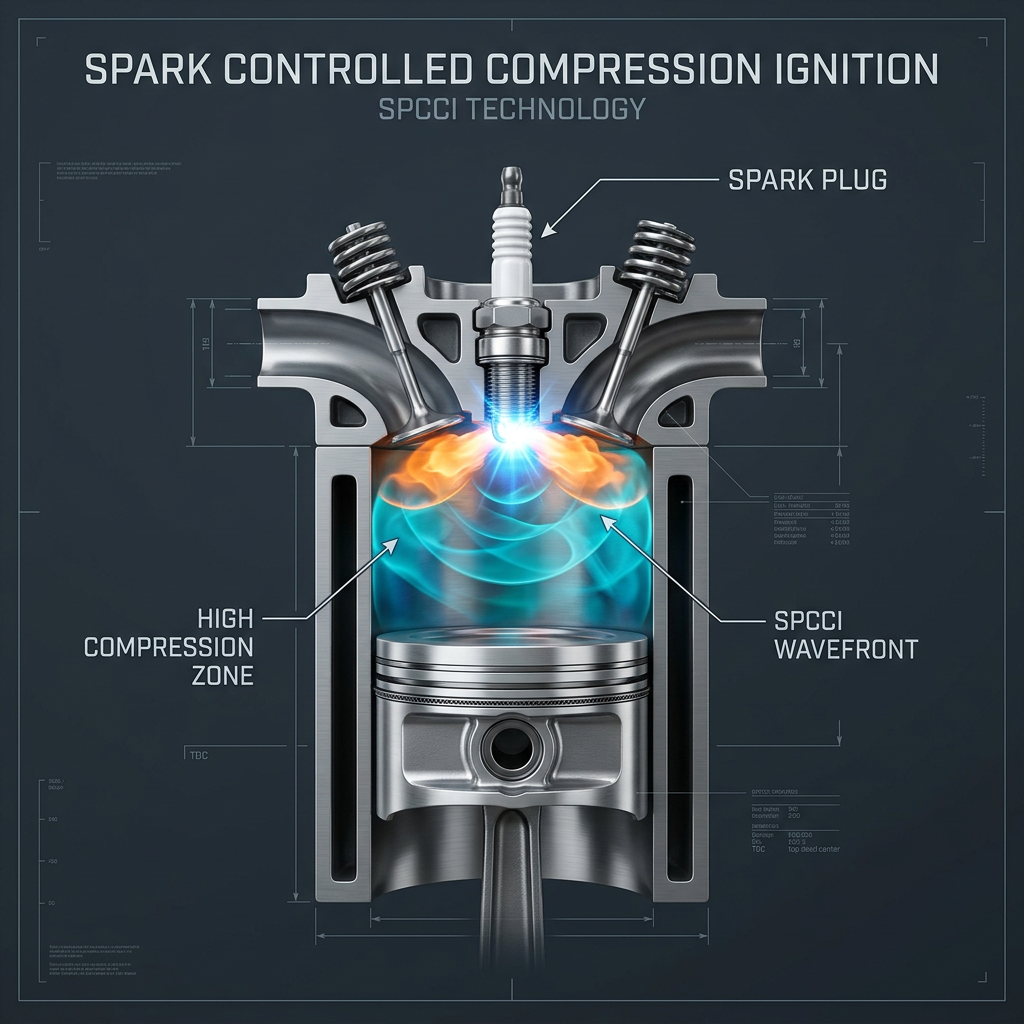
While Skyactiv-G represents Mazda’s world-renowned line of spark-ignition direct-injection gasoline engines, Mazda has pushed combustion boundaries further with Skyactiv-X. Skyactiv-X introduces a proprietary combustion process called Spark Controlled Compression Ignition (SPCCI), bridging the gap between gasoline engine smoothness and diesel engine torque efficiency.
In SPCCI operation, a lean mixture of fuel and air is compressed to an exceptionally high pressure ratio (up to 16.0:1). At the exact moment combustion is required, a central spark plug ignites a localized dense pocket of fuel, creating a high-pressure wave inside the cylinder that compresses the rest of the lean fuel mixture until it ignites simultaneously throughout the entire chamber. Because SPCCI relies heavily on precise compression dynamics, engine management software monitors fuel octane parameters meticulously. In global markets where Skyactiv-X is deployed, high compression stability enables diesel-like torque response with up to 20-30% improved fuel economy compared to traditional gas powertrains.
How Much MPG Do Skyactiv Engines Achieve in Real-World Driving Around Plainfield and Shorewood?
Suburban Route 59 & I-55 Commuting
EPA fuel economy numbers provide a baseline, but local driving around Will County involves unique traffic conditions—stop-and-go stoplights along Route 59, suburban cruising through Shorewood, and open highway stretches on I-55. In real-world testing, standard 2.5L Skyactiv-G models like the Mazda CX-5 and CX-30 consistently achieve 26 to 31 MPG combined. On extended highway drives toward Chicago or southern Illinois, drivers routinely report hitting 33+ MPG using regular 87-octane gas.
Does Octane Rating Impact MPG Ratings?
Many drivers assume higher octane fuel delivers better mileage. However, extensive testing shows that running 93 octane in standard Skyactiv-G engines results in 0% gain in miles per gallon. Even in Skyactiv Turbo models, switching from 87 to 93 octane improves performance (horsepower and torque), but fuel efficiency remains virtually identical under standard driving habits. Driving style, tire pressure, and proper alignment have a far greater impact on your fuel costs than fuel grade.
How Does Mazda Skyactiv Compare to Toyota Dynamic Force Engines?
Mazda Skyactiv Architecture
• Compression Ratio: Up to 14.0:1 • Transmission: 6-speed or 8-speed direct-drive step automatic • Driving Dynamics: Immediate pedal response, natural engine braking, non-linear torque curve • Fuel Grade: 87 Octane safe & optimized across NA lineup
Toyota Dynamic Force Architecture
• Compression Ratio: Up to 13.0:1 - 14.0:1 • Transmission: Continuously Variable Transmission (CVT) in most models • Thermal Efficiency: High peak thermal efficiency (40%) • Throttle Feel: Rubber-band accelerator delay typical of CVTs
The Driver's Advantage
While both Japanese automakers engineered outstanding high-compression engines that thrive on 87-octane gas, Mazda pairs its Skyactiv powertrains with real torque-converter automatic transmissions rather than sluggish CVTs, delivering a far superior driving connection.
What Type of Engine Oil is Required for Mazda Skyactiv Engines?
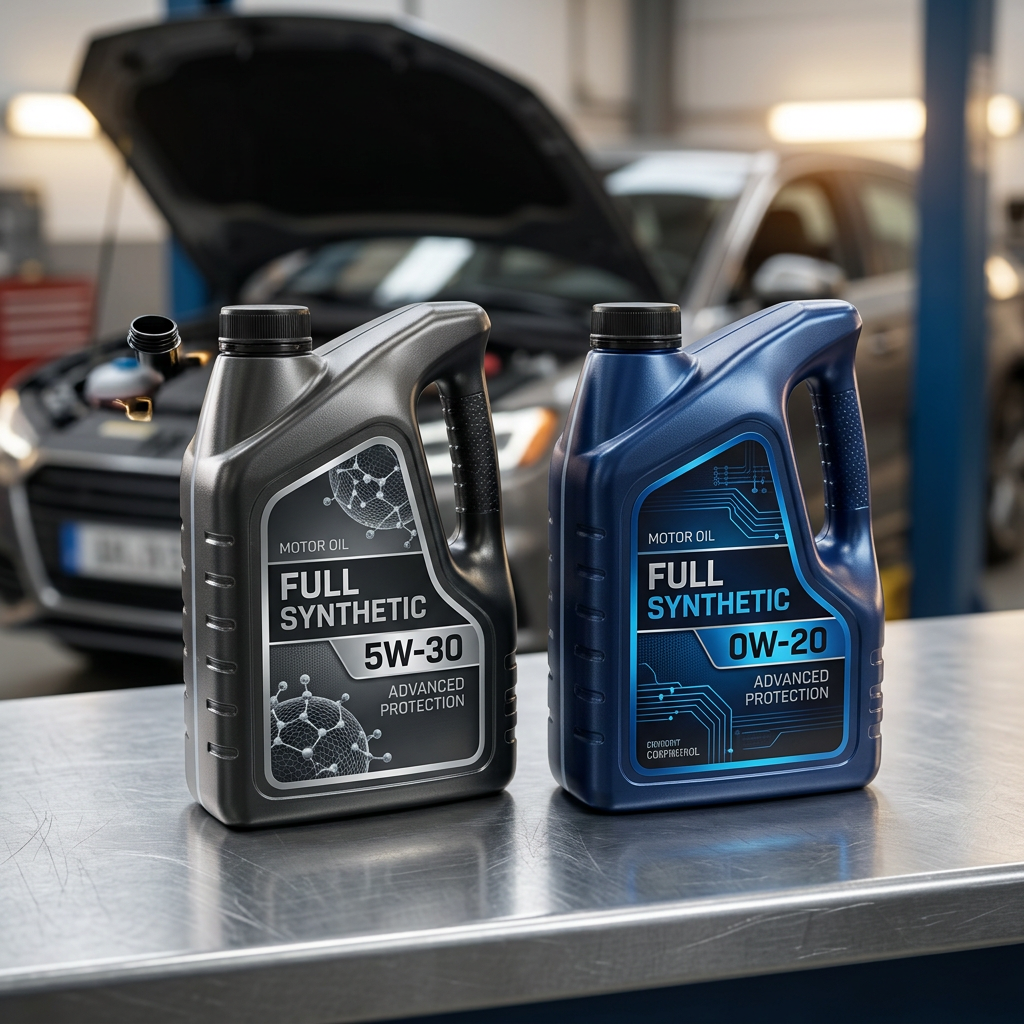
Maintaining high internal compression without friction requires advanced lubricants. For naturally aspirated Skyactiv-G 2.0L and 2.5L engines, Mazda specifies SAE 0W-20 Full Synthetic Engine Oil. For turbocharged Skyactiv-G 2.5T models, Mazda mandates SAE 5W-30 Full Synthetic Engine Oil to protect turbocharger bearings operating under elevated temperatures. Mazda Genuine Oil features proprietary molybdenum additives that coat high-load internal components, preventing metal-on-metal wear during cold winter morning startups in Northern Illinois. Using non-approved thick conventional oils can restrict flow through tight oil passages and decrease efficiency. Keep your powertrain running perfectly by reserving your appointment with our factory certified technicians:Schedule Your Service Today.
Long-Term Fuel System Care and Preventative Maintenance for Skyactiv Owners
Because Skyactiv engines utilize direct fuel injection (injecting fuel directly into the cylinder rather than upstream in the intake port), intake valves do not receive continuous washing from fuel spray. To ensure your Skyactiv engine maintains peak efficiency over hundreds of thousands of miles, follow these maintenance best practices:
1. Use Top Tier™ Gasoline: Always purchase gas from reputable Top Tier stations in Plainfield and Shorewood. Top Tier fuels contain detergent additives that prevent harmful carbon deposit buildup on high-pressure direct injectors. 2. Follow Spark Plug Intervals: Naturally aspirated Skyactiv engines require spark plug replacements every 75,000 miles, whereas Skyactiv Turbo models require fresh iridium plugs every 40,000 miles to ensure clean, high-intensity ignition. 3. Use OEM Filters & Components: Always fit genuine OEM air filters and oil filters. You can purchase genuine factory-engineered maintenance supplies directly through our parts center:Order Genuine Mazda Parts.
Seasonality and Commuting: Optimizing Skyactiv Performance in Northern Illinois Winters
Winter Blend Fuel Impact
During late fall and winter in Illinois, fuel stations transition to winter-blend gas containing higher vapor pressure. You may notice a slight 1-2 MPG drop in fuel economy, which is completely normal for all modern vehicles.
High Compression Cold Starts
On cold mornings in Plainfield, Skyactiv engines intentionally idle higher for 30-45 seconds to quickly heat up the catalytic converter and exhaust manifold, quickly reaching optimal operating temperature.
Winter Maintenance Prep
Check tire inflation monthly as temperatures drop, ensure full synthetic 0W-20 or 5W-30 oil is fresh, and inspect your battery before sub-zero winter temperatures arrive.
Evaluating Fuel Cost vs. Performance Gains at Hawk Mazda in Plainfield
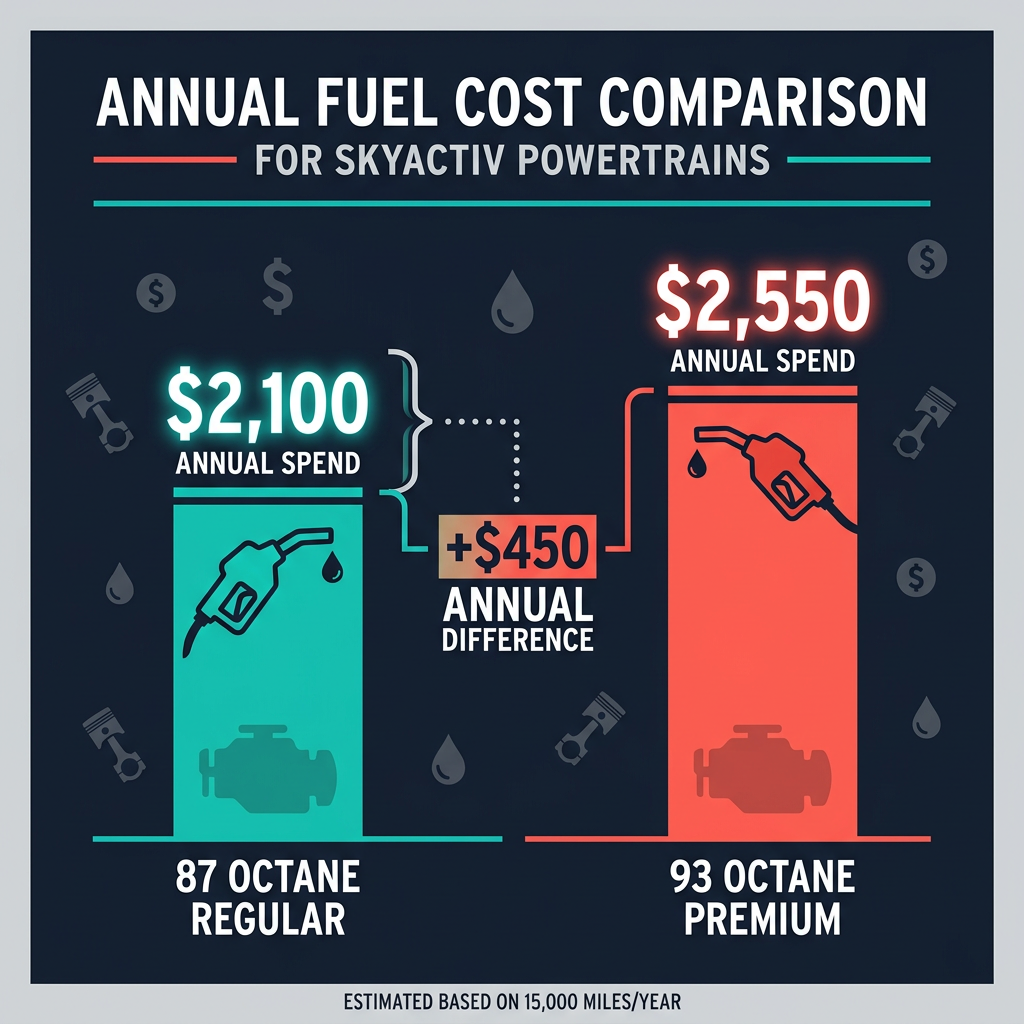
To put the fuel octane choice into financial perspective, let's look at average annual costs for a driver covering 15,000 miles per year in a Skyactiv Turbo vehicle averaging 25 MPG (600 gallons of fuel annually): • Regular 87 Octane ($3.50/gal average):~$2,100 per year • Premium 93 Octane ($4.25/gal average):~$2,550 per year • Annual Difference: Approximately $450 per year ($37.50/month) For drivers who prioritize spirited performance and maximum throttle response, an extra $37 a month is a modest trade-off for 250 horsepower. For practical daily commuters, running regular 87 octane keeps money in your wallet without compromising engine health or longevity.
Visit Hawk Mazda for Expert Skyactiv Service and New Vehicle Sales
Whether you are interested in testing out the effortless acceleration of a new Skyactiv Turbo model or need routine scheduled maintenance for your current vehicle, Hawk Mazda is your trusted local source in Will County.