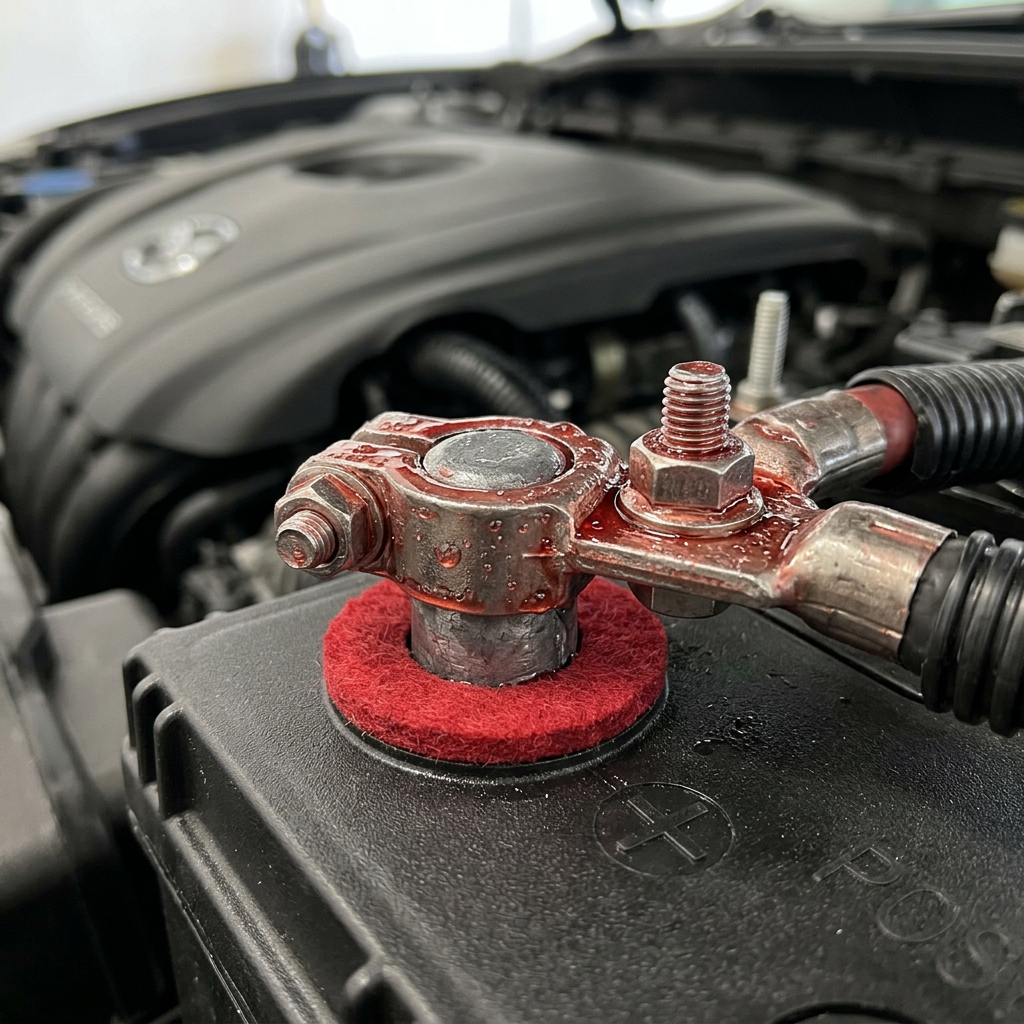
12V Starter Battery vs. EV Traction Battery SOH Testing: Key Differences Explained
Understanding the State of Health (SOH) of an automotive battery requires recognizing that traditional internal combustion engine (ICE) vehicles and electric vehicles (EVs) utilize stored electrical energy in fundamentally different ways. A standard 12V starter battery is engineered to deliver a massive burst of current—often between 400 and 900 amperes—for just a few seconds to turn over an engine's flywheel and initiate internal combustion. Once the engine starts, the alternator takes over the electrical load and recharges the battery. Consequently, 12V SOH diagnostics prioritize measuring immediate burst capability, known as Cold Cranking Amps (CCA), alongside internal conductance and static voltage.
In stark contrast, an EV or Plug-in Hybrid Electric Vehicle (PHEV) high-voltage traction battery functions as the primary propulsion source for the entire vehicle. Operating between 300V and 800V+, these massive lithium-ion battery packs are evaluated on continuous energy storage capacity (measured in kilowatt-hours, or kWh), energy retention degradation over time, thermal management efficiency, and individual cell voltage balance. While a failing 12V battery manifests in a slow starter crank or sudden failure to turn over, a degrading EV traction battery results in gradual driving range loss, reduced regenerative braking capacity, and altered fast-charging power curves.
To accurately evaluate these complex energy systems, specialized diagnostic methodologies are required. Technicians testing a 12V unit evaluate high-amp pulse discharge under load, whereas high-voltage battery SOH diagnostics rely heavily on advanced Battery Management System (BMS) telemetry, Parameter ID (PID) decoding, and module-level voltage delta analysis. Drivers navigating the variable climate of Plainfield and Chicagoland must understand these critical differences to maintain vehicle reliability, avoid unexpected winter breakdowns, and maximize long-term powertrain durability.
How Do Mechanics Test 12V Starter Battery State of Health?
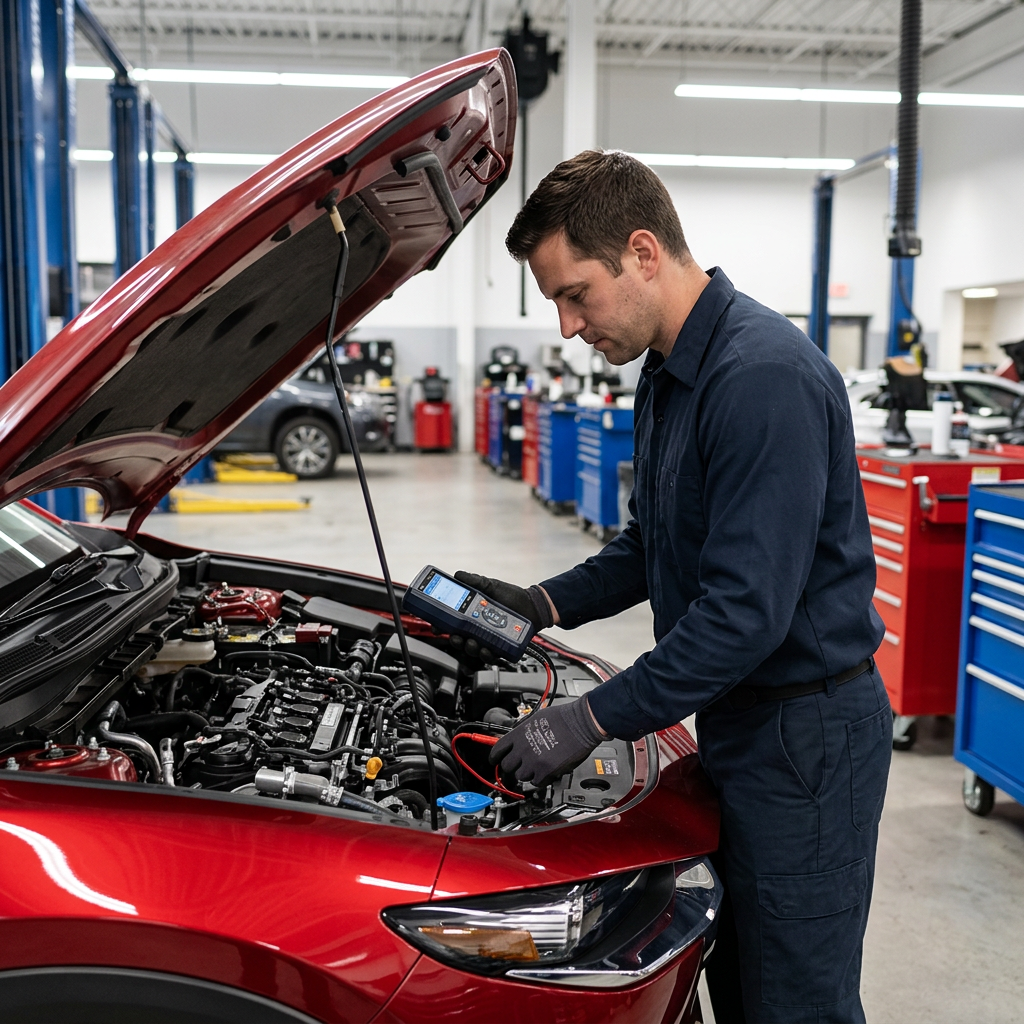
Evaluating the health of a standard 12V automotive battery involves a combination of static measurements, dynamic load tests, and electronic conductance analysis. Mechanics begin by inspecting static Open-Circuit Voltage (OCV) using a digital multimeter across the terminals with the engine turned off. A fully charged lead-acid battery should display approximately 12.6V to 12.8V. A reading below 12.4V indicates a partially discharged state, while readings under 12.0V point to a severely discharged or failed cell condition. To assess true starting power, technicians perform a Cold Cranking Amperage (CCA) test. Traditional carbon pile load testers apply a dynamic load equal to half the battery's CCA rating for 15 seconds. If the voltage remains above 9.6V at 70°F during load application, the battery passes. Modern shops also utilize digital conductance testers, which send a small AC signal through the battery to measure internal plate surface area and internal resistance without drawing heavy current.
Internal resistance is one of the clearest indicators of 12V degradation. As lead-acid and AGM batteries age, lead sulfate crystals build up on the internal plates (sulfation), restricting current flow and increasing internal resistance measured in milliohms. Advanced electronic diagnostic units compare actual measured CCA against the battery's factory-rated label. If measured CCA drops below 70-75% of original rating, replacement is strongly recommended prior to severe weather seasons. Furthermore, mechanics check the vehicle's charging system—specifically alternator output voltage (typically 13.8V to 14.7V) and parasitic draw. A hidden electrical drain pulling more than 50 milliamperes with the vehicle powered down can drain even a brand-new 12V battery overnight. Comprehensive 12V SOH checks verify both the power source itself and the surrounding electrical architecture.
How Is State of Health Diagnostic Testing Performed on EV and Hybrid High-Voltage Traction Batteries?
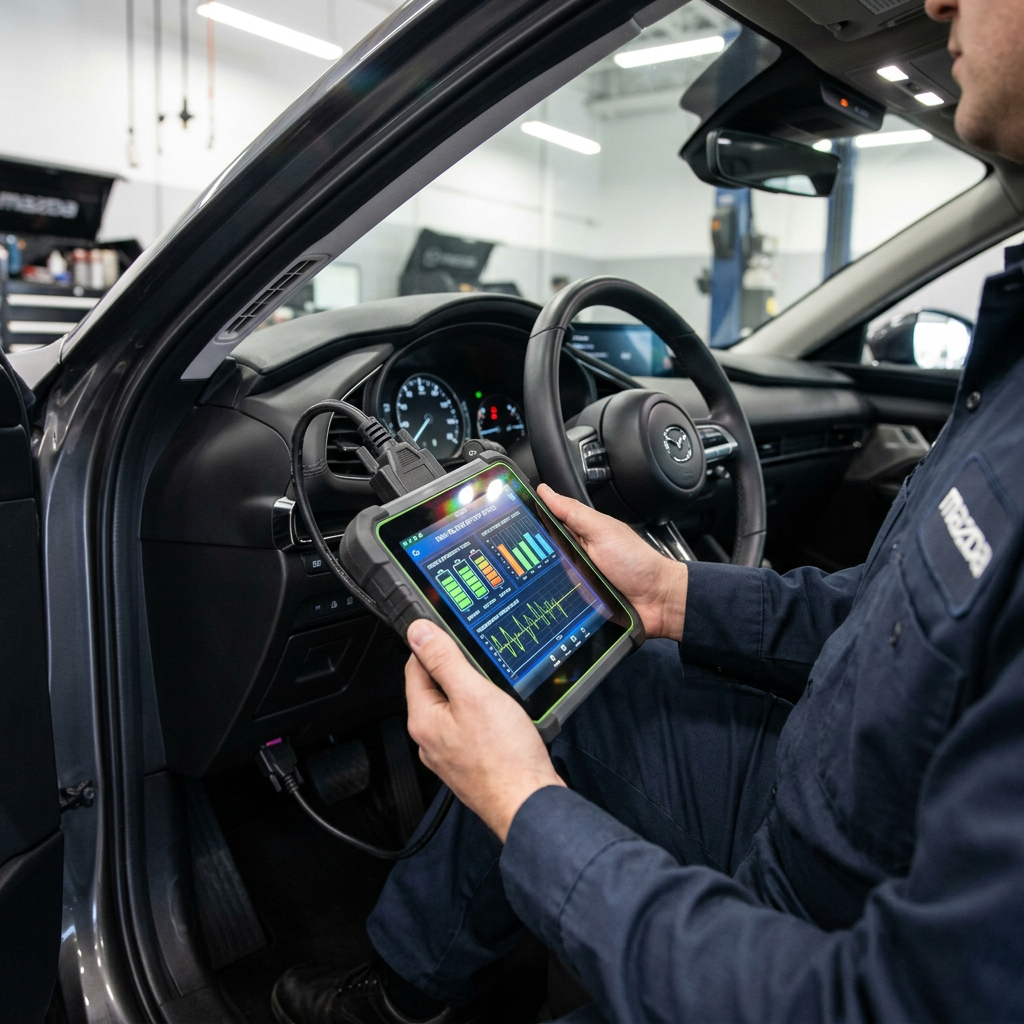
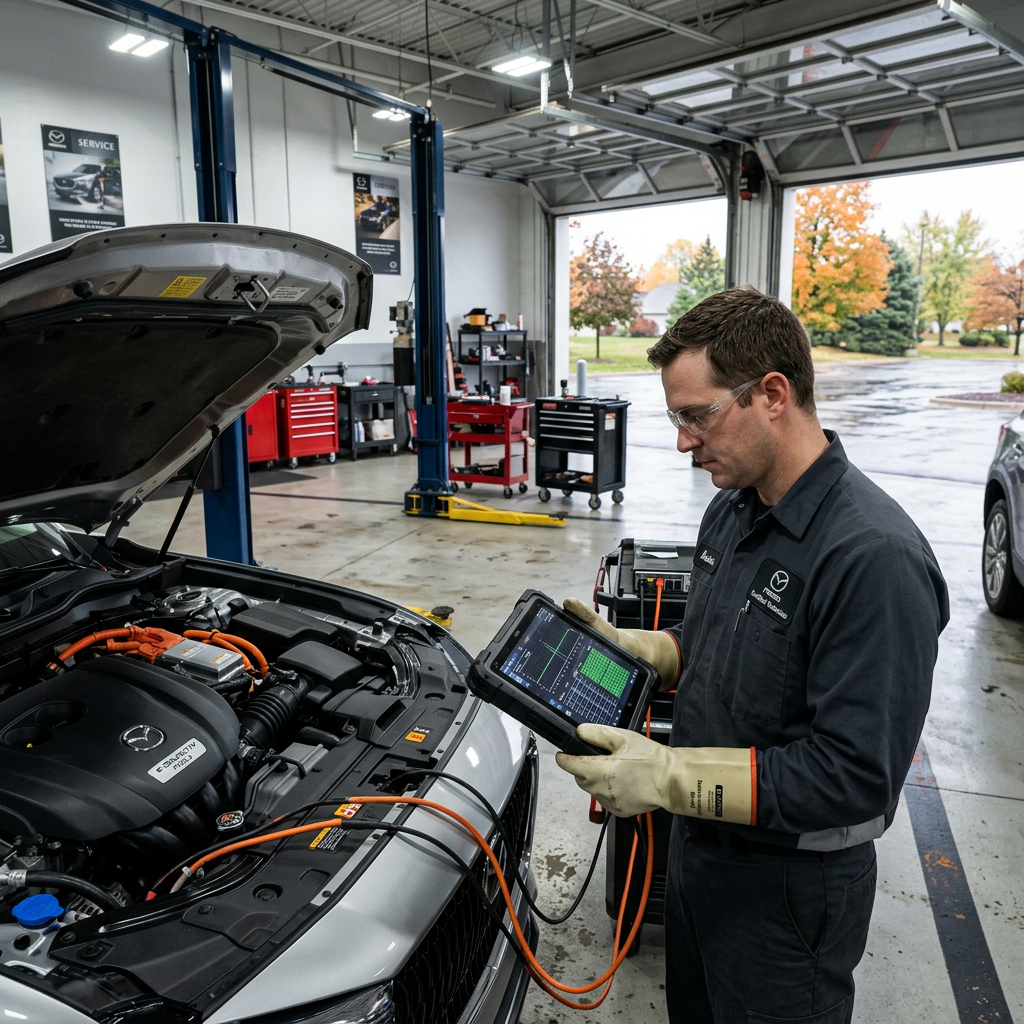
High-voltage (HV) traction battery diagnostics require sophisticated electronic telemetry equipment rather than simple hand-held load clamps. Electric vehicle and hybrid battery packs consist of hundreds of individual lithium-ion cells linked in series and parallel modules. Diagnostic testing centers on interrogating the vehicle's onboard Battery Management System (BMS) via proprietary diagnostic software interface tools. Technicians extract live Parameter IDs (PIDs) from the BMS to evaluate critical metrics including overall pack SOH percentage, maximum usable capacity (kWh), individual cell voltage deltas, and historical temperature logs. A healthy EV pack maintains minimal voltage variance across cell groups (ideally less than 10 to 20 millivolts difference between highest and lowest cells). Significant voltage deltas highlight weak or degraded cell modules that reduce total pack performance.
For deep diagnostic verification, dynamic charge/discharge cycle analysis is performed. Technicians log power flow under rapid Level 3 DC charging and heavy acceleration loads to record internal resistance changes across thermal zones. Because temperature significantly impacts lithium-ion performance, analyzing thermal management sensor data ensures cooling loops and heat pumps function properly to prevent accelerated pack degradation.
What Is the Difference Between AGM, EFB, Standard Flooded, and EV Lithium-Ion Batteries?
Flooded & EFB
Standard flooded lead-acid batteries feature liquid electrolyte surrounding lead plates. They offer affordable starting power but lower tolerance for deep discharge cycles. Enhanced Flooded Batteries (EFB) utilize poly-fleece scrims on plates to retain active material, providing twice the micro-hybrid cycle life of conventional units—ideal for basic start-stop systems.
AGM Technology
Absorbed Glass Mat (AGM) batteries suspend liquid electrolyte inside ultra-fine fiberglass separators. Completely sealed and spill-proof, AGM units deliver superior cold-cranking power, lower internal resistance, faster recharge rates, and triple the cycle durability of standard flooded units—essential for vehicles packed with electrical accessories.
EV Lithium-Ion
Traction batteries use Nickel Manganese Cobalt (NMC) or Lithium Iron Phosphate (LFP) chemistries operating at high voltage. They deliver exceptional energy density (wh/kg), supporting thousands of deep discharge cycles. Unlike 12V starter batteries built for instant amp spikes, lithium-ion packs store immense power for vehicle range.
|
Battery Type
|
Nominal Voltage
|
Primary Application
|
Deep Discharge Tolerance
|
Relative Lifespan
|
|
Standard Flooded
|
12V
|
Basic Engine Starting
|
Low
|
3–5 Years
|
|
EFB (Enhanced Flooded)
|
12V
|
Entry Start-Stop ICE
|
Moderate
|
4–6 Years
|
|
AGM (Absorbed Glass Mat)
|
12V
|
Modern ICE / PHEV / Auxiliary 12V
|
High
|
5–7 Years
|
|
Lithium-Ion (NMC / LFP)
|
300V–800V+
|
EV / PHEV Traction Motor
|
Very High (20%-80% optimal)
|
8–15+ Years
|
How Do You Know If a Car Battery Is Dying or Failing in Chicagoland Winters?
12V Battery Failure Signs
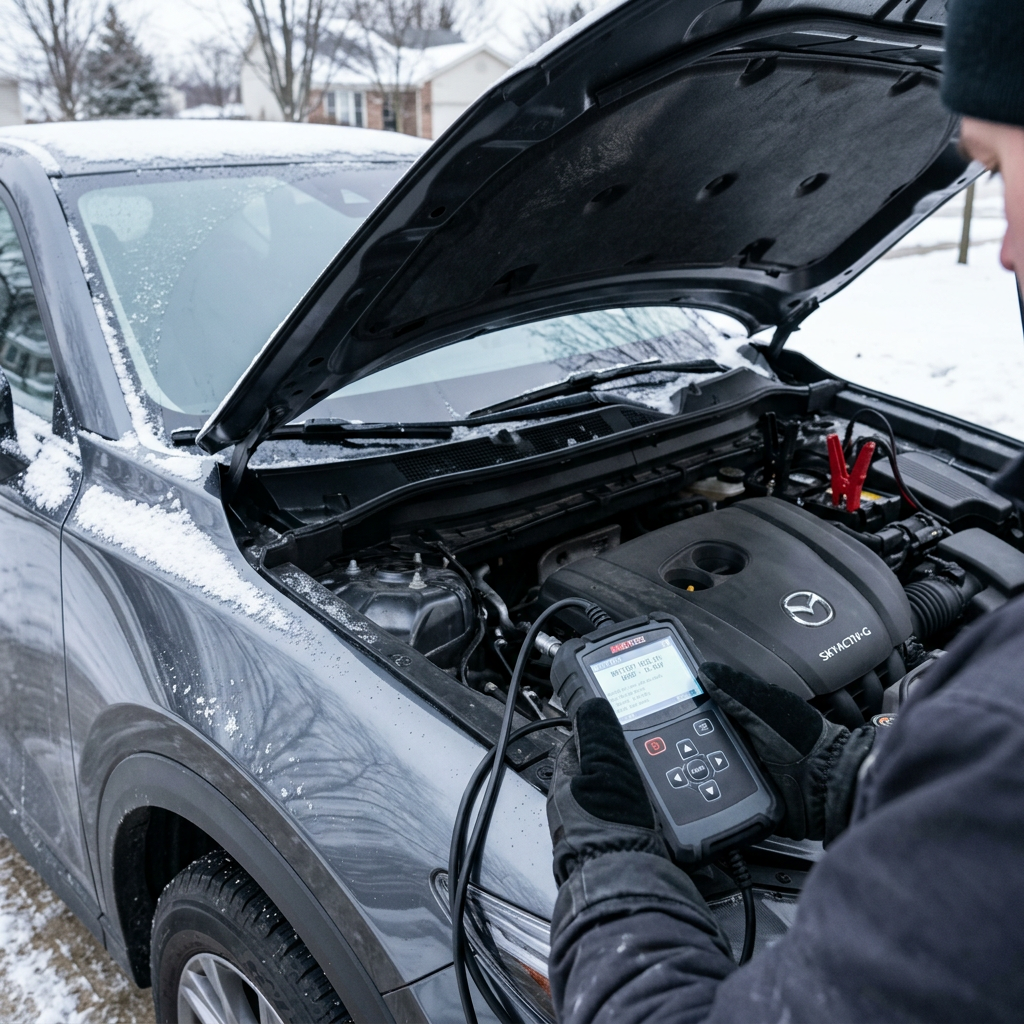
Chicagoland sub-zero winter temperatures drastically slow chemical reactions inside 12V lead-acid batteries, reducing available CCA capacity by 30% to 50% while engine oil thickens. Key warning signs include: • Slow, sluggish engine turnover upon key turn or push-button start. • Clicking sounds from the starter solenoid when attempting to start. • Dimming headlights or interior illumination at engine idle. • Illumination of the dashboard battery warning light or i-Stop system alerts. • Resetting clock or infotainment settings after ignition cycle.
EV Traction Battery Failure Signs
For electric vehicles and hybrids operating in freezing Illinois conditions, signs of high-voltage battery degradation manifest differently: • Sudden, disproportionate drops in displayed range during cold morning drives. • Significantly throttled DC Fast Charging rates under cold temperatures. • Reduced regenerative braking response as BMS limits charge acceptance. • Thermal management error codes or high-voltage system warnings on dashboard screens.
Does Buying a Battery with Higher CCA Than Required Damage Your Vehicle?
A common electrical myth among car owners is that installing a 12V battery with a higher Cold Cranking Amperage (CCA) rating than factory specifications will burn out the starter motor or damage sensitive control modules. **This myth is entirely false.** A vehicle's electrical components operate on electrical resistance governed by Ohm's Law (Current = Voltage / Resistance). The starter motor and electronics draw only the specific amperage required to function; the battery does not forcibly 'push' excess electrical current into the vehicle system.
In fact, selecting a replacement battery with a higher CCA rating provides significant advantages, especially during harsh winter weather in Plainfield and Joliet. When ambient temperatures plunge below zero, thick engine oil increases mechanical resistance on the starter, demanding higher peak current. Having additional CCA margin ensures steady voltage output during extreme engine cranking, protecting sensitive microprocessors from low-voltage brownouts. When upgrading, drivers should simply ensure physical group size fits the tray correctly and matches factory terminal orientation.
Are Hybrid and EV Battery Replacements Covered Under Manufacturer Warranties?
Federal mandates protect electric and hybrid vehicle buyers by requiring automakers to provide minimum high-voltage battery warranty coverage. Under federal rules, electric vehicle traction batteries are covered for a minimum of **8 years or 100,000 miles**, whichever comes first. In states adhering to California Air Resources Board (CARB) Partial Zero Emission Vehicle (PZEV) regulations, coverage extends up to **10 years or 150,000 miles** for hybrid components. Automaker warranties generally guarantee that the high-voltage battery pack will retain at least 70% of its original usable energy capacity during the warranty period. If official SOH diagnostic scans verify capacity retention has dropped below this threshold, the manufacturer will replace or recondition degraded battery modules under warranty coverage.
Mazda Hybrid and Plug-in Hybrid (PHEV) vehicles feature comprehensive High-Voltage Battery Warranties alongside factory powertrain protection. To keep warranty coverage intact, owners should follow recommended factory service schedules and avoid unauthorized modifications to high-voltage wiring harnesses or management software.
How Do Battery Warranties Compare Between AutoZone, Advance Auto Parts, Costco, and Dealerships?
Aftermarket Retailers
AutoZone (Duralast) and Advance Auto Parts (DieHard) offer 2- to 3-year free replacement periods. However, aftermarket warranties strictly cover the replacement unit itself; labor for installation, terminal corrosion cleaning, and vehicle BMS recalibration are never covered.
Wholesale Clubs
Costco (Interstate Batteries) provides non-prorated 36-month free replacement warranties at competitive pricing. However, installation service is not offered on-site, requiring buyers to install units themselves and perform necessary electronic registration elsewhere.
Authorized Dealerships
OEM Mazda batteries installed at dealerships feature multi-year replacement guarantees paired with labor coverage. Crucially, dealership installation includes mandatory computer BMS resets to ensure charging profiles adapt correctly to the new battery.
|
Provider
|
Free Replacement Term
|
Labor Covered?
|
BMS Coding Included?
|
Nationwide Warranty Support
|
|
AutoZone / Duralast
|
24–36 Months
|
No
|
No
|
Yes (Retail Stores)
|
|
Advance Auto / DieHard
|
24–36 Months
|
No
|
No
|
Yes (Retail Stores)
|
|
Costco / Interstate
|
36 Months
|
No (DIY Installation)
|
No
|
Yes (Member Warehouses)
|
|
Authorized Dealership (Hawk Mazda)
|
36–84 Months (Prorated)
|
Yes (When Installed On-Site)
|
Yes (Factory Diagnostic Reset)
|
Yes (All Mazda Dealerships)
|
How Much Do Auto Repair Shops or Dealerships Charge for Battery Replacement Labor?
Labor costs for battery replacement vary substantially based on vehicle complexity, battery location, and chemical architecture. For standard 12V lead-acid or AGM replacement on traditional ICE vehicles, installation labor typically ranges between **$30 and $100**. However, modern vehicles equipped with intelligent battery sensors require BMS recalibration via diagnostic scan tool during installation. Resetting the battery monitoring algorithm prevents premature battery degradation and ensures proper operation of active fuel-saving systems like Mazda i-Stop, adding nominal diagnostic labor time.
Conversely, high-voltage traction battery pack replacement on electric vehicles or hybrid models is a major mechanical job. Replacing an EV pack involves high-voltage safety disconnections, liquid cooling circuit draining/flushing, structural underbody unbolting, and module programming—resulting in specialized labor charges ranging from **$500 to $2,000+**.
How Plainfield and Joliet Driving Conditions Impact Battery Health and Lifespan
Drivers throughout Plainfield, Joliet, and the wider Will County region subject automotive batteries to some of the most challenging environmental conditions in the Midwest. Northeastern Illinois experiences extreme seasonal temperature swings—from humid 95°F summer afternoons along the DuPage River to sub-zero winter blasts during polar vortex events along the Interstate 55 corridor.
Summer heat accelerates internal chemical degradation inside 12V batteries by evaporating electrolyte and speeding up internal plate corrosion. However, the battery's true weakness isn't exposed until winter strikes. Sub-zero temperatures reduce available cranking power right when thick engine oil requires maximum starter torque. For EV owners, frigid winter commutes require heavy cabin heating, reducing driving range by 20% to 35% and placing higher demand on thermal management circuits. Regular professional SOH diagnostics at Hawk Mazda ensure your vehicle stays prepared for harsh Chicagoland seasons.
If you are experiencing slow engine cranking or decreased driving range in the Plainfield area, visit our certified service center today. Get Directions to Hawk Mazda to consult with our factory-trained service team.
Complete Battery Health and Replacement Guide: Practical Maintenance Tips
12V Terminal Care
Inspect terminal posts regularly for white or bluish lead-sulfate corrosion build-up. Clean corrosion using a wire brush and baking soda solution, then apply anti-corrosion terminal washer pads and protective spray coating to maintain solid electrical conductivity.
EV Charging Habits
To maximize EV lithium-ion traction battery SOH, maintain daily State of Charge (SOC) between 20% and 80%. Limit rapid DC Fast Charging to highway trips, and avoid leaving high-voltage packs sitting at 100% charge in direct hot summer sunlight.
Seasonal Storage
If storing a vehicle for extended periods over winter, connect a smart microprocessor-controlled trickle charger to maintaining 12V voltage without overcharging. Prevent deep battery discharge cycles that cause permanent plate sulfation.
Why Professional Battery SOH Diagnostics Matter for Modern Mazda Vehicles
Modern Mazda vehicles feature sophisticated powertrain technologies—including Skyactiv®-G engines, i-Stop smart stop-start systems, MHEV (e-Skyactiv G mild-hybrid), and advanced PHEV platforms. These systems demand precise electrical voltage stability to operate smoothly. Basic hand-held multimeters or generic auto parts store testers are incapable of reading complex Mazda factory Diagnostic Trouble Codes (DTCs) or evaluating multi-module battery communication networks.
At Hawk Mazda, our factory-certified technicians utilize dedicated Mazda Modular Diagnostic Software (M-MDS) equipment. This factory diagnostic tool interfaces directly with your vehicle's Powertrain Control Module (PCM) and Battery Management System, performing precise SOH algorithms, conductance checks, and charging sensor recalibration. Have questions about your battery health? Call us at (779) 260-6502 to speak with a Hawk Mazda service consultant today.
Schedule Your Professional Battery State-of-Health Test at Hawk Mazda in Plainfield, IL
Don't wait for freezing winter temperatures or unexpected starting failures to leave you stranded. Whether you drive a classic 12V gasoline Mazda CX-5, an e-Skyactiv PHEV, or an electric vehicle, the certified service team at Hawk Mazda in Plainfield, IL is ready to perform comprehensive State-of-Health testing and expert battery replacement.
Visit our convenient Plainfield facility located at 2421 S Rte 59, Plainfield, IL 60586 for quick diagnostic evaluation, genuine OEM battery replacements, and factory-backed warranties.