Key Signs Your Car Battery Is Dying: Quick Diagnosis & Summary
Few automotive experiences are quite as frustrating as stepping into your vehicle, turning the key or pressing the start button, and hearing nothing more than a faint click—or worse, total silence. Your vehicle's battery is the heart of its electrical architecture, responsible for supplying the high-amperage surge needed to spin the starter motor while stabilizing electrical current across every sensor, computer, and convenience feature. When a battery begins to fail, it rarely stops working without giving advance warnings. Recognizing the early symptoms of chemical and electrical degradation allows you to address the issue before becoming stranded at home or work.
As fall conditions bring cooler weather across Plainfield and northern Illinois, battery efficiency naturally drops. Low temperatures slow down the internal chemical reactions within the lead-acid or AGM cells, while simultaneously requiring extra electrical power to turn over cold engine oil. The most common early symptoms of a failing car battery include a noticeably sluggish engine crank, rapid rapid clicking from under the hood during ignition, flickering instrument clusters, exterior light dimming, and resting voltage readings dropping below 12.4 volts. Understanding these symptoms gives you the foresight to test and replace a weakening battery on your terms.
|
Symptom
|
Primary Indicator
|
Urgency Level
|
Recommended Action
|
|
Slow Engine Crank
|
Engine turns over sluggishly before starting
|
Moderate
|
Perform battery load test within 48 hours
|
|
Rapid Clicking Noise
|
Starter solenoid clicks rapidly; engine fails to turn
|
High
|
Jump-start and replace battery immediately
|
|
Flickering Dash/Lights
|
Lights dim or flash when starting or idling
|
Moderate to High
|
Check voltage output and terminal cleanlines
|
|
Resting Voltage Below 12.0V
|
Multimeter reads under 12.0 volts engine off
|
High
|
Charge or replace battery right away
|
|
Sulfur / Rotten Egg Smell
|
Pungent chemical smell around engine bay
|
Critical
|
Do not drive; inspect for leaks or overcharging
|
Why Does a Car Battery Make a Rapid Clicking Sound When Trying to Start?
That sharp, repetitive rapid-fire clicking sound when pushing your ignition button is one of the most classic indicators of a depleted battery. Many drivers assume a clicking sound points to a ruined starter motor, but in reality, it is usually a sign that the starter solenoid is operating exactly as designed under severe electrical deprivation.
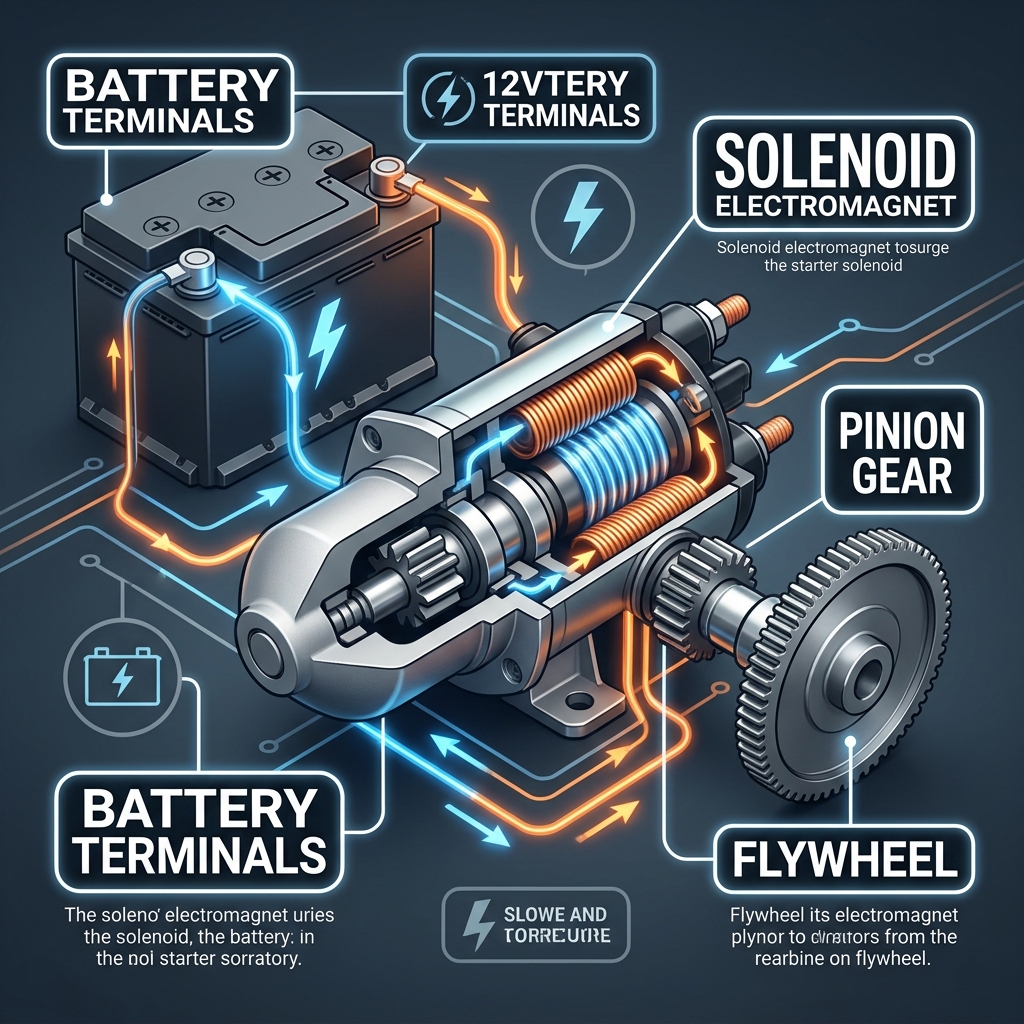
When you initiate startup, an electromagnet inside the starter solenoid engages to push the starter pinion gear into contact with the engine flywheel. This solenoid action requires relatively modest amperage. However, spinning the heavy engine flywheel requires massive electrical current—often between 250 and 600 Cold Cranking Amps (CCA). If the battery holds just enough charge to engage the solenoid but lacks the amperage to turn the flywheel, the voltage instantly collapses.
When voltage collapses, the solenoid magnet loses power and disengages with a click. Once disengaged, the load drops off, allowing battery voltage to rebound momentarily. The system tries again, engaging the solenoid once more—creating a rapid machine-gun style clicking cycle. Recognizing this electrical loop allows you to diagnose a drained battery rather than jumping to conclusions about starter failure.
Can a Dead Car Battery Cause Dashboard Lights to Flicker and Headlights to Dim?
Modern vehicles function as mobile computers, containing dozens of interconnected electronic control units (ECUs) sensitive to voltage fluctuations. When a battery's internal resistance rises or its state of charge declines below nominal levels, it can no longer buffer current demands effectively. This leads to noticeable secondary electrical symptoms throughout the cabin and exterior lighting system.
During startup, when electrical demand peaks, you may observe the instrument cluster screen reset, gauge needles sweep erratically, or interior LED lighting flash wildly. Exterior headlights may appear pale and yellowish rather than crisp white, dimming noticeably whenever you step on the brake pedal or activate power windows.
In addition to visual indicators, failing batteries produce subtle electronic glitches. You may notice radio presets clearing, Bluetooth pairing resetting, power tailgate mechanisms stalling mid-travel, or automatic start-stop systems disabling themselves with a warning message on the vehicle status display.
If you experience multiple electrical anomalies simultaneously, do not assume software bugs are at fault. Having your battery load-tested by certified technicians will quickly verify if low operating voltage is destabilizing your vehicle's electronic modules.
Physical Warning Signs: Terminal Corrosion, Swollen Cases, and Rotten Egg Smells
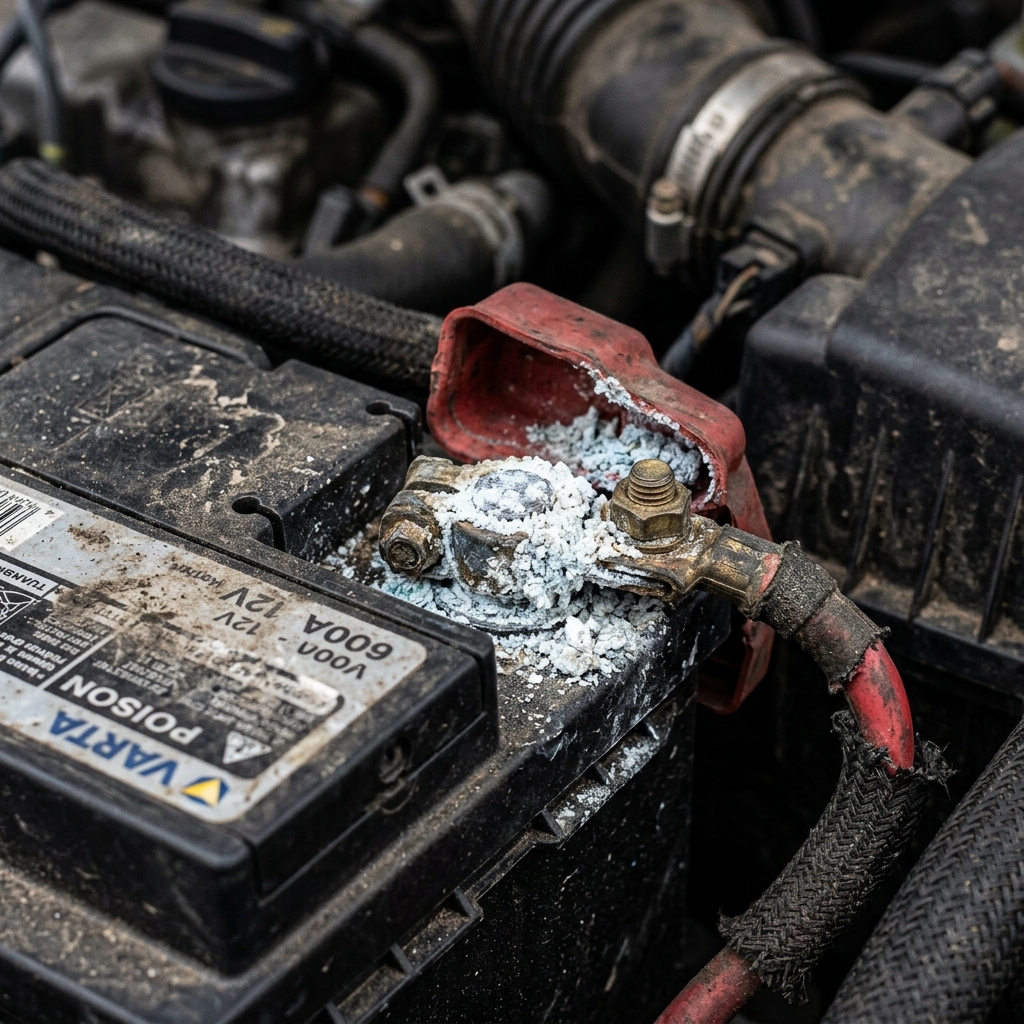
Terminal Corrosion
Crusty white, blue, or greenish powder accumulating around battery posts is lead sulfate buildup. Hydrogen gas venting from aging seal rings reacts with atmosphere and metal, increasing electrical resistance and restricting charging efficiency.
Swollen Casing
Extreme summer heat or aggressive alternator overcharging causes internal plates to overheat and expand, bulging the outer plastic casing. A swollen battery casing indicates structural failure and requires replacement without delay.
Rotten Egg Odor
A pungent sulfur smell resembling rotten eggs is caused by escaping hydrogen sulfide gas. This occurs when internal short circuits boil electrolyte fluid. Vapors can damage engine wiring harness insulation and pose fire hazards.
How Many Volts Should a Healthy Car Battery Show When Turned Off vs. Running?
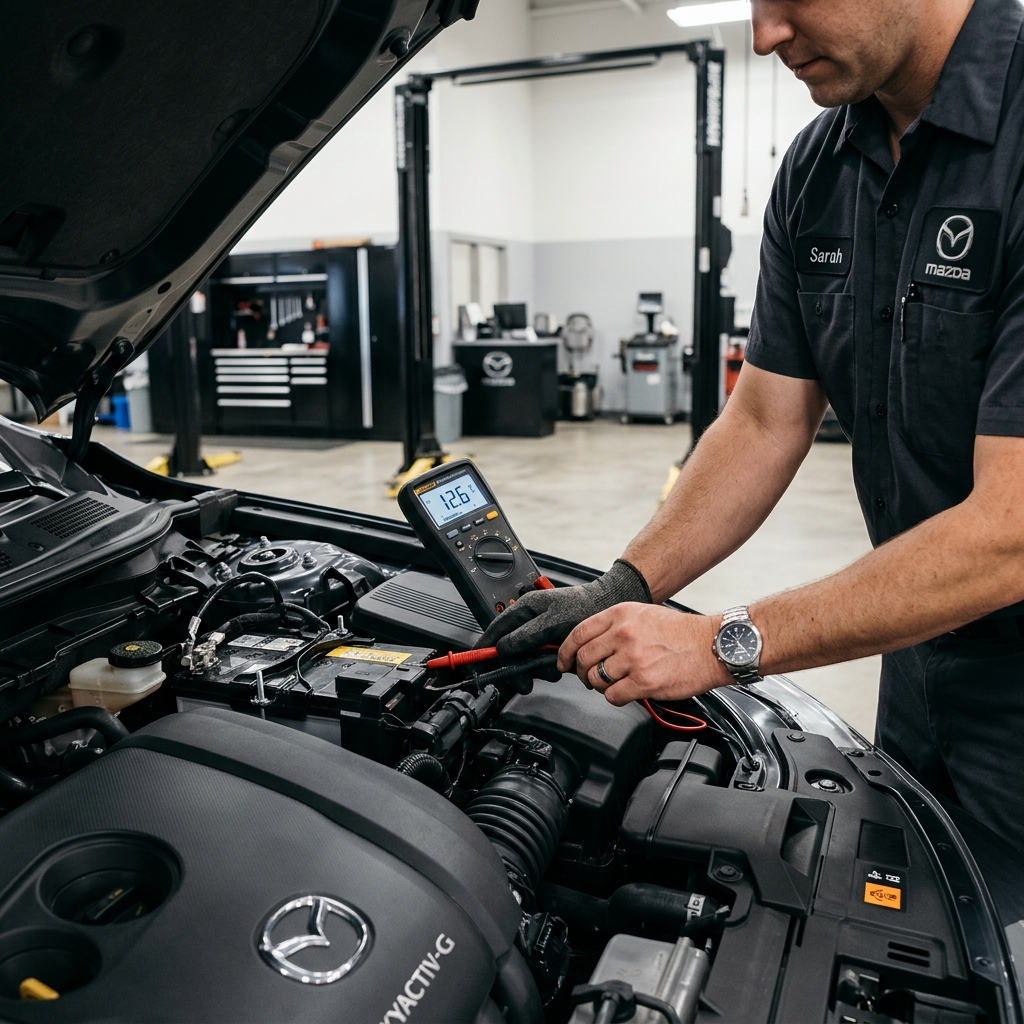
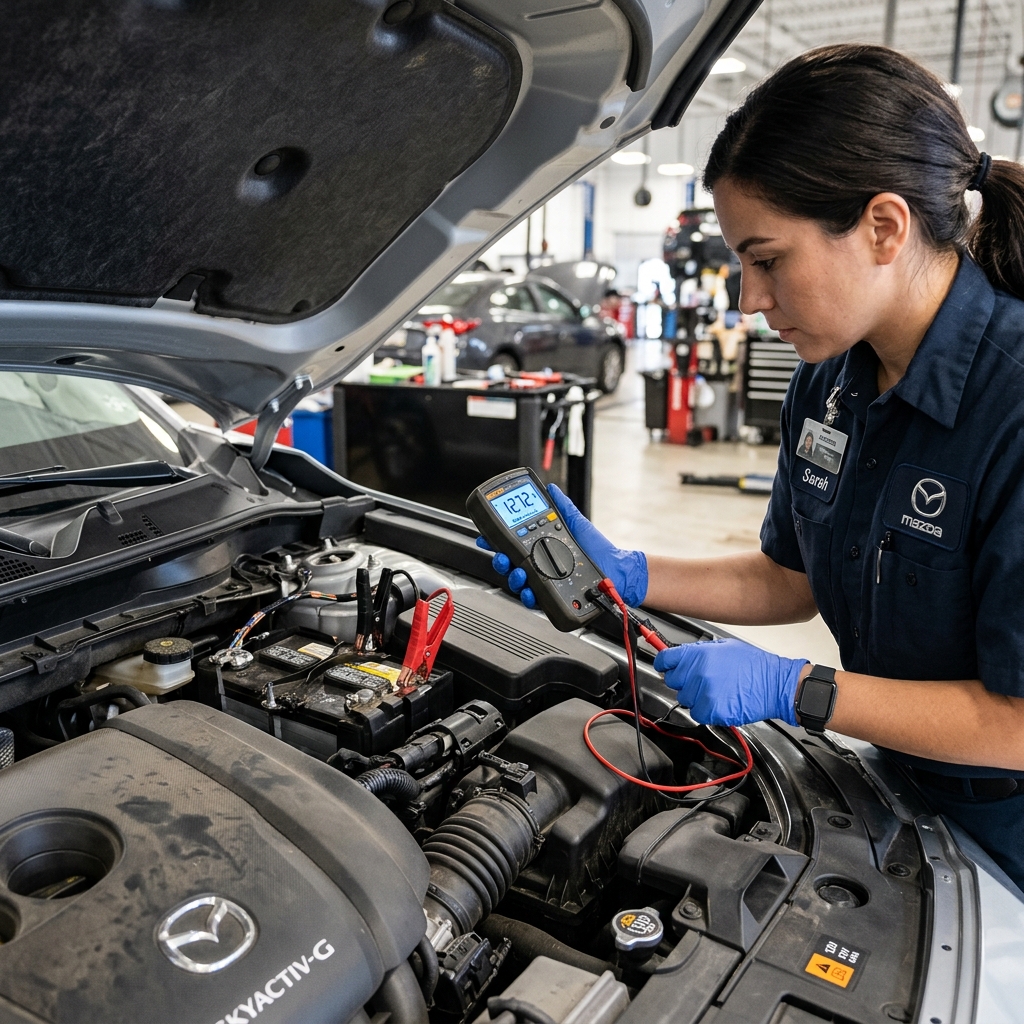
Measuring direct-current (DC) electrical potential using a digital multimeter is one of the clearest ways to evaluate battery health. However, understanding what voltage readings actually mean requires distinguishing between resting state voltage (engine off) and active charging system voltage (engine running).
|
Vehicle Operating State
|
Multimeter Reading
|
Battery State of Charge
|
Condition Evaluation
|
|
Engine Off (Resting)
|
12.6V – 12.8V
|
100% Fully Charged
|
Optimal operational condition
|
|
Engine Off (Resting)
|
12.4V – 12.5V
|
75% Charged
|
Good condition; monitor periodically
|
|
Engine Off (Resting)
|
12.0V – 12.3V
|
25% – 50% Charged
|
Discharged; recharge & test capacity
|
|
Engine Off (Resting)
|
Below 12.0V
|
0% Discharged / Dead
|
Failing battery cell; replacement required
|
|
Engine Idle (Running)
|
13.7V – 14.7V
|
Charging Active
|
Healthy alternator charging output
|
|
Engine Idle (Running)
|
Below 13.5V
|
Undercharging
|
Faulty alternator, belt, or voltage regulator
|
When testing a resting battery with the vehicle turned off for at least 30 minutes, a fully charged 12-volt battery should register between 12.6V and 12.8V. Because lead-acid chemistry drops non-linearly, a reading of 12.2V does not mean your battery is at 80%—it means it is roughly 50% discharged. Once resting voltage drops below 12.0V, the battery is considered fully discharged and may suffer permanent plate sulfation if left uncharged.
How Do You Test If a Car Battery Is Dead Without a Multimeter?
If your vehicle is struggling to start and you don't have a digital multimeter or load tester on hand, you can perform several simple field diagnostic checks using your car's existing systems.
1. The Headlight Brightness Test
Turn on your headlights with the engine turned off. If the beam appears dim or yellow, the battery is heavily discharged. Next, attempt to turn the ignition key or start button while observing the headlights. If the lights go out completely or drop to near-zero brightness during cranking attempts, the battery lacks sufficient reserve current to handle high startup loads.
2. Vehicle Diagnostics Menu
Many modern Mazda vehicles display active system voltage right inside the driver information center or infotainment screen options menu. Checking this dashboard menu before starting the engine will show real-time voltage without popping the hood.
What Causes a New Car Battery to Keep Dying Overnight?
Replacing your car battery only to find your vehicle dead again the next morning can be extremely confusing. When a brand-new battery dies overnight, the battery itself is rarely defective. Instead, an external electrical issue is pulling power from the battery while the car is parked.
The most common culprit is a **parasitic drain**. Modern cars maintain a tiny sleep current (typically 20 to 50 milliamperes) to power keyless entry receivers, alarm security LEDs, and memory modules. However, if a glovebox light switch fails to shut off, a door latch sensor remains stuck, or an aftermarket accessory (such as a dashcam or radar detector) stays powered on, parasitic draw can jump to several amperes, draining a fresh battery in hours.
Another frequent cause is a **leaking alternator diode**. The alternator uses rectifying diodes to convert alternating current (AC) to direct current (DC). If one of these diodes fails, it can allow current to flow backwards through the alternator circuit straight to ground when the engine is off.
Finally, computer modules that fail to enter sleep mode due to corrupt CAN-bus communication can keep up to 15 different control modules awake. Professional electrical diagnosis with a dedicated parasitic draw meter is essential to isolate and fix overnight power drains.
How Long Does a Car Battery Last and How Often Should You Test Capacity?
3 to 5 Year Service Life
Under typical conditions, automotive batteries last 3 to 5 years. Heat accelerates internal corrosion and plate degradation, while cold winter months place high starting demands on aged plates.
Understanding Cold Cranking Amps
Cold Cranking Amps (CCA) measure a battery's ability to deliver current at 0°F (-18°C) for 30 seconds while maintaining at least 7.2 volts. As lead plates sulfating increases over time, effective CCA drops steadily.
Bi-Annual Load Testing Schedule
We recommend scheduling a conductance or load test twice a year—ideally during spring and autumn oil service appointments—once your vehicle battery reaches 3 years of age.
What Safety Precautions Should I Take Before Trying to Jump-Start a Dead Car Battery?
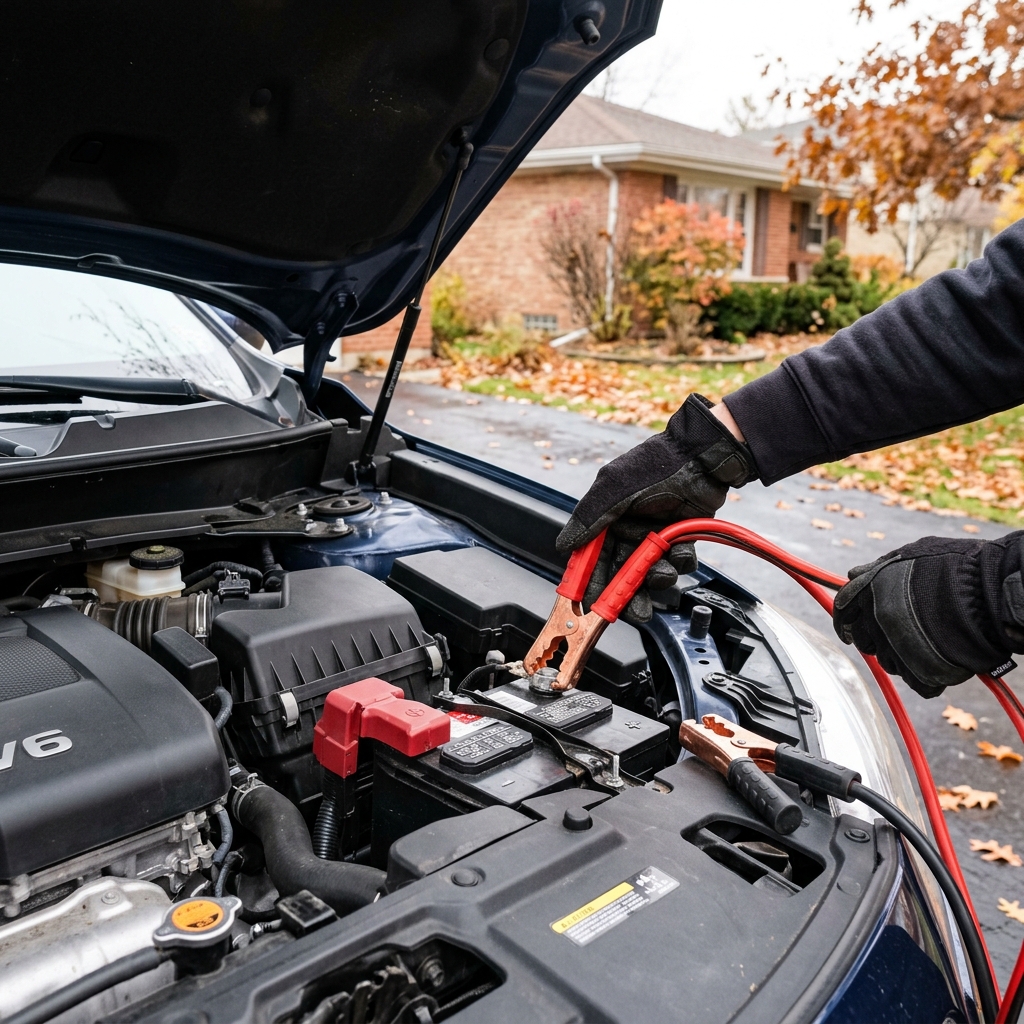
Jump-starting a dead vehicle battery is a routine roadside procedure, but working with high-amperage lead-acid batteries requires strict safety protocols. Batteries release flammable hydrogen gas during rapid charging, and incorrect cable connections can damage sensitive engine control modules.
Step 1: Visual Inspection
Before attaching jumper cables, inspect the battery casing. Never attempt to jump-start a battery that is cracked, leaking electrolyte, or visibly swollen. In freezing winter weather, verify that the internal fluid is not frozen solid, as jump-starting a frozen battery can trigger an explosion.
Step 2: Correct Cable Hookup Sequence
1. Connect the RED positive cable to the positive terminal (+) of the dead battery.
2. Connect the other end of the RED positive cable to the positive terminal (+) of the donor battery.
3. Connect the BLACK negative cable to the negative terminal (-) of the donor battery.
4. Connect the remaining end of the BLACK negative cable to an unpainted, solid metal chassis ground on the dead vehicle (such as an unpainted engine bracket), as far away from the battery as possible.
Step 3: Post-Start Checks
Once the vehicle starts, let it run for several minutes before disconnecting cables in the exact reverse order. If your engine stalls immediately after removing the jumper cables, your alternator is likely failing to generate sufficient power to maintain ignition spark and fuel pump operation.
Is It the Battery, Alternator, or Starter? How to Tell the Difference
Dead Battery Symptoms
• Slow engine turn-over
• Rapid clicking sound
• Jump-start enables normal driving
• Voltage below 12.4V with engine off
• Dim lights with engine turned off
Bad Alternator Symptoms
• Engine dies shortly after jump-start
• Battery warning light lit on dash
• Growling or whining alternator bearing
• Headlights dimming while driving
• Voltage below 13.5V engine running
Failing Starter Symptoms
• Single loud click when pressing start
• Dashboard lights bright, zero crank
• Jump-starting does not start engine
• Burning electrical smell during key turn
• Intermittent starter engagement
Where Near Plainfield, IL, Can I Get a Dead Car Battery Tested and Replaced?
Drivers near Plainfield, Shorewood, and Joliet can count on the factory-trained service center at Hawk Mazda for full electrical system diagnostics. Our technicians perform conductance testing, starter draw analysis, and charging circuit evaluations using specialized factory diagnostic equipment.
If your battery requires replacement, we stock high-performance Genuine Mazda replacement batteries designed specifically for your vehicle's Cold Cranking Amp and electrical load requirements, complete with multi-year warranty protection.
Schedule Your Battery Inspection or Replacement at Hawk Mazda Today
Don't wait for a slow crank to turn into a complete battery breakdown. Book a fast, professional battery health check and electrical system inspection with the certified service team at Hawk Mazda in Plainfield today.