Do Winter Tires Require Different Inflation Pressure Than All-Season Tires? The Direct Answer
When Northern Illinois winters roll into Plainfield and the surrounding Will County area, drivers frequently ask whether specialized snow tires require a different target inflation pressure (PSI) than standard all-season tires. The direct answer is no—your target recommended cold tire inflation pressure remains exactly the same regardless of whether you are running summer, all-season, or dedicated winter tires.
Your vehicle's engineers calibrated the ideal recommended tire pressure based on your car's total gross weight, axle distribution, suspension dynamics, and braking characteristics—not the tread compound of the tire mounted on the rim. Whether you drive a nimble Mazda CX-30, a spacious Mazda CX-90, or any other sedan or SUV, your target target inflation pressure is fixed by the manufacturer. However, maintaining that target target pressure during freezing temperatures requires significantly more attention and frequent adjustments than during warm summer months.
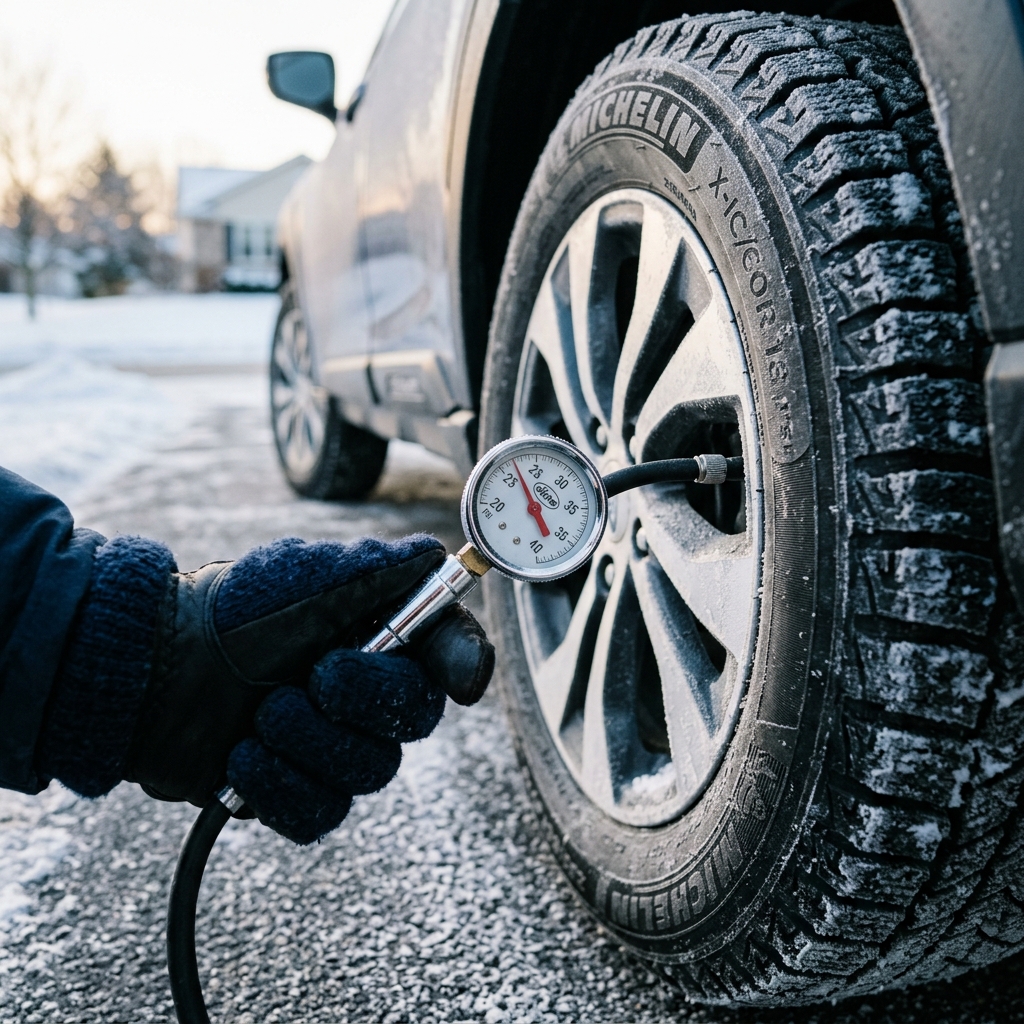
The Golden Rule of Winter Tire Inflation: Always target the recommended cold PSI listed on your vehicle's driver's side door placard. While dedicated winter tires feature softer rubber compounds, flexible tread blocks, and deep siping designed to grip snow and ice, their internal air cavity operates under the exact same physical laws of thermodynamics as any other tire. Because cold ambient air contracts, your actual tire pressure drops automatically in sub-freezing weather, requiring you to top off your tires more frequently to stay at that factory-recommended baseline.
Does Cold Weather Lower Tire Pressure, and By How Much?
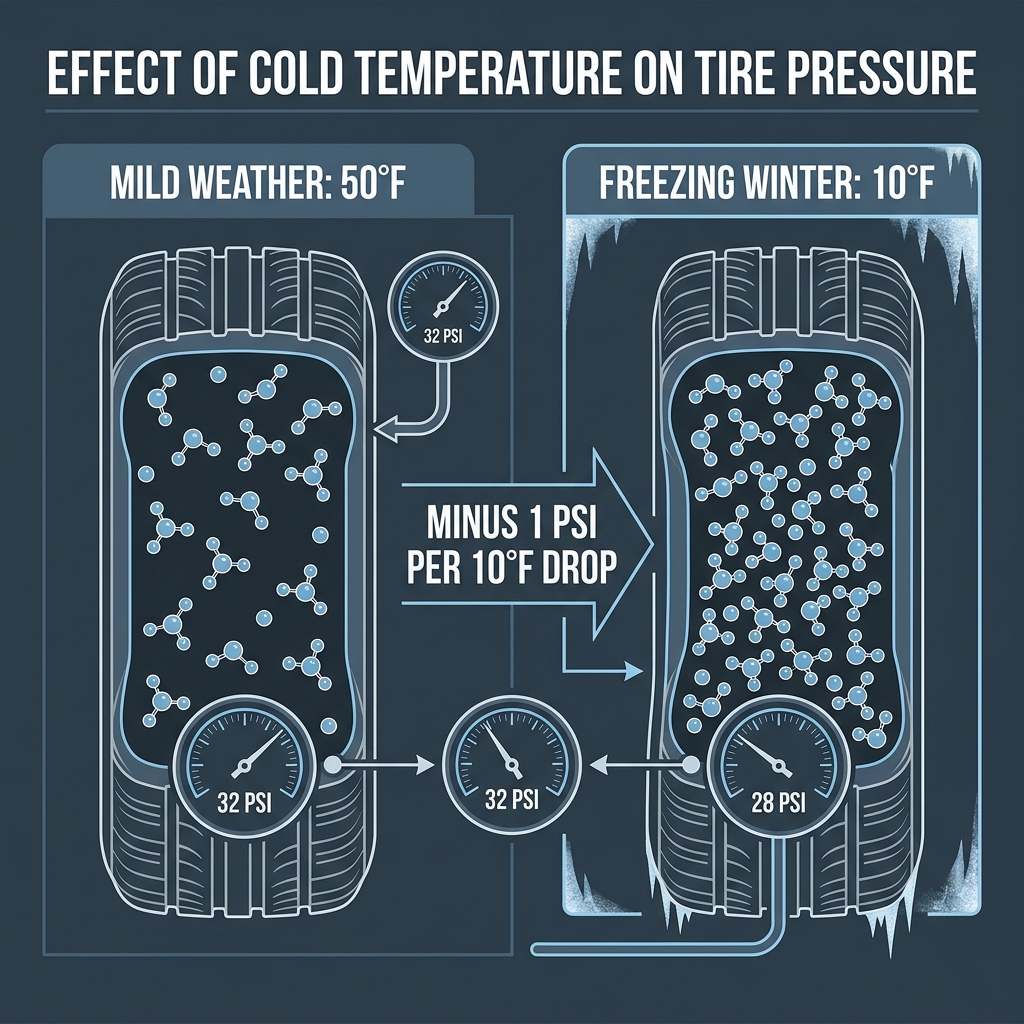
Yes, ambient cold weather directly lowers air pressure inside your tires due to elementary physics. According to Gay-Lussac's Law of thermodynamics, the pressure of a given mass of gas is directly proportional to its absolute temperature when volume remains constant. In practical driving terms: when air inside your tire cools down, its molecules slow down and move closer together, exerting less force against the inner walls of the tire casing.
The universally accepted automotive standard rule of thumb is that for every 10°F drop in ambient outside temperature, your tire pressure will decrease by approximately 1 PSI (pound per square inch). Conversely, every 10°F rise in temperature increases pressure by about 1 PSI.
In Northeastern Illinois, autumnal and winter weather transitions can be dramatic. A sudden arctic cold front sweeping through Plainfield can easily drop evening temperatures from 55°F down to 15°F overnight. That 40-degree temperature collapse translates directly to a loss of 4 PSI in every single tire before you even turn your ignition key in the morning.
Why Normal Driving Doesn't Fully Fix It: Driving generates friction and thermal energy, warming the air inside the tire by roughly 2 to 4 PSI after 20 minutes of highway driving on I-55. However, relying on driving friction to reach your target PSI is dangerous; your tires spend their critical initial miles severe underinflated, increasing tread wear and compromising emergency stopping distances on icy pavement.
Door Placard PSI vs. Sidewall Pressure: Where to Find Your Target Winter Pressure
One of the most persistent misunderstandings among vehicle owners centers on where to look for proper tire inflation numbers. Misreading these figures can severely compromise handling, fuel efficiency, and tire longevity during hazardous Midwest winters.
1. The Driver's Door Placard (Correct Target)
Located inside the driver's door jamb (or B-pillar), this yellow-and-white vehicle sticker states the precise cold inflation pressure engineered for your vehicle's exact weight, suspension, and gross axle load ratings. This figure applies to ALL tires mounted to the vehicle, including replacement winter tires. Always match this baseline PSI.
2. The Tire Sidewall Rating (Maximum Limit)
Molded into the outer rubber sidewall of the tire itself (e.g., 'Max Press. 44 PSI' or '50 PSI'), this represents the absolute maximum pressure the structural casing can safely withstand under maximum load. NEVER inflate your winter or all-season tires to this maximum sidewall number. Doing so leads to severe center-tread wear, reduced grip, and harsh ride quality.
3. What Means 'Cold Tire Pressure'?
'Cold inflation pressure' means taking your reading when the vehicle has been parked for at least three hours, or driven less than one mile at moderate speeds. Checking tires immediately after a long highway commute gives an artificially high reading due to internal heat build-up.
Why Does the TPMS Light Come On in Cold Weather?
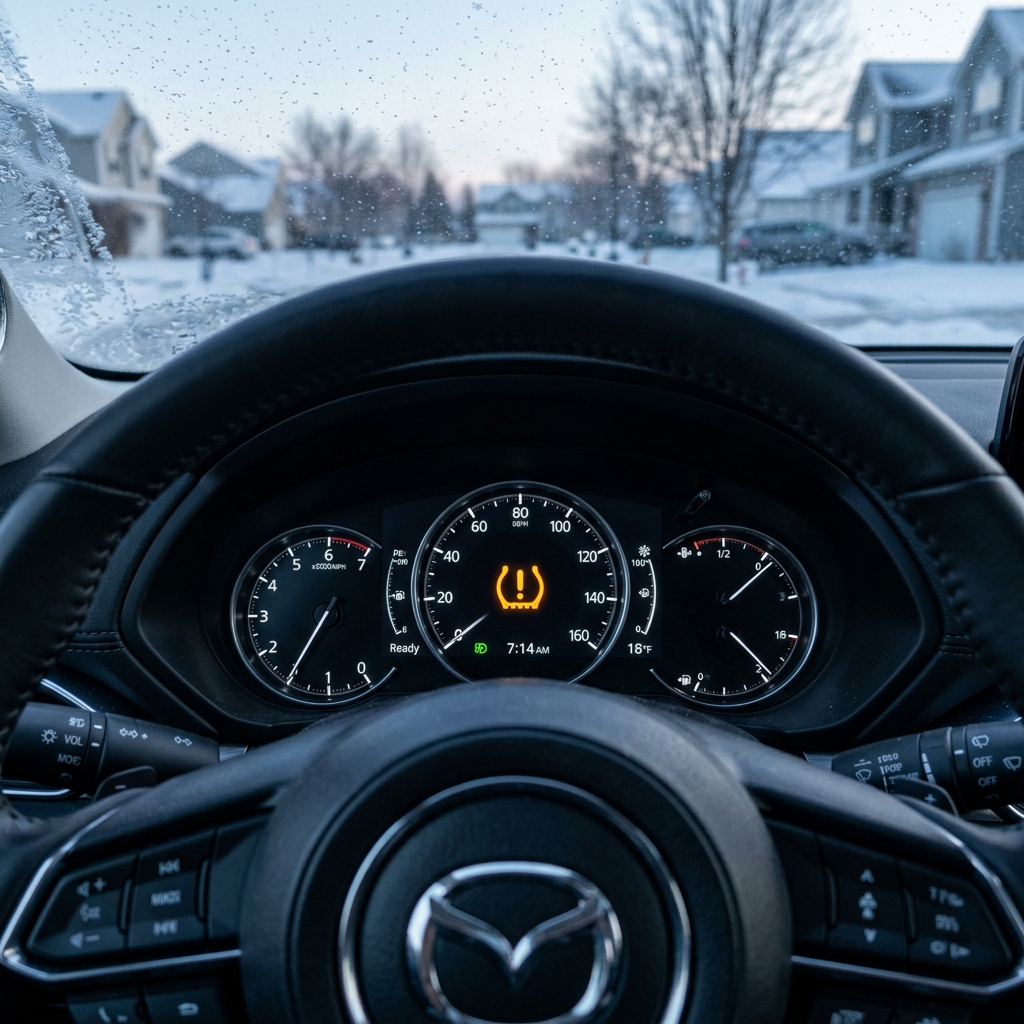
If you wake up on a chilly morning in Plainfield or Joliet and notice a glowing yellow horseshoe icon with an exclamation point on your dashboard, your Tire Pressure Monitoring System (TPMS) has registered a low-pressure condition. Federal regulations mandate that TPMS illuminate when inflation pressure drops 25% below the vehicle manufacturer's recommended cold pressure placard setting.
Cold Alarm vs. Real Puncture: In late fall and early winter, overnight ambient temp dips frequently push tire pressure just past that 25% threshold. If your light illuminates early in the morning, check all four tires with a quality gauge. If all four tires show a uniform drop of 3 to 5 PSI below the placard spec, thermal contraction is the culprit. However, if three tires read 32 PSI and one reads 22 PSI, you likely have a slow puncture or bead leak that requires professional inspection.
If you need professional assistance diagnosing a persistent low-pressure light or resetting your TPMS sensors after installing seasonal winter rubber, our team is ready to help. You can Schedule Your Service Today online in just a few clicks.
How Do You Adjust Tire Pressure If Checking Inside a Heated Garage?
Parking inside a heated garage or underground parking structure during Illinois winters is a wonderful luxury for comfort, but it introduces a major calibration trap for tire maintenance. When you measure and inflate your winter tires in a cozy 65°F garage and then drive out onto sub-zero roads, the air inside your tires rapidly cools and contracts, causing your actual rolling pressure to drop well below target specs.
To correct for thermal loss when inflating tires inside a warm garage prior to outdoor cold driving, use the Indoor/Outdoor Temperature Compensated Adjustment Formula:
|
Target Placard PSI
|
Garage Temp (°F)
|
Outdoor Ambient Temp (°F)
|
Temp Difference
|
Required Garage Inflation PSI
|
|
34 PSI
|
65°F
|
15°F
|
50°F lower outdoor
|
39 PSI inside garage
|
|
36 PSI
|
60°F
|
10°F
|
50°F lower outdoor
|
41 PSI inside garage
|
|
32 PSI
|
70°F
|
20°F
|
50°F lower outdoor
|
37 PSI inside garage
|
The Rule of Thumb for Heated Garages: Add +1 PSI for every 10°F difference between your indoor garage temperature and the expected outdoor ambient driving temperature. Once the vehicle drives into the freezing outdoor environment, the compressed internal air cools down and settles precisely at your door placard's recommended PSI target.
What Should You Do If a Tire Valve Stem Freezes in Winter?
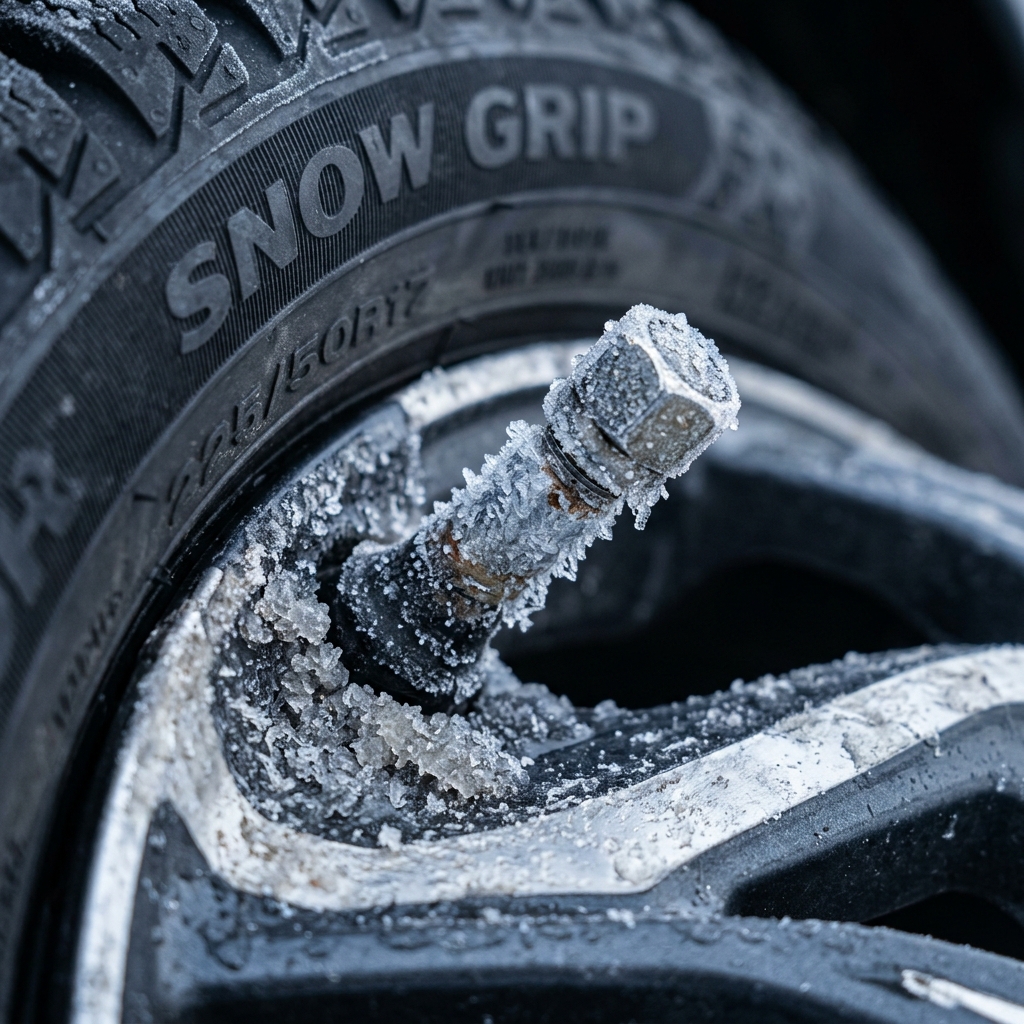
Midwest road slush, salt, and freezing moisture can easily get trapped inside or around your tire valve stems. When moisture penetrates past missing cap threads and freezes around the Schrader valve pin, checking or adding air becomes frustrating and potentially damaging to the stem assembly.
Safe Thawing Techniques: • Never pour boiling water over a frozen valve stem, as thermal shock can crack rubber grommets and weaken metallic TPMS stems. • Warm a cloth with warm water or hold a warm pocket heat-pack against the stem for 60 seconds to melt localized ice. • Use a small spray of isopropyl alcohol or automotive lock de-icer directly onto the stem threads.
Preventative Valve Care: Swap out decorative metal valve caps for high-grade plastic dust caps during winter. Metallic caps can cold-weld or galvanic-corrode onto brass Schrader valve threads when exposed to road salt, causing the stem core to snap off when turned with pliers. Need stem replacement or cap accessories? You can easily Order Genuine Mazda Parts through our dedicated dealership parts department.
Do Snow Tires Lose Pressure Faster Than Summer or All-Season Tires?
Drivers often note that dedicated snow tires appear to lose air faster than their summer or all-season setups. While high-quality rubber compounds themselves hold air equally well, several key winter environmental factors contribute to accelerated pressure loss:
1. Rubber Compound Flexibility
Winter tires use high-silica rubber compounds engineered to remain pliable down to sub-zero temperatures. High casing flexibility combined with extreme road impacts over frozen pavement creates microscopic flexing along the wheel bead seat where rubber meets metal.
2. Rim Bead Salt Corrosion
Road brine and chemical de-icers used on Will County highways seep between the tire bead and the alloy wheel rim flange. Over time, aluminum oxide scale forms along the bead seat, breaking the air seal and leading to gradual slow leaks.
3. Thermal Swing Cycling
Winter driving subjecting wheels to 0°F outside temperatures during morning commutes and 65°F inside heated garages creates dramatic expansion-contraction cycles, accelerating natural gas permeability through microscopic rubber pores.
Plainfield & Shorewood Winter Driving: How Proper Pressure Maximizes Traction
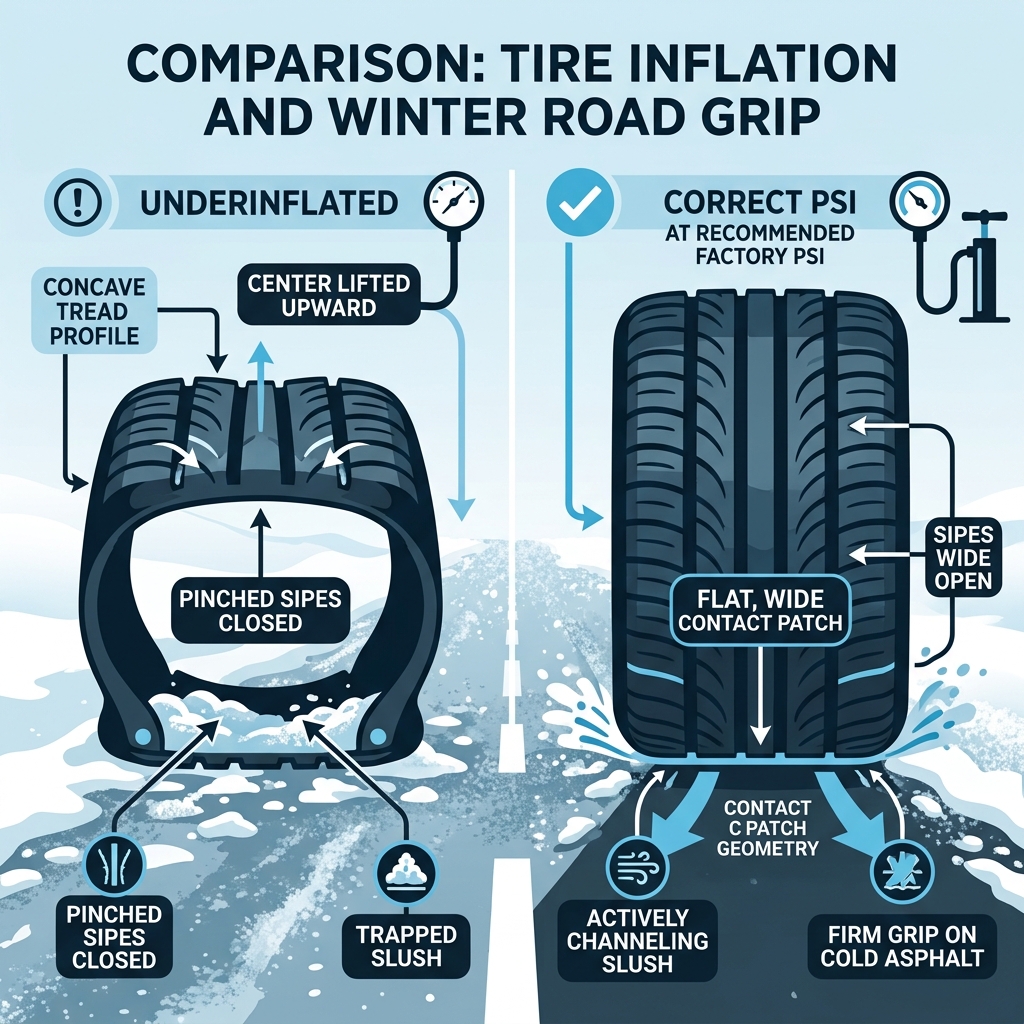
Navigating heavy winter slop on Route 59, icy merges along Interstate 55, or unplowed subdivision roads in Plainfield and Shorewood requires peak tire contact patch geometry. There is a common myth that underinflating winter tires provides better traction by 'flattening' the tire. In reality, underinflation does the exact opposite of what you need on slushy Midwest roads.
Why Underinflation Reduces Winter Grip: When a winter tire is underinflated by just 4 to 6 PSI, the center of the tread lifts upward while the outer shoulders pinch together. This closes up the engineered tread sipes and evacuation channels. Instead of cutting through heavy slush to bite the pavement beneath, the underinflated tire rides on top of the slush—a dangerous condition known as slush-planing.
Maintaining your door placard PSI keeps the directional grooves open, allowing your tires to channel water, slush, and snow away from the footprint instantly.
Step-by-Step Winter Pressure Routine for Suburban Commuters
To ensure peak vehicle safety, fuel economy, and tire wear performance during Illinois' cold months, implement this simple 3-step monthly routine:
Step 1: Check Every 2 Weeks
Check cold tire pressure at least twice a month and immediately after any sudden 15°+ temperature dip. Use a calibrated digital pressure gauge rather than pencil-type gauges, which can stick in sub-freezing temperatures.
Step 2: Portable Inflator Kit
Keep a 12V portable tire inflator in your trunk. Avoid gas station air pumps on zero-degree days—their compressed air lines frequently contain frozen condensation water that gets injected straight into your tire valve.
Step 3: Consider Nitrogen Fill
Ask about dry nitrogen tire inflation. Dry nitrogen contains virtually zero moisture, reducing thermal-expansion fluctuations and maintaining stable pressure three to four times longer than standard compressed air during deep freezes.
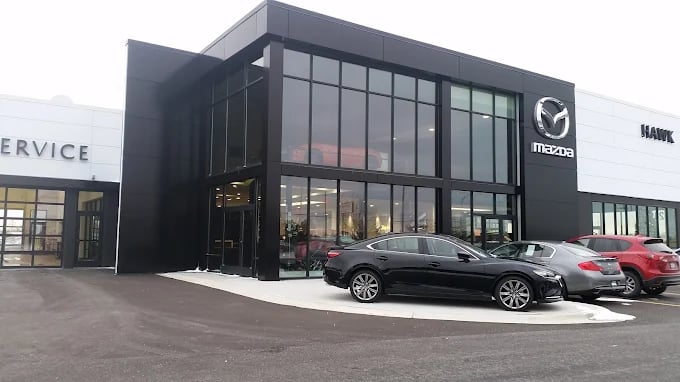
Winter Tire Mount, Balance, and Inspection Services at Hawk Mazda
At Hawk Mazda, our factory-certified service center is fully equipped with state-of-the-art tire mounting, high-speed computerized balancing, and digital wheel alignment equipment tailored for Mazda vehicles and all major makes and models.
Comprehensive Winter Tire Services Include: • Seasonal wheel and tire swaps with sensor re-calibration. • Corrosion removal and bead sealing on oxidized alloy rims. • TPMS diagnostic testing and replacement battery/sensor servicing. • Multi-point winter suspension and brake safety inspections.
Frequently Asked Questions About Cold Weather Tire Pressure
Q: Can I intentionally overinflate my winter tires by 2–3 PSI to offset cold weather drops?
A: While some tire manufacturers occasionally suggest adding 2 to 3 PSI to your cold target in severe sub-zero climates to cushion against overnight temperature plunges, it is generally safer to inflate strictly to your vehicle placard's recommended PSI baseline and check pressures more frequently. Overinflating reduces your tire's contact patch on solid ice, reducing stopping power.
Q: What pressure should I store my off-season tires at?
A: When storing off-season tires (such as summer tires in winter or winter tires during summer), inflate them to approximately 5 to 10 PSI below normal operating pressure if unmounted, or at placard operating pressure if mounted on wheels. Store them in a cool, dry, dark environment away from electric motors (which generate ozone) and direct sunlight.
Q: How do I know when my winter tires are too worn for safety?
A: Dedicated winter tires lose their specialized snow traction features when tread depth wears past 6/32 of an inch. While legal all-season wear limits are 2/32 of an inch, winter tires require significantly deeper tread channels to squeeze out slush. You can also explore options to Shop Certified Pre-Owned Mazda or check our service department for replacement winter tire packages.
Schedule Your Winter Tire Service at Hawk Mazda in Plainfield, IL
Don't let cold weather temperature drops compromise your vehicle's safety, handling, or fuel efficiency this winter season. Whether you need a seasonal tire changeover, TPMS diagnostic check, nitrogen conversion, or a brand-new set of dedicated winter tires, Hawk Mazda is your trusted automotive authority in Plainfield, Joliet, and Shorewood.
Visit Hawk Mazda today at 2421 S Rte 59, Plainfield, IL 60586 or speak directly with our service team at (779) 260-6502. If you are considering upgrading your vehicle for winter, you can also Get Your Trade-In Value or Apply For Financing Now online.