Should You Set Tire Pressure in a Warm Garage or Outside in the Cold?
As winter settles over Northern Illinois, drivers across Plainfield, Shorewood, and Joliet face a common dilemma when checking their tire pressure. If you park inside a heated or attached garage set at 65°F, but drive out into a frigid 15°F morning on Route 59, what reading should you aim for? The direct answer is simple yet critical: You must always adjust your tire pressure so that it matches the target PSI required for the outdoor ambient temperature where your vehicle actually operates.
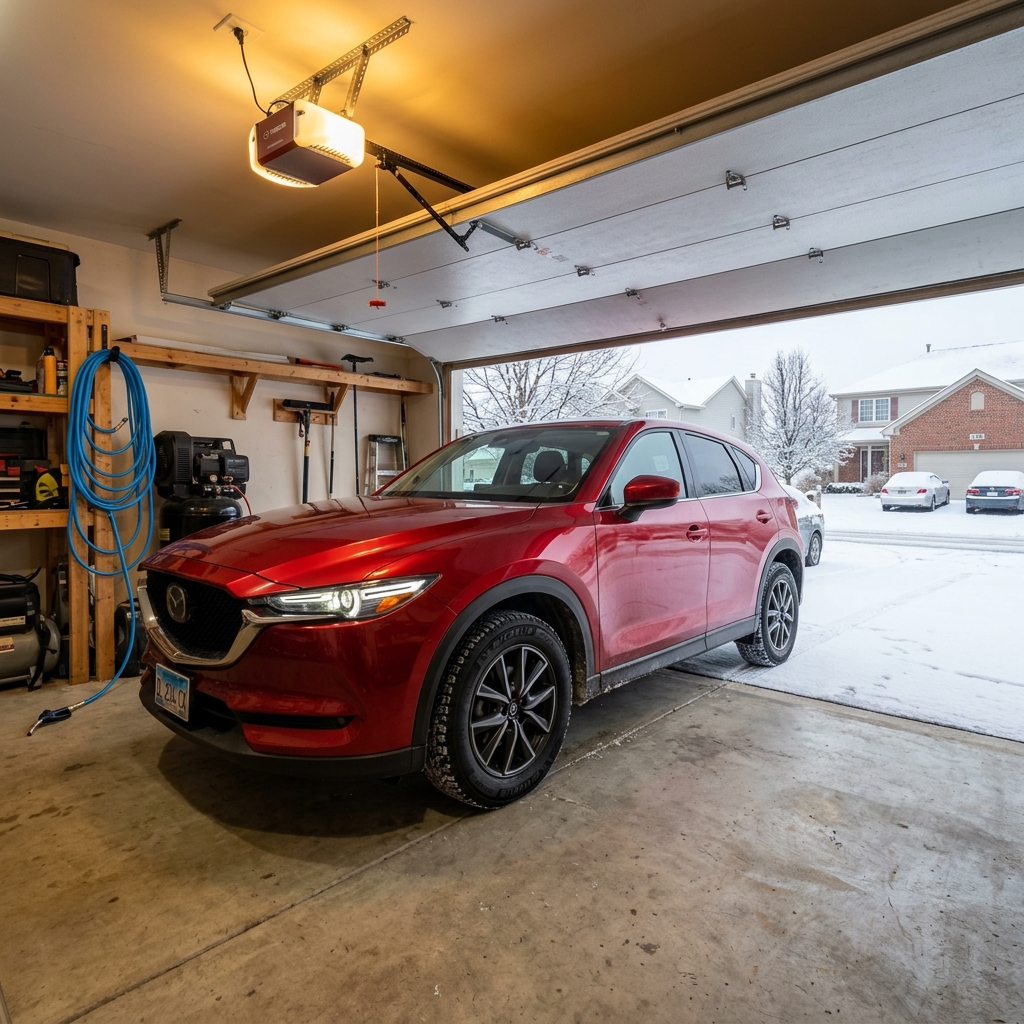
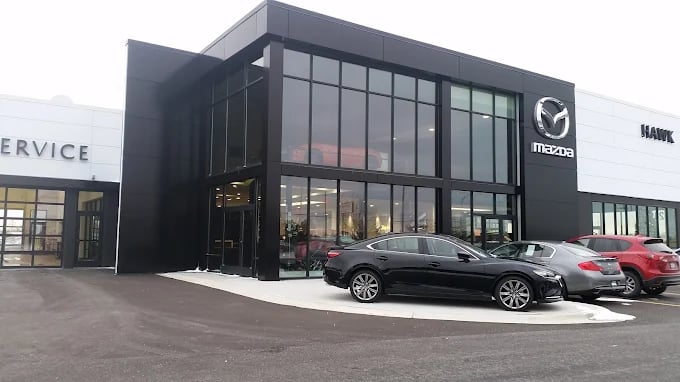
If you inflate your tires inside a warm garage to the exact placard PSI on your driver's door jamb without compensating for the indoor-outdoor temperature gap, your tires will become significantly under-inflated within minutes of driving outside. To maintain recommended tire pressure for winter tires on Plainfield roads, you must add approximately 1 PSI for every 10°F positive difference between your indoor garage air and the outdoor winter climate. Our team at Hawk Mazda helps local drivers understand these thermodynamics so every journey remains safe, efficient, and responsive.
How Ambient Temperature and Cold Weather Drop Your Tire Pressure
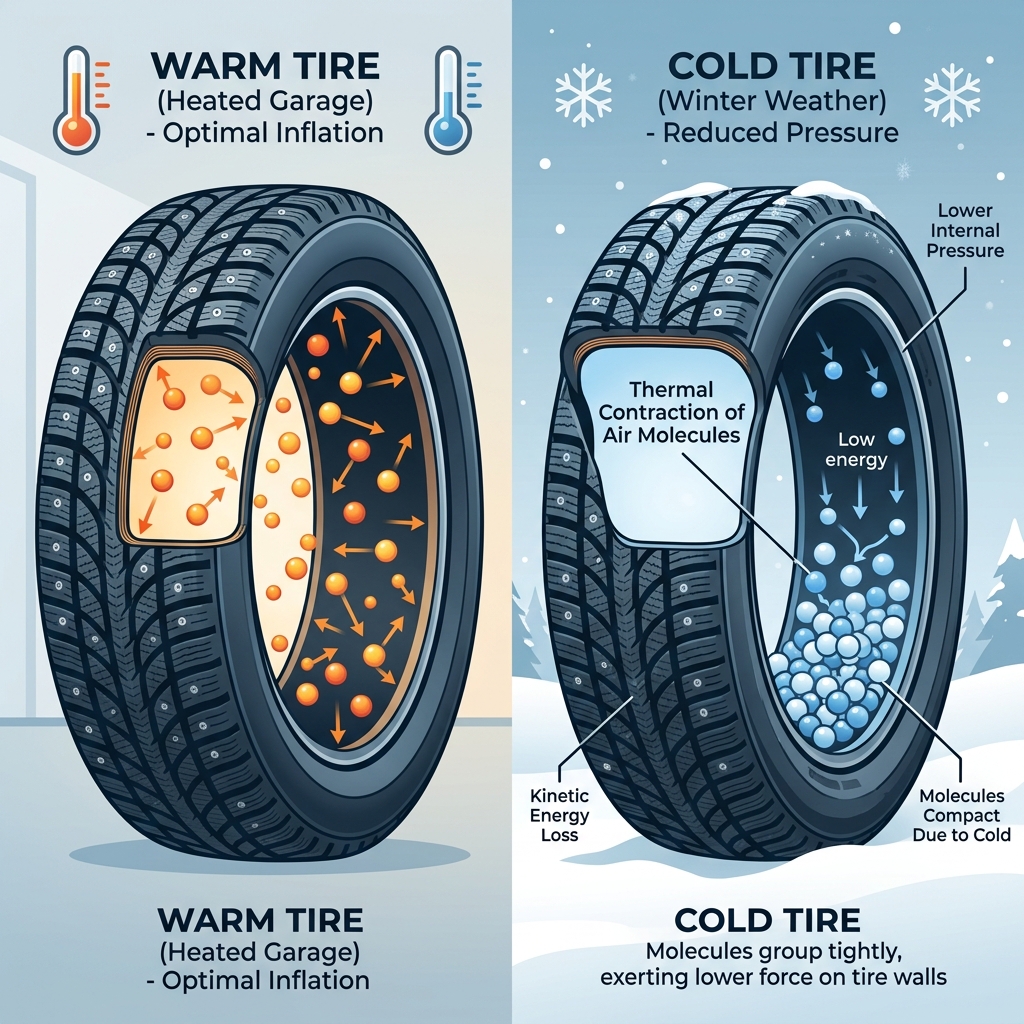
The underlying cause of seasonal tire pressure drops is fundamental physics: Gay-Lussac's Law of ideal gas thermal behavior. Air inside your tire is trapped in a fixed volume. When ambient outdoor temperatures plummet, gas molecules lose kinetic energy, move slower, and press with less force against the interior tire walls. This thermal contraction results in a measurable drop in pressure without any physical air escape or puncture. As a universal automotive rule of thumb, for every 10°F drop in ambient air temperature, inflation pressure decreases by roughly 1 PSI (pound per square inch). In Will County, sub-zero cold snaps or sudden 30-degree overnight temperature swings can instantly drop tire pressure by 3 to 5 PSI overnight.
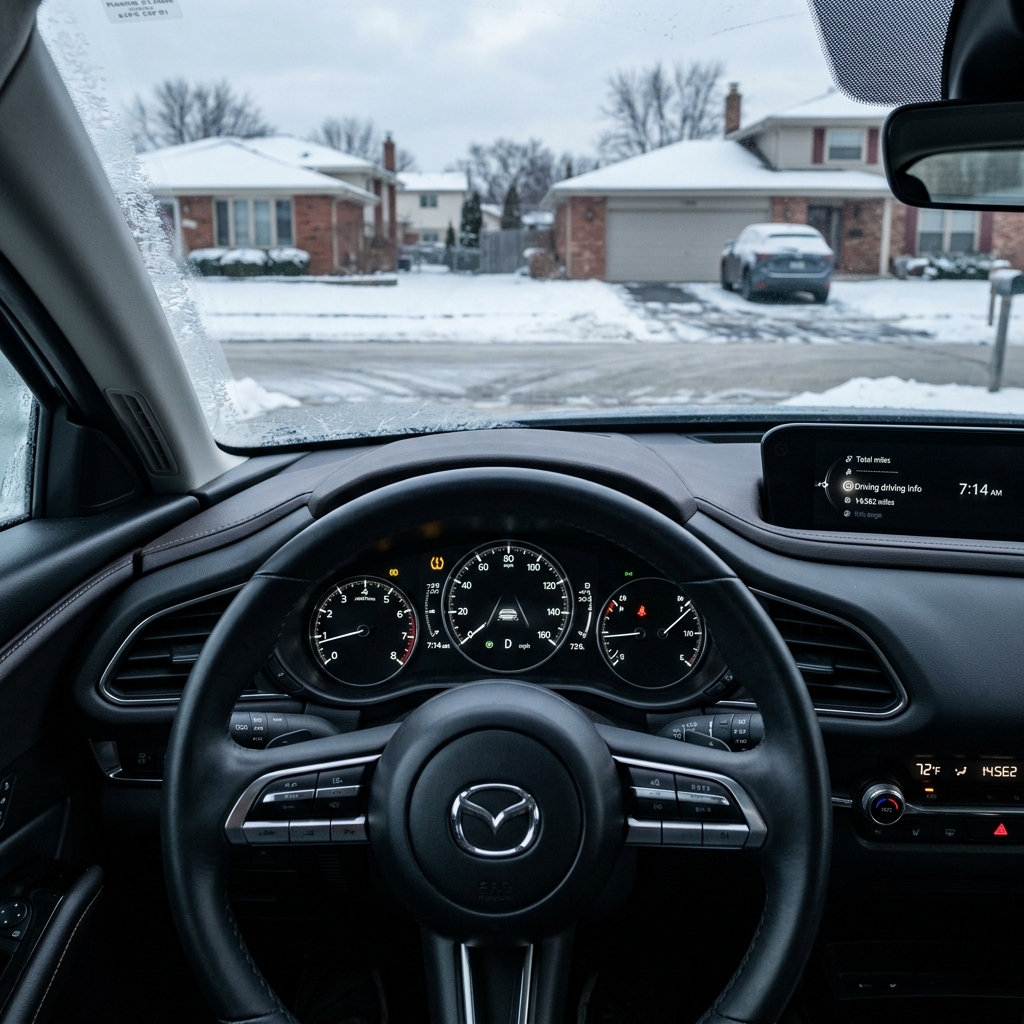
Consider this real-world scenario: If your Mazda CX-30 sits overnight in an attached, heated garage held at 65°F, and you set all four tires to the factory-recommended 34 PSI inside. When you roll out onto a 15°F morning highway in Plainfield, the 50°F temperature differential causes the air inside the tire to contract rapidly. Dynamic chilling causes your operating pressure to drop by 5 PSI down to 29 PSI, severely compromising handling and tire integrity.
The Temperature Compensation Formula for Setting Tire Pressure Indoors
If inflating your tires outdoors in sub-freezing weather is uncomfortable or impractical, you can easily perform indoor pressure compensation while setting tires inside your garage. By adding the exact temperature delta offset, your tires will stabilize at the ideal factory specification once equalized with the chilly outdoor atmosphere. The Garage Temperature Compensation Math: 1. Check the target cold PSI listed on your driver door pillar (e.g., 36 PSI). 2. Measure the indoor temperature of your garage (e.g., 60°F). 3. Check the current outdoor winter temperature in Plainfield (e.g., 20°F). 4. Calculate the difference: 60°F - 20°F = 40°F difference. 5. Divide by 10 to get the PSI adjustment: 40 ÷ 10 = +4 PSI. 6. Inflate tires inside the garage to: 36 PSI + 4 PSI = 40 PSI.
When your Mazda leaves the 60°F garage and cools down in the 20°F outdoor winter air, the interior pressure will naturally drop by 4 PSI, landing perfectly on the recommended 36 PSI target while driving. Using this simple compensation formula protects your vehicle against uncompensated cold drop, preserving your steering accuracy and avoiding unexpected warning lights. For precise assistance, drivers can Schedule Your Service Today with certified experts who ensure accurate year-round tire setup.
What Pressure Should You Use for Winter Tires?
Follow Door Placard Specs
Drivers often wonder whether specialized winter tires require higher or lower inflation targets than factory specs. Mazda engineers design vehicle suspension and stability control systems around specific tire pressures printed on the door jamb placard. Whether using all-season or dedicated winter tires, always stick to the manufacturer's cold target rating specified for your vehicle model.
Never Use Max Sidewall PSI
A frequent misconception is inflating winter tires to the pressure stamped on the tire sidewall (e.g., 44 or 50 PSI). That sidewall number represents the absolute maximum safe structural capacity of the rubber casing—not the operational pressure for your vehicle. Over-inflating to maximum ratings drastically reduces tread contact patch on icy roads, causing harsh ride quality and reduced traction.
Optimal Winter Contact Patch
Proper inflation ensures the entire tread surface rests flat against snow and ice. Winter rubber compounds rely on deep sipes flexing open to bite into snow. Correct pressure enables full tread flexibility and bite, maintaining control across freezing rain, slush, and packed snow.
What Is the Best Time of Day to Check Winter Tire Pressure?
Timing plays a massive role in obtaining an accurate pressure reading. The optimal time to check winter tire pressure is first thing in the morning, before the vehicle has been driven and before ambient temperatures rise with daylight. Vehicle manufacturers specify 'cold tire inflation pressure.' A true cold reading requires the vehicle to sit stationary for at least three hours or overnight. Driving even just one or two miles generates internal air friction and sidewall flexing heat, elevating pressure by 2 to 4 PSI and masking under-inflation.
Solar radiation can also skew measurements for commuters in Shorewood and Joliet. If your car is parked in a driveway where direct morning sunlight hits the tires on one side, radiant heat can increase pressure on those tires by up to 3 PSI compared to shaded tires. Always measure tires in consistent shade or before sunrise for pure accuracy.
Do Winter Tires Wear Faster If Run at Summer Tire Pressures?
A frequent operational question is whether winter tires degrade faster when operated at summer baseline pressure levels. The short answer is: If winter cold drops your pressure below recommended settings, rapid shoulder wear occurs; if over-inflated, center tread suffers. Winter tire compounds feature soft, high-silica rubber formulations engineered to stay pliable in freezing weather. Because the compound is naturally softer than summer rubber, running incorrect pressures accelerates physical tread breakdown dramatically.
When winter tires run under-inflated—which happens when summer inflation settings are left unadjusted through winter temperature drops—the center of the tread sags upward, concentrating vehicle weight onto outer shoulder blocks. This causes heavy outer tread scrub, sluggish steering response, and cupping. Conversely, over-inflating stiffens the soft sipes, preventing them from gripping road contours. Maintaining precise cold inflation preserves even wear across the full face of your winter tires.
Comparing Winter Tires vs. All-Season Tires in Sub-Zero Conditions
Rubber Compound Pliability
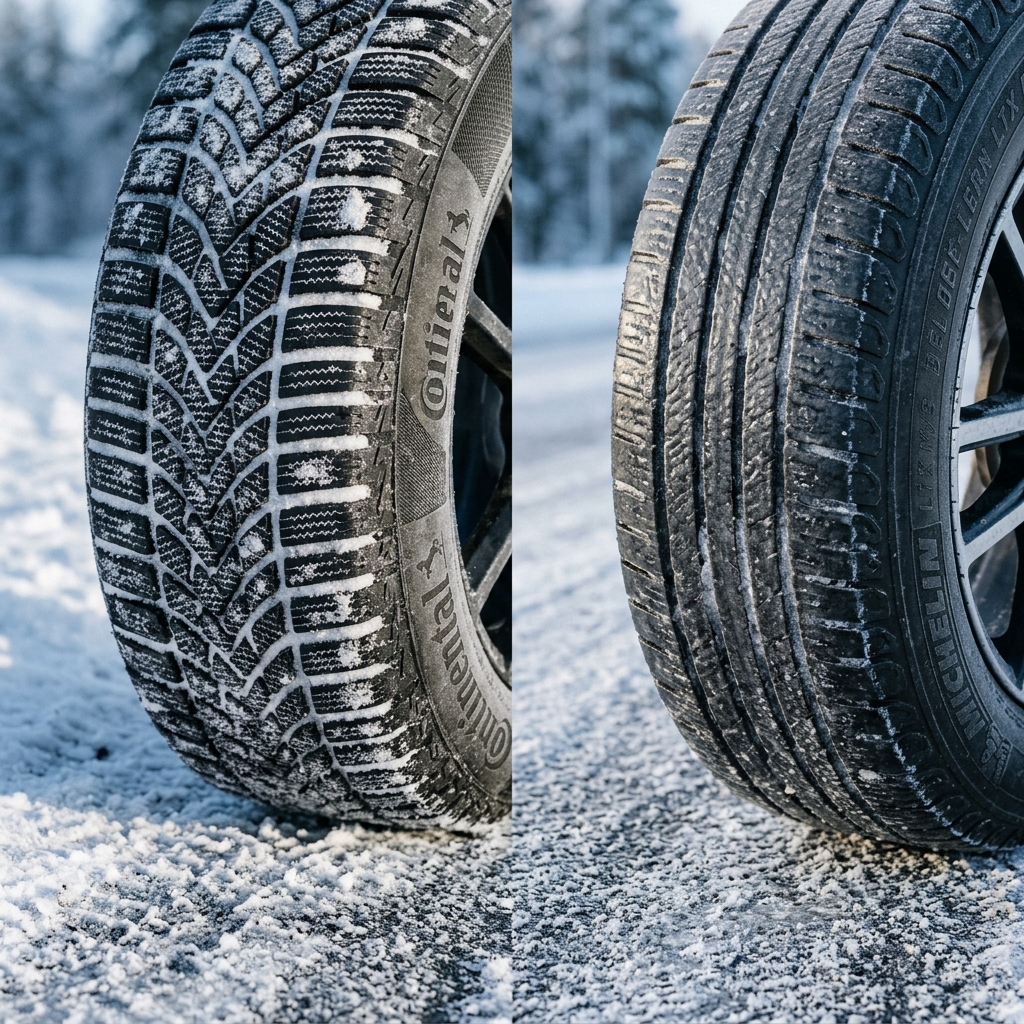
All-season tire rubber begins to harden and turn glass-like below 45°F, dramatically reducing grip even on dry asphalt. Dedicated winter tires utilize flexible polymers and high silica content that remain supple even down to -30°F, guaranteeing surface adhesion.
Siping & Tread Geometry
Winter tires feature thousands of microscopic high-density sipes that trap snow inside small grooves. Because snow-on-snow traction is superior to rubber-on-ice grip, winter treads bite into frozen slush. All-season treads pack up with snow and slick over quickly.
Cold Air Pressure Retention
Winter tire rubber inner liners are specifically built to reduce microscopic air permeability in harsh winter climates. Maintaining correct tire pressure ensures winter treads bite effectively without risk of bead seal leakage along cold rim flanges.
Step-by-Step Guide: How to Accurately Check and Inflate Cold Winter Tires
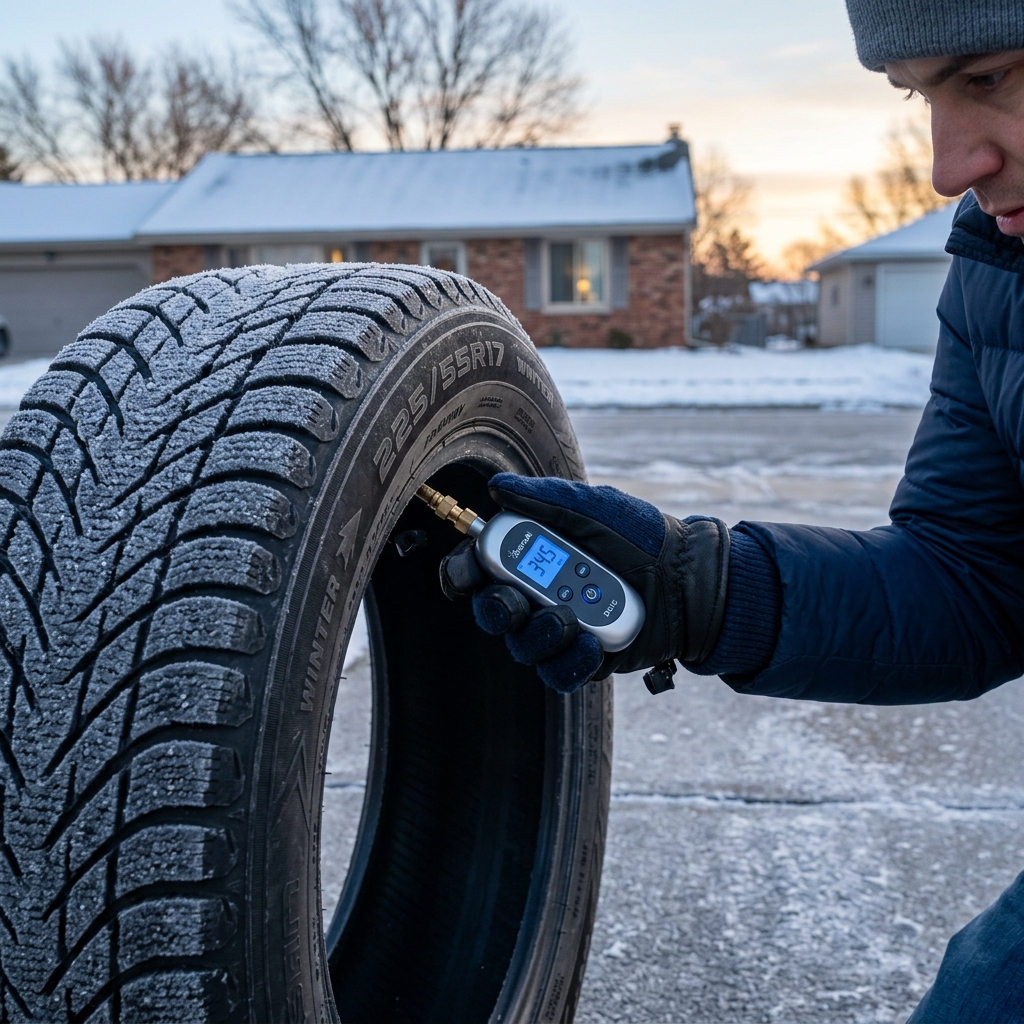
Step 1: Choose a Quality Gauge Avoid uncalibrated gas station pencil gauges. Invest in a digital or high-grade dial tire pressure gauge for dependable accuracy within 0.5 PSI. Step 2: Check Cold in Morning Air Measure pressure before driving or calculate garage temperature compensation if inflating indoors. Step 3: Inspect Valve Stems for Ice Remove valve caps carefully. Clear away packed snow or ice. Water around the Schrader valve stem can freeze open when air passes through, causing slow leaks.
Step 4: Inflate to Calculated Target Add air in short bursts using an electric compressor until reaching calculated PSI target. Always replace valve stem caps to keep moisture out. Step 5: Recalibrate Mazda TPMS On Mazda vehicles equipped with indirect or direct TPMS, press the TPMS recalibration button or access the Infotainment System menu to set new benchmark values. If you need replacement parts or tire accessories, Order Genuine Mazda Parts directly from our Plainfield center.
Why TPMS Warning Lights Turn On During Sudden Cold Snaps in Plainfield
Every winter, hundreds of drivers across Plainfield wake up to find their yellow Tire Pressure Monitoring System (TPMS) amber light glowing on the instrument cluster. This light triggers when tire pressure drops 25% below specified placard levels. During a sudden cold snap where overnight temperatures drop 25°F to 35°F, tires lose 3 to 4 PSI. If your baseline pressure was already borderline, this cold air contraction triggers the TPMS alert automatically upon starting the engine.
You might notice the light turns off after 10 to 15 miles of highway commuting along I-55. Friction heat expands the air back above the triggering threshold. However, ignoring the warning is dangerous: your tires remain severely under-inflated during those initial cold miles when road hazards and freezing ice are most severe. Always top off pressure when the light activates.
Safety and Handling Risks of Improperly Inflated Tires on Frozen Roads
Operating a vehicle on under-inflated or over-inflated tires on frozen Illinois roadways presents severe safety risks. Under-inflation reduces sidewall stiffness, causing delayed steering response when avoiding obstacles or changing lanes in winter weather. Stopping distances on packed snow increase significantly when proper tread contact is compromised.
Furthermore, improperly inflated tires increase hydroplaning risk on slushy highways around Joliet and Shorewood. Under-inflated tires cannot channel thick winter slush away through directional grooves, causing the tire to float on top of slush. Low tire pressure also exposes alloy wheels to severe bend or crack damage when hitting sharp freeze-thaw potholes concealed under snow covers.
Winter Tire Maintenance Checklist for Suburban Chicago Drivers
Tread Depth (4/32" Rule)
While 2/32" is legal minimum for summer tires, winter tires require at least 4/32" tread depth to grip snow and clear slush effectively. Check tread depth with a dedicated gauge or Washington quarter test.
Sidewall & Rim Integrity
Inspect tire sidewalls monthly for weather checking, cold cracking, or impact bulges from winter potholes. Inspect rim flanges for corrosion that causes bead air leakage.
Monthly Spare Tire Check
Don't forget your compact spare in the trunk! Unheated trunk space causes spare pressure to drop rapidly in winter. Maintain spare pressure at 60 PSI so it is ready during roadside emergencies.
Professional Tire Care and Seasonal Service at Hawk Mazda
At Hawk Mazda, our factory-certified service center is fully equipped to handle all your seasonal tire care needs. Whether you need winter tire mounting, computerized wheel alignment, digital pressure calibration, or nitrogen inflation service, our experts keep your Mazda driving smoothly through Illinois winters.
Schedule Your Winter Tire Service at Hawk Mazda in Plainfield, IL
Don't let freezing weather compromise your vehicle safety or tire performance. Visit Hawk Mazda in Plainfield, IL today for professional winter tire inspection, precision inflation, and comprehensive seasonal vehicle maintenance. Our friendly team is ready to serve drivers from Plainfield, Shorewood, Joliet, and surrounding communities. Visit our dealership at 2421 S Rte 59, Plainfield, IL 60586 or get directions online: Get Directions to Hawk Mazda. Have questions? Call us at (779) 260-6502 to speak with a factory-trained service advisor.