Should You Increase Tire Pressure Above Recommended PSI in Cold Weather? The Direct Answer
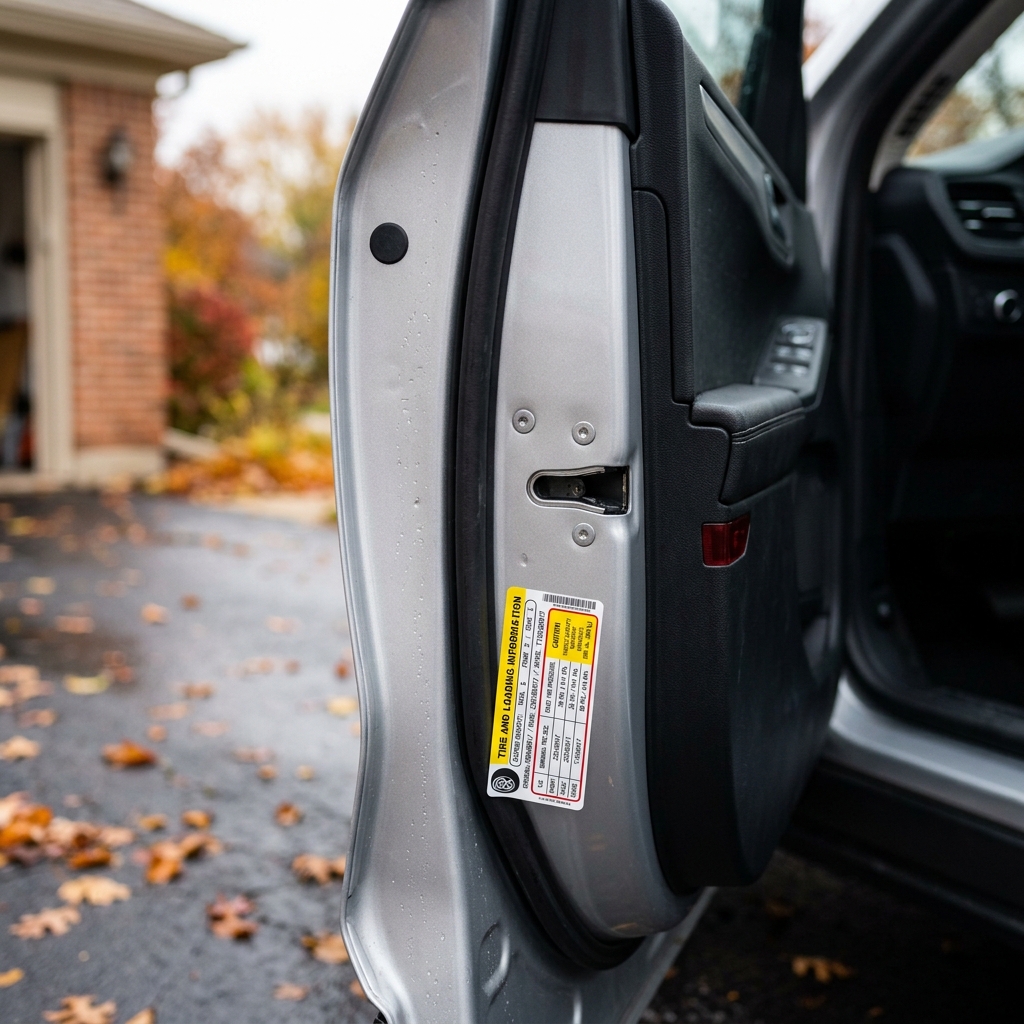
As autumn transitions into winter across Plainfield, Shorewood, and Joliet, drivers frequently ask a critical safety question: Should tire pressure be increased above the recommended PSI during cold weather? The direct, unequivocal answer from automotive engineers and certified tire specialists is no. You should never deliberately inflate your tires beyond the vehicle manufacturer's specified recommended cold inflation pressure listed on your driver's side door placard to compensate for winter cold.
A common misconception among Northern Illinois motorists is that intentionally overinflating tires before winter will counteract the thermal pressure drop caused by freezing temperatures. However, doing so artificially restricts your tire's contact patch with the pavement, dramatically compromising handling, stopping distance, and vehicle stability on icy or snow-dusted roads like Route 59 and Interstate 55. Vehicle manufacturers spend thousands of engineering hours determining the precise recommended PSI to balance tire longevity, emergency braking traction, fuel efficiency, and ride comfort.
Instead of overinflating above specification, the key to safe winter driving is maintaining true cold inflation pressure. This means routinely monitoring tire pressure when your vehicle has been parked for at least three hours and topping up air to match the exact manufacturer PSI rating printed on the B-pillar door jam placard. Whether you drive a spirited Mazda CX-5, a spacious CX-90, or any other vehicle, maintaining proper baseline pressure ensures optimal rubber contact with northern Illinois roads throughout winter.
Why Does My Tire Pressure Light Turn On When Autumn Temperatures Drop in Plainfield?
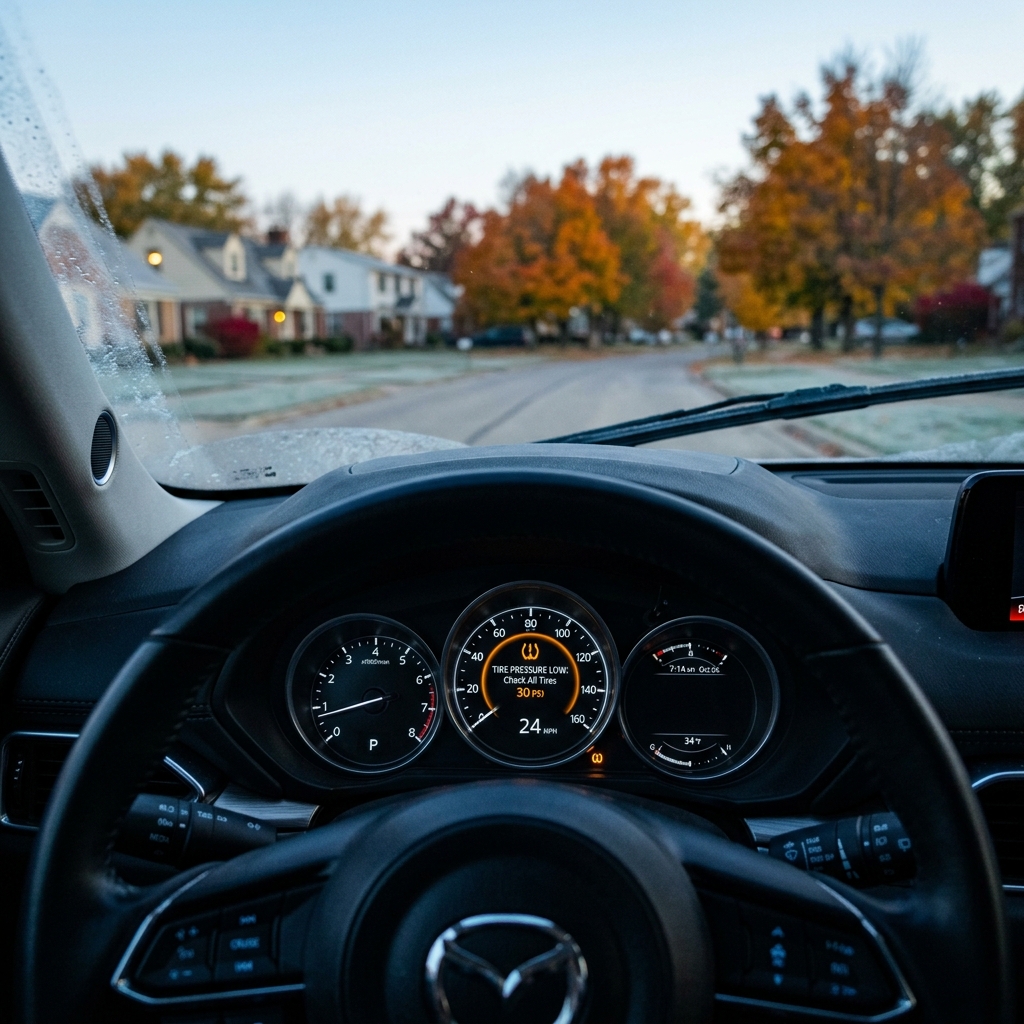
Every autumn in Plainfield and Will County, local morning commutes begin with a familiar dashboard illuminated symbol: the horseshoe-shaped Tire Pressure Monitoring System (TPMS) warning light. Many drivers assume this warning indicates a sudden puncture or nail in the tread. In reality, the culprit is almost always fundamental physics—specifically Gay-Lussac's Law and Ideal Gas Law dynamics.
As outdoor ambient temperatures drop during crisp October and November nights, the air molecules trapped inside your tires contract and move closer together. On average, standard compressed air inside a tire loses approximately 1 PSI (pound per square inch) for every 10-degree Fahrenheit drop in ambient temperature. When Plainfield shifts from a mild 65°F autumn afternoon to a frosty 25°F morning, your tires can automatically drop 4 to 5 PSI overnight without a single drop of air actually escaping the rubber vessel.
Most TPMS systems trigger an alert when tire pressure falls 25% below the factory specification. If your Mazda vehicle recommends 34 PSI, a drop down to 25.5 PSI triggers the amber warning dashboard indicator. Knowing Schedule Your Service Today options are available at Hawk Mazda gives local commuters peace of mind when temperature swings occur.
Temperature vs Pressure Impact Table: • +70°F Ambient: 35 PSI Baseline • +50°F Autumn Night: ~33 PSI • +30°F Early Freeze: ~31 PSI • +10°F Winter Cold Snap: ~29 PSI This predictable thermal loss highlights why regular seasonal checkups in Will County are crucial to driving safety.
The Hidden Dangers of Overinflating Tires During Northern Illinois Winters
Compromised Winter Traction
When a tire is intentionally overinflated above OEM cold pressure specifications, the center of the tread bulges outward while the shoulders lift away from the road surface. This drastically reduces the size of your vehicle's contact patch—the small area of rubber that actually touches the asphalt. On slick snow, black ice, or slush on Route 59, a reduced contact patch translates directly to longer stopping distances, loss of lateral grip during cornering, and increased risk of skidding.
Severe Pothole Damage Risk
Northern Illinois winter freeze-thaw cycles create severe potholes across Plainfield and Joliet roadways. A properly inflated tire acts as an internal pneumatic cushion, absorbing energy when hitting road irregularities. An overinflated tire becomes stiff and unyielding. Striking a deep pothole with high PSI dramatically increases the likelihood of bent alloy rims, broken internal tire belts, sidewall impact bubbles, or catastrophic winter blowouts.
Accelerated Center Tread Wear
Consistent overinflation causes localized wear down the center rib of the tire tread while outer shoulders remain unworn. This uneven wear pattern permanently ruins the tire long before its rated treadwear mileage. Additionally, hard center tread reduces overall ride quality, transmitting harsh road vibrations directly into your Mazda vehicle's suspension system and cabin atmosphere.
How to Measure and Adjust Cold Tire Inflation Pressure Correctly
Achieving maximum vehicle safety during winter requires accurate pressure checking techniques. Follow this step-by-step guide established by master technicians at Hawk Mazda:
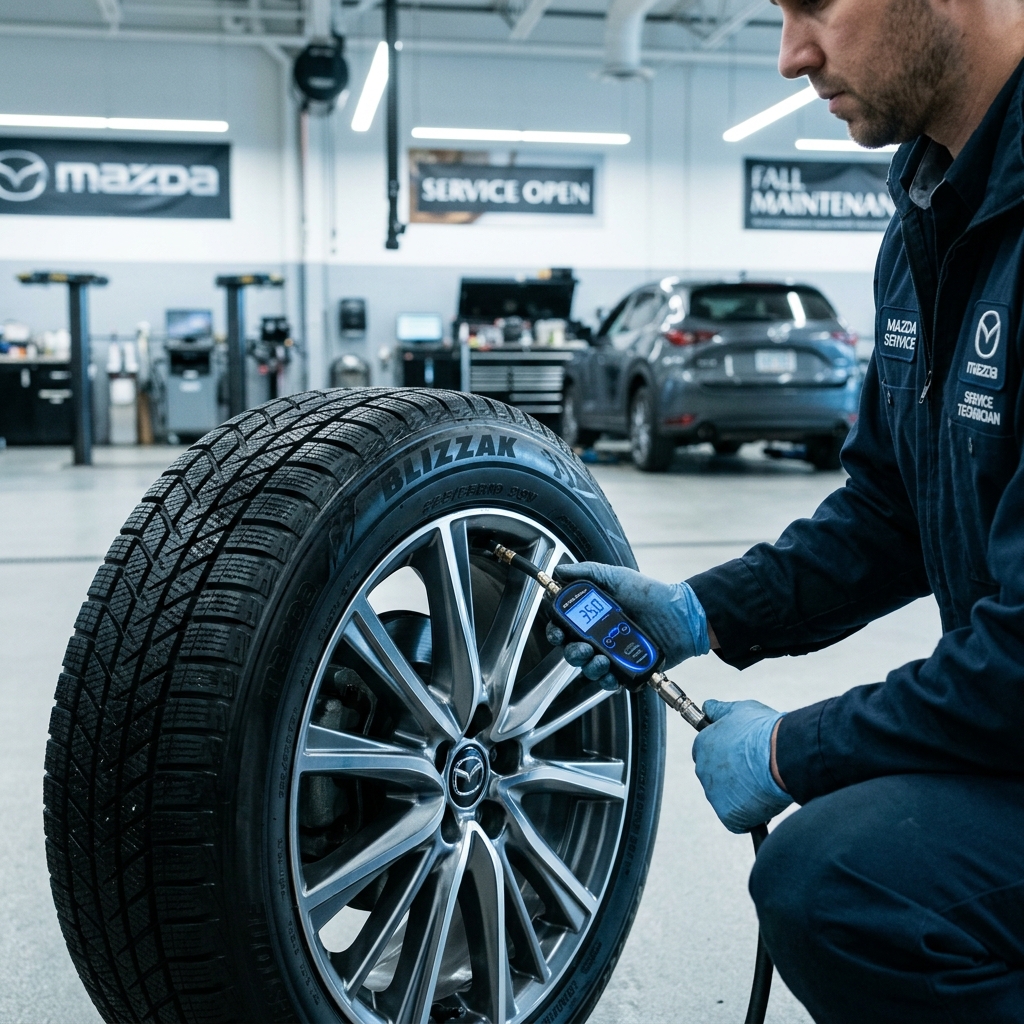
1. Measure When Tires Are 'Cold': Always check pressure before driving or at least three hours after the vehicle has been parked. Driving even one mile warms internal air and elevates pressure reading by 2 to 4 PSI, giving a false high measurement. 2. Locate the Official OEM Placard: Open the driver's front door and read the white/yellow sticker on the door pillar (B-pillar). This indicates exact factory PSI specs for front and rear tires. Never use the MAX PSI number stamped on the tire sidewall—that refers strictly to the maximum load limit of the tire rubber, not your vehicle's operational target.
3. Use a Quality Digital Pressure Gauge: Keep a reliable digital pressure gauge in your glove compartment. Pop off valve caps, press the gauge firmly onto the valve stem, and match the target placard rating. Need replacement caps or professional air gauges? You can easily Order Genuine Mazda Parts online through Hawk Mazda.
What Is the Difference Between All-Season and All-Weather Tires for Winter Driving?
All-Season Tires
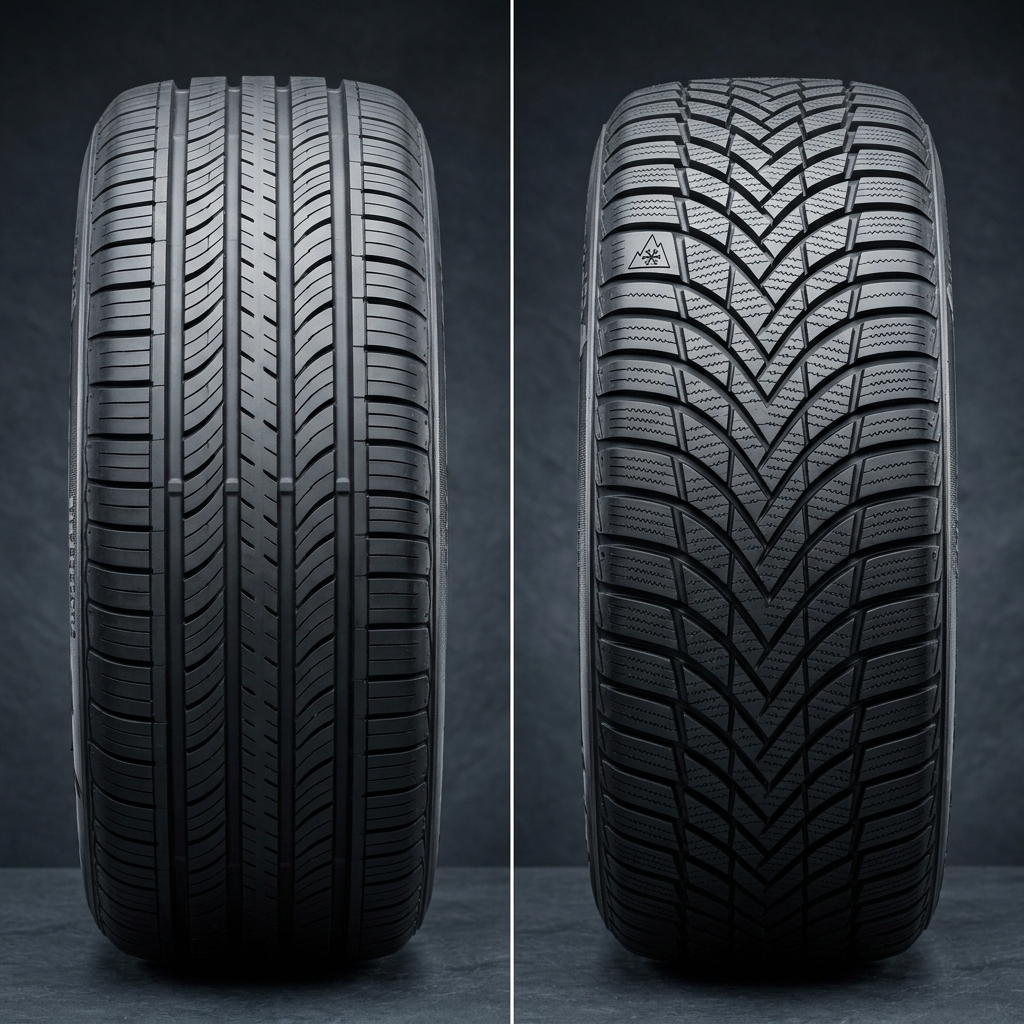
Despite their name, standard all-season tires are engineered for temperatures above 45°F. Below 45°F, their rubber compound hardens and turns stiff (the 'hockey puck' effect). This dramatically reduces traction on dry or wet cold pavement in Plainfield, even before snow falls.
All-Weather Tires (3PMSF)
All-weather tires feature advanced silica rubber compounds that remain pliable in sub-zero weather while carrying the 3-Peak Mountain Snowflake (3PMSF) rating. They can be driven year-round in Will County without requiring spring/fall tire changeouts.
Dedicated Winter Tires
Dedicated winter tires utilize ultra-soft compound formulations and thousands of tiny tread sipes designed specifically to bite into packed snow and ice. They offer unmatched stopping distance in severe Northern Illinois blizzards.
|
Tire Category
|
Optimal Temp Range
|
Snow & Ice Grip
|
Year-Round Driving
|
|
All-Season
|
Above 45°F
|
Light / Moderate
|
Yes
|
|
All-Weather (3PMSF)
|
Above & Below 32°F
|
Severe Snow Rated
|
Yes
|
|
Dedicated Winter
|
Below 45°F Only
|
Maximum Grip
|
No (Winter Only)
|
Is Nitrogen Tire Fill Better Than Regular Air for Autumn and Winter Driving?
Many driver enthusiasts in Shorewood and Joliet ask whether switching to nitrogen gas inflation eliminates cold weather tire pressure problems. While standard compressed air consists of roughly 78% nitrogen, 21% oxygen, and trace gases, dry pure nitrogen fill offers distinct physical advantages during autumn and winter temperature fluctuations.
Why Nitrogen Is More Stable: Pure nitrogen gas contains almost zero moisture vapor. Standard compressed air often contains microscopic water particles that expand and contract dramatically when temperatures swing between morning freezes and afternoon thaws. Because dry nitrogen lacks moisture, its expansion and contraction rate is far more linear and predictable.
Larger Molecular Structure: Nitrogen molecules are slightly larger than oxygen molecules, causing nitrogen gas to migrate through rubber tire pores 30% to 40% slower than regular air. This helps maintain stable pressure longer over extended periods.
The Practical Reality: While nitrogen reduces pressure drops, it does not eliminate physics. Nitrogen gas still drops pressure as temperature declines (about 1 PSI per 10°F drop). Whether filled with nitrogen or compressed air, regular pressure checks remain essential. If you ever need air in an emergency, topping off a nitrogen tire with regular compressed air is completely safe.
What Should Plainfield Drivers Do When the Tire-Pressure Light Stays On After Adding Air?
You added air, brought every tire to the exact placard PSI, but the warning light on your dashboard remains illuminated during your commute along Route 59. What should you do next? Here are the four primary reasons a TPMS light stays on and how to resolve them:
• Drive for a Relearn Cycle: Many modern Mazda models require driving above 15-20 mph for 10 to 20 continuous minutes to allow wheel speed sensors and direct TPMS receivers to recalibrate and clear the warning code. • Corrosion at the Rim Bead: Winter road salt in Will County causes aluminum alloy wheel rims to develop white oxidation along the inner bead lip. This micro-corrosion allows air to slowly seep out continuously, keeping the TPMS system triggered. • Failing TPMS Sensor Battery: Tire pressure sensors inside the wheel stem operate on non-replaceable lithium batteries with a typical lifespan of 5 to 7 years. Cold autumn weather frequently drains dying batteries below operating threshold voltage. • Unchecked Spare Tire: In vehicles equipped with active spare tire sensors, a low spare in the trunk will keep the dashboard warning light on even if all four road tires are perfect.
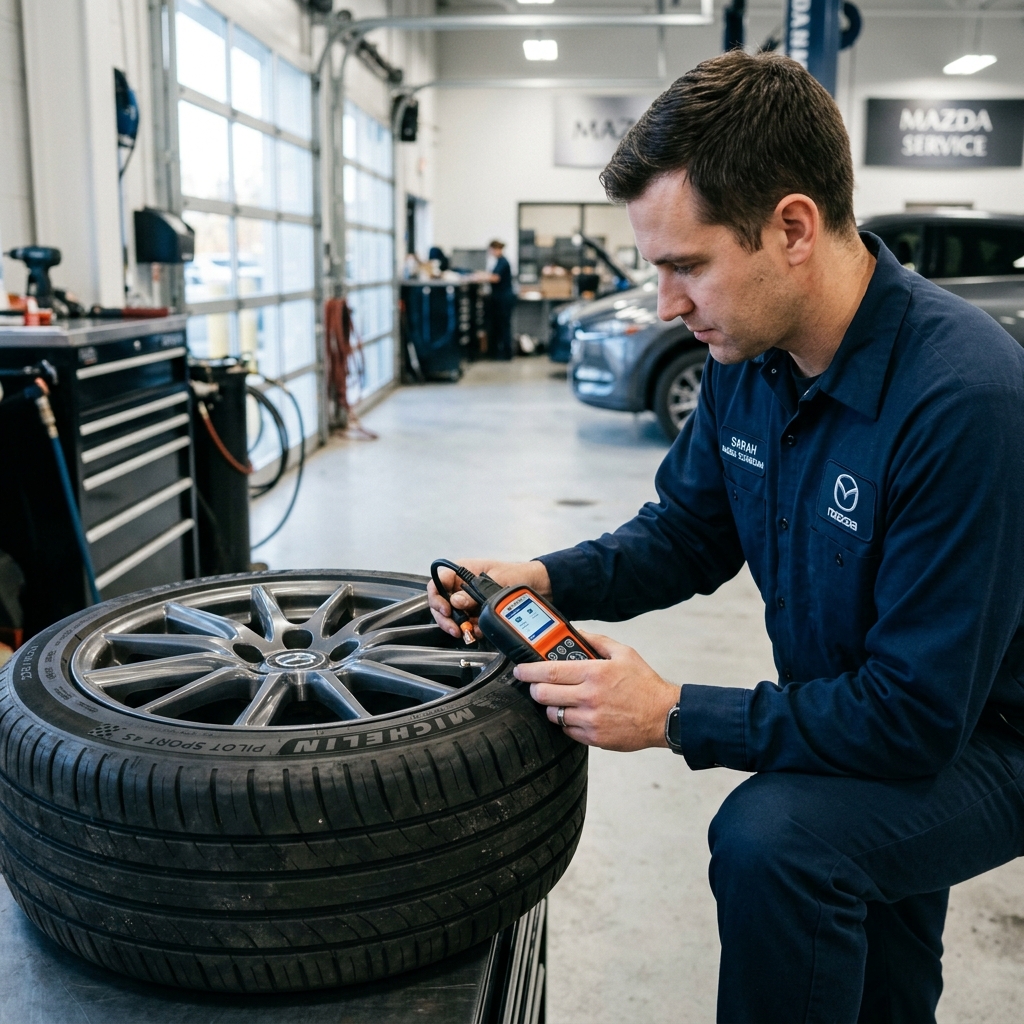
If your TPMS light blinks for 60 seconds upon vehicle startup before staying solid, your system has detected a sensor diagnostic error rather than just low pressure. The master mechanics at Hawk Mazda can quickly diagnose TPMS fault codes, clean rim beads, or replace failing sensors. Feel free to Call us at (779) 260-6502 or stop by our Plainfield service center.
How Should I Prepare My Vehicle’s Tires for Colder Weather in Plainfield?
1. Perform Quarter Test
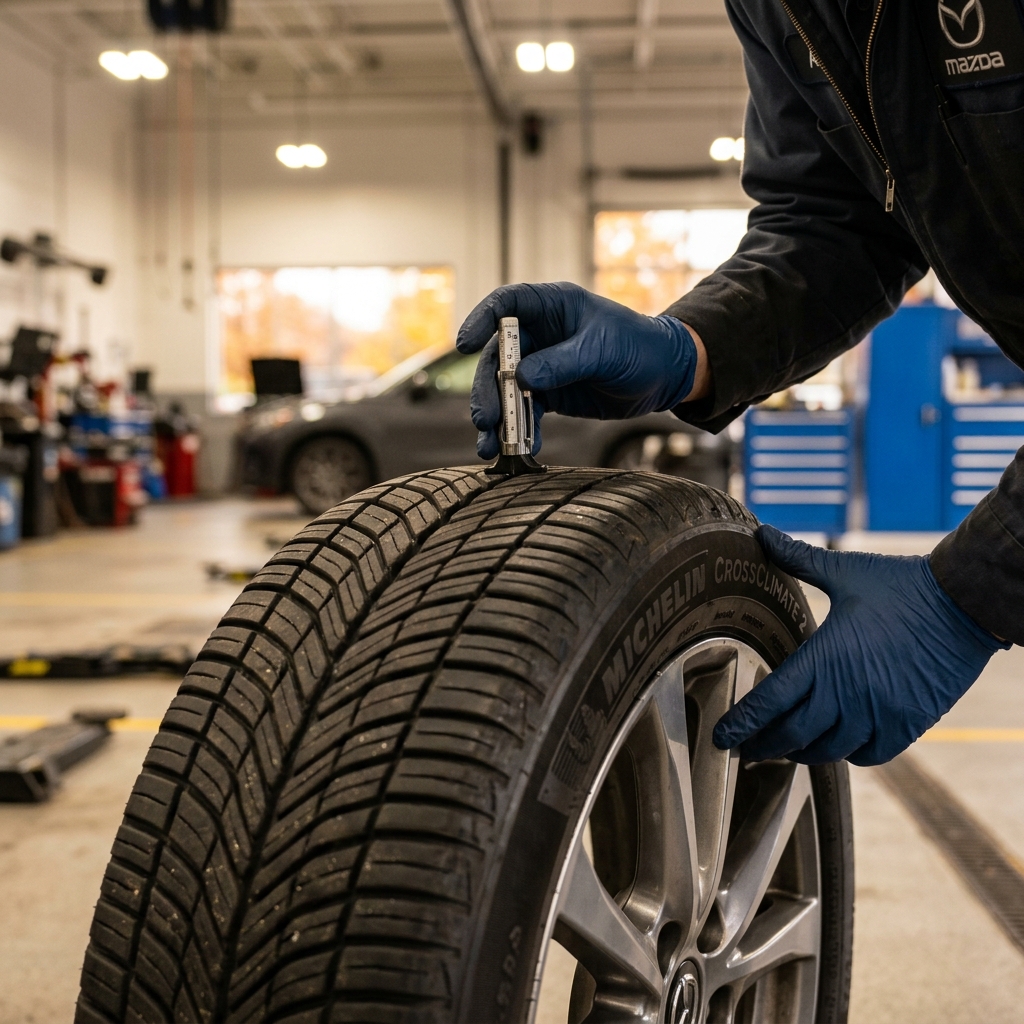
Place a US quarter upside down into tread grooves (head down). If Washington's head is completely visible, your tread depth is below 4/32 inch—the critical threshold needed to channel winter slush away and prevent hydroplaning on wet Plainfield roads.
2. Rotate & Balance
Front tires wear significantly faster on front-wheel-drive and all-wheel-drive vehicles during winter cornering. Rotating tires every 5,000 to 7,500 miles ensures even treadwear, maximizing traction across all four wheels on slippery surfaces.
3. Alignment Check
Hitting curbs or autumn construction potholes around Will County misaligns suspension angles. Proper wheel alignment prevents inner shoulder scrub, improves straight-line tracking on snow, and protects expensive tire tread investment.
How Cold Weather Tire Pressure Impacts Fuel Economy and Driving Range
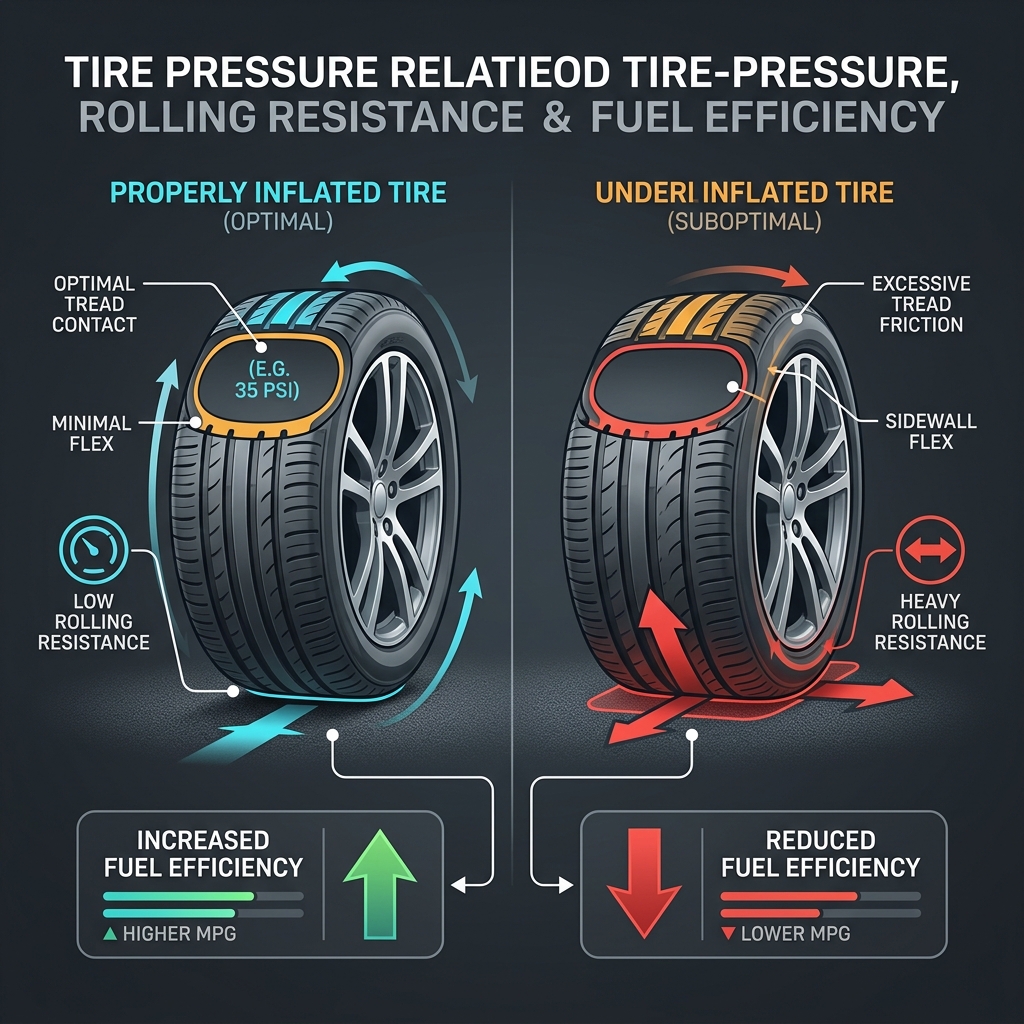
Neglecting winter tire pressure checks doesn't just compromise road safety—it hits your wallet directly at the gas pump. Underinflated tires sag, causing increased rubber flexing and significantly higher rolling resistance as the tire rotates against cold asphalt.
According to U.S. Department of Energy testing, fuel economy drops by approximately 0.2% for every 1 PSI drop across all four tires. Driving on tires that are 7 to 10 PSI underinflated during cold weather results in a 2% to 3% drop in miles per gallon. Over a full Will County winter, this equates to dozens of extra dollars wasted on gasoline during daily commutes.
For plug-in hybrid (PHEV) and electric vehicle (EV) drivers, low tire pressure combined with cold ambient temperatures creates a double penalty on electric driving range. Keeping tires set to factory cold PSI restores EV range and maintains peak MPG efficiency.
Seasonal Tire Storage and Maintenance Tips for Will County Car Owners
Clean Thoroughly
Before storing off-season summer or winter tires in your garage, wash off all road salt, brake dust, and debris using mild soap and water. Corrosive winter chemical residues degrade tire rubber compounds during month-long storage if left unwashed.
Cool, Dry Location
Store loose tires in airtight heavy-duty plastic bags to prevent oil evaporation from the rubber compound. Keep tires away from direct sunlight, electric motors, or furnaces that release ozone gas, which accelerates sidewall rubber cracking.
Proper Stacking Position
If storing tires mounted on wheels, stack them flat on top of one another or hang them individually from heavy-duty wall hooks. If storing unmounted tires without wheels, store them standing upright side-by-side on specialized tire racks.
When to Replace Your Winter or All-Season Tires: Key Tread and Age Indicators
Proper inflation pressure cannot overcome worn-out rubber. Driving on worn tires during Illinois winter storms is extremely dangerous. Look out for these critical replacement signs:
• Tread Depth Below 4/32 Inch: While 2/32 inch is legal minimum for summer dry roads, winter weather traction requires at least 4/32 inch to grip snow, slush, and icy roads effectively. • Sidewall Weather Checking: Freeze-thaw cycles cause microscopic cracks along the sidewalls, signaling rubber dry rot and risk of sudden sidewall failure. • Tire Age Exceeding 6 Years: Check the DOT code on the tire sidewall (the last four digits indicate week and year of manufacture). Tires over six years old lose crucial elastic properties regardless of remaining tread depth.
Ready for a fresh set of winter-ready tires? You can Browse New Mazda Inventory or visit our tire center to find OEM-approved replacement tires backed by manufacturer warranties.
Schedule Your Professional Winter Tire Inspection and Maintenance at Hawk Mazda
Don't let autumn temperature drops leave you stranded or compromise your safety during severe Northern Illinois winters. Maintaining proper cold tire pressure according to manufacturer specs is the single most effective way to protect your vehicle's handling, stopping power, fuel efficiency, and tire lifespan.
Whether you need a quick tire pressure check, TPMS sensor diagnostic, computerized four-wheel alignment, or a brand new set of 3-Peak Mountain Snowflake all-weather tires, Hawk Mazda in Plainfield is your trusted community resource. Conveniently located on Route 59, our factory-trained Mazda technicians use state-of-the-art service equipment to keep your vehicle performing at its absolute peak.